Former Bangladesh Prime Minister Sheikh Hasina Sentenced to Death for Crimes Against Humanity
November 17, 2025 | Dhaka, Bangladesh
In a landmark ruling that has sent shockwaves across South Asia and the international community, Bangladesh’s ousted Prime Minister Sheikh Hasina has been sentenced to death by the country’s International Crimes Tribunal. The verdict, delivered in absentia from Dhaka, follows a months-long trial that found Hasina guilty of ordering a deadly crackdown on student-led protests in July 2024.
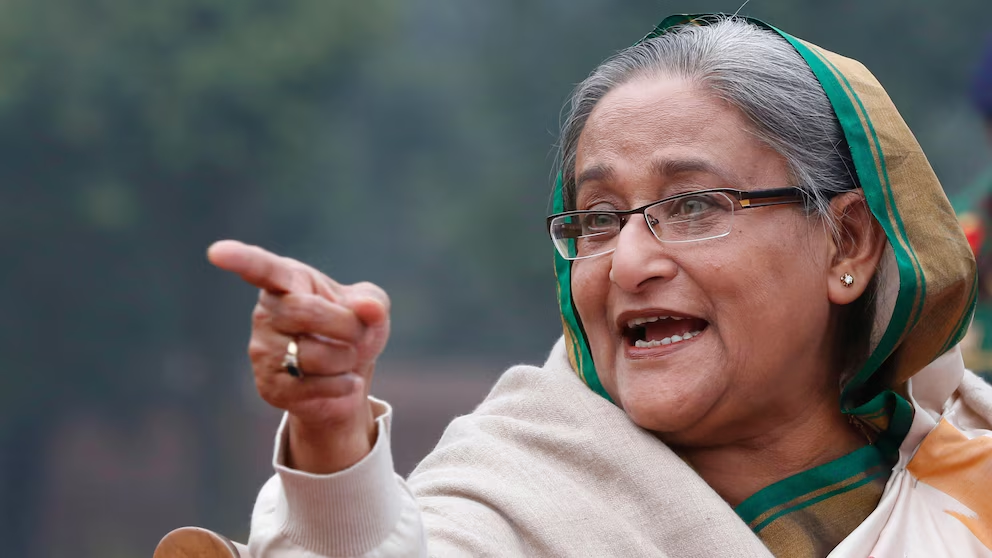
The tribunal concluded that Hasina, 78, directly authorised the use of lethal force against demonstrators protesting a controversial government jobs quota system. The United Nations estimates that up to 1,400 people were killed during the unrest, with thousands more injured.
Hasina, who fled to India in August 2024 after her 15-year rule collapsed, was convicted on multiple counts of crimes against humanity, including the use of helicopter bombings, close-range shotgun attacks, and incendiary directives to suppress dissent. The court cited forensic evidence and recorded communications as proof of her involvement.
In addition to Hasina, former Home Minister Asaduzzaman Khan—also in exile—was sentenced to death. A third defendant, a former police chief, received a five-year sentence after cooperating with prosecutors.
The verdict was broadcast live, and the courtroom erupted in cheers as the sentence was read. Outside, tensions flared as protesters gathered near the Dhanmondi residence of Hasina’s father, Sheikh Mujibur Rahman, Bangladesh’s founding president. Police deployed stun grenades and batons to disperse the crowd.
Hasina denounced the ruling as “biased and politically motivated,” asserting in a statement that she never ordered the killings and would face her accusers in a “proper tribunal” if given the chance. Her Awami League party has called for a nationwide shutdown in protest.
India, where Hasina currently resides, faces mounting diplomatic pressure to extradite her. While acknowledging the verdict, India’s Ministry of External Affairs emphasised its commitment to peace and stability in Bangladesh, without confirming any extradition plans.
The ruling comes ahead of Bangladesh’s parliamentary elections scheduled for February 2026 and marks the most dramatic legal action against a former leader since the country’s independence in 1971.