

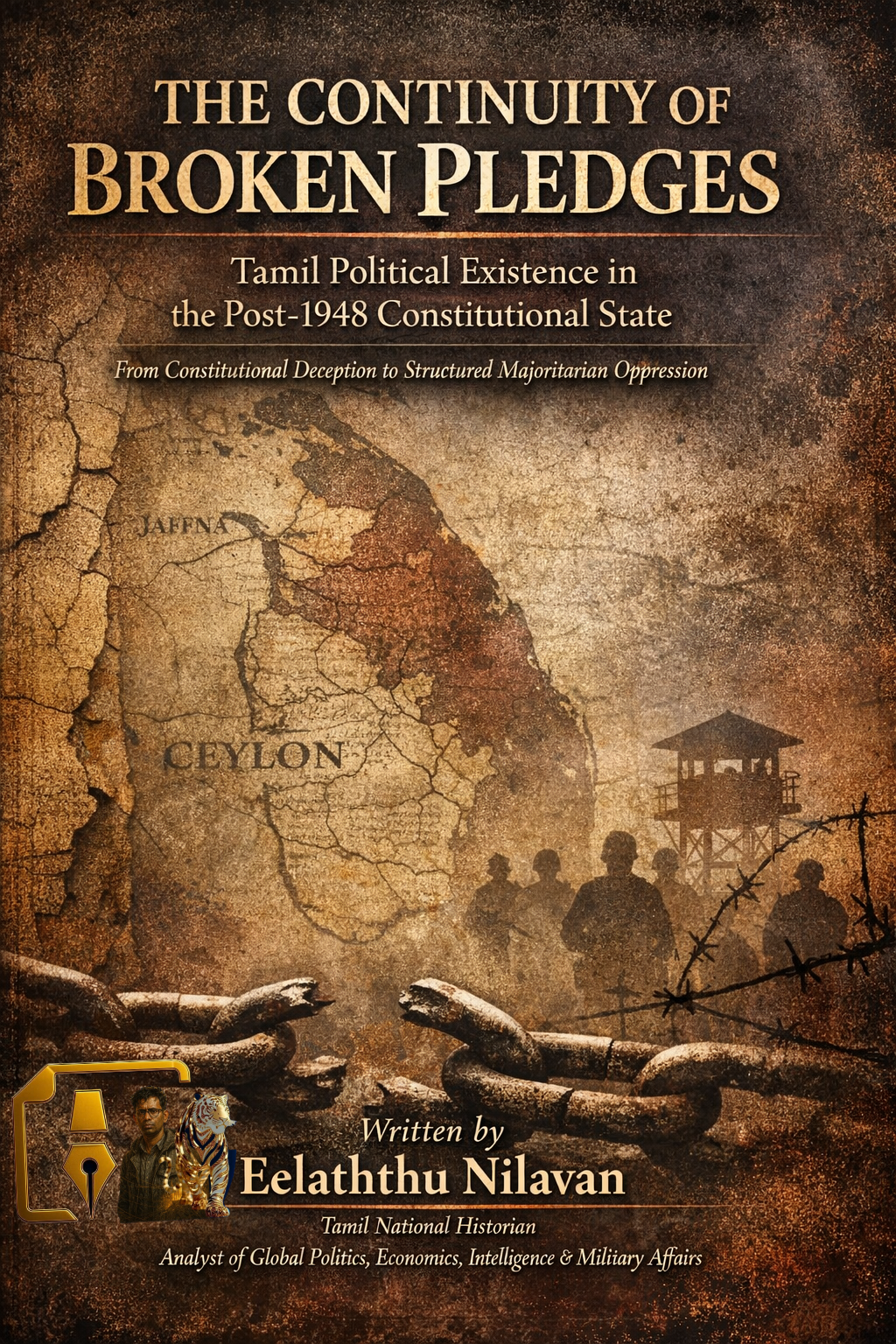
𝑭𝒓𝒐𝒎 𝑪𝒐𝒏𝒔𝒕𝒊𝒕𝒖𝒕𝒊𝒐𝒏𝒂𝒍 𝑫𝒆𝒄𝒆𝒑𝒕𝒊𝒐𝒏 𝒕𝒐 𝑺𝒕𝒓𝒖𝒄𝒕𝒖𝒓𝒂𝒍 𝑺𝒖𝒃𝒋𝒖𝒈𝒂𝒕𝒊𝒐𝒏
𝑰𝒏𝒕𝒓𝒐𝒅𝒖𝒄𝒕𝒊𝒐𝒏: 𝑯𝒊𝒔𝒕𝒐𝒓𝒚 𝑨𝒔 𝑨 𝑳𝒊𝒗𝒊𝒏𝒈 𝑺𝒕𝒓𝒖𝒄𝒕𝒖𝒓𝒆
The political condition of the Tamil people in Sri Lanka today cannot be understood as a “post-war issue” or a “development challenge.” It is the logical continuation of a historical structure established during the late colonial and early post-independence periods. The era between 1833 and 1948 did not merely precede Tamil marginalization—it designed it.

What exists today is not a failure of reconciliation, but the successful maturation of a majoritarian state project whose foundations were built through deception, constitutional manipulation, and demographic engineering.
𝑷𝒐𝒔𝒕-1948: 𝑻𝒉𝒆 𝑰𝒏𝒔𝒕𝒊𝒕𝒖𝒕𝒊𝒐𝒏𝒂𝒍𝒊𝒛𝒂𝒕𝒊𝒐𝒏 𝒐𝒇 𝑫𝒆𝒄𝒆𝒑𝒕𝒊𝒐𝒏
The Ceylon Citizenship Act of 1948 was not an isolated betrayal—it was the first legislative confirmation that Section 29 safeguards were meaningless. This act demonstrated a critical truth:
Constitutional promises were expendable once power was secured.
From that moment onward, every Tamil engagement with the Sri Lankan state followed a predictable cycle:
• Tamil grievance reaches a critical point
• A pact or promise is offered
• International or domestic pressure subsides
• The agreement is abandoned or diluted
This cycle is not accidental—it is systemic governance by delay and denial.
𝑻𝒉𝒆 𝑴𝒐𝒅𝒆𝒓𝒏 𝑴𝒂𝒋𝒐𝒓𝒊𝒕𝒂𝒓𝒊𝒂𝒏 𝑺𝒕𝒂𝒕𝒆: 𝑫𝒆𝒎𝒐𝒄𝒓𝒂𝒄𝒚 𝑨𝒔 𝑬𝒕𝒉𝒏𝒊𝒄 𝑪𝒐𝒏𝒕𝒓𝒐𝒍
The Sri Lankan state today continues to interpret democracy not as pluralism, but as numerical domination. Elections function as ethnic censuses, where power is guaranteed in advance by demographic rather than policy considerations.
Key features of this system include:
• Permanent Sinhala control of the executive
• Militarization of Tamil civilian spaces
• Centralized land administration overrides local Tamil ownership
• Cultural-symbolic occupation through temples and monuments
These are not post-war excesses—they are post-colonial refinements of the Donoughmore logic.
𝑷𝒐𝒔𝒕-2009: 𝑻𝒉𝒆 𝑺𝒉𝒊𝒇𝒕 𝑭𝒓𝒐𝒎 𝑵𝒆𝒈𝒐𝒕𝒊𝒂𝒕𝒊𝒐𝒏 𝒕𝒐 𝑴𝒂𝒏𝒂𝒈𝒆𝒅 𝑺𝒊𝒍𝒆𝒏𝒄𝒆
After the military defeat of the Tamil armed resistance, the state did not move toward political resolution. Instead, it adopted a strategy of managed silence:
• International forums are engaged with promises of reform
• Domestic Tamil demands are redirected toward development rhetoric
• Accountability is endlessly postponed through commissions without power
The state no longer needs to break pacts publicly—it simply refuses to create binding ones.
𝑻𝒉𝒆 𝑰𝒍𝒍𝒖𝒔𝒊𝒐𝒏 𝒐𝒇 𝑹𝒆𝒄𝒐𝒏𝒄𝒊𝒍𝒊𝒂𝒕𝒊𝒐𝒏: 𝑨 𝑵𝒆𝒘 𝑭𝒐𝒓𝒎 𝒐𝒇 𝑫𝒆𝒄𝒆𝒑𝒕𝒊𝒐𝒏
Modern reconciliation discourse functions much like Section 29 once did—as a language of reassurance without enforcement.
Key realities remain unchanged:
• No political solution with internal self-rule
• No return of militarized land
• No recognition of Tamil nationhood
• No credible accountability for mass atrocities
Reconciliation, in this context, is not peace—it is administrative pacification.
𝑻𝒂𝒎𝒊𝒍 𝑷𝒐𝒍𝒊𝒕𝒊𝒄𝒂𝒍 𝑪𝒐𝒏𝒔𝒄𝒊𝒐𝒖𝒔𝒏𝒆𝒔𝒔 𝑻𝒐𝒅𝒂𝒚: 𝑭𝒓𝒐𝒎 𝑹𝒆𝒒𝒖𝒆𝒔𝒕 𝒕𝒐 𝑹𝒆𝒄𝒍𝒂𝒎𝒂𝒕𝒊𝒐𝒏
The contemporary Tamil political mindset is no longer shaped by faith in state reform. It is shaped by historical memory.
What has emerged is a clarity forged over generations:
• Equality cannot exist within a unitary majoritarian state
• Rights granted without power can always be withdrawn
• Survival requires structural self-determination, not promises
This is not extremism—it is historical learning.
𝑪𝒐𝒏𝒄𝒍𝒖𝒔𝒊𝒐𝒏: 𝑯𝒊𝒔𝒕𝒐𝒓𝒚 𝑫𝒊𝒅 𝑵𝒐𝒕 𝑭𝒂𝒊𝒍 𝑻𝒉𝒆 𝑻𝒂𝒎𝒊𝒍𝒔—𝑻𝒉𝒆 𝑺𝒕𝒂𝒕𝒆 𝑫𝒊𝒅
From 1833 to the present, the Tamil political experience has been defined by one constant:
Power promised but never shared.
The demand for Tamil self-determination did not arise from ideology alone—it arose from a century of evidence. Every broken pledge taught the same lesson:
A nation cannot survive on another nation’s goodwill.
History has already delivered its verdict. The only unresolved question is whether the world will continue to ignore it.

Written by Eelaththu Nilavan
Tamil National Historian | Analyst of Global Politics, Economics, Intelligence & Military Affairs
30/12/2025
