


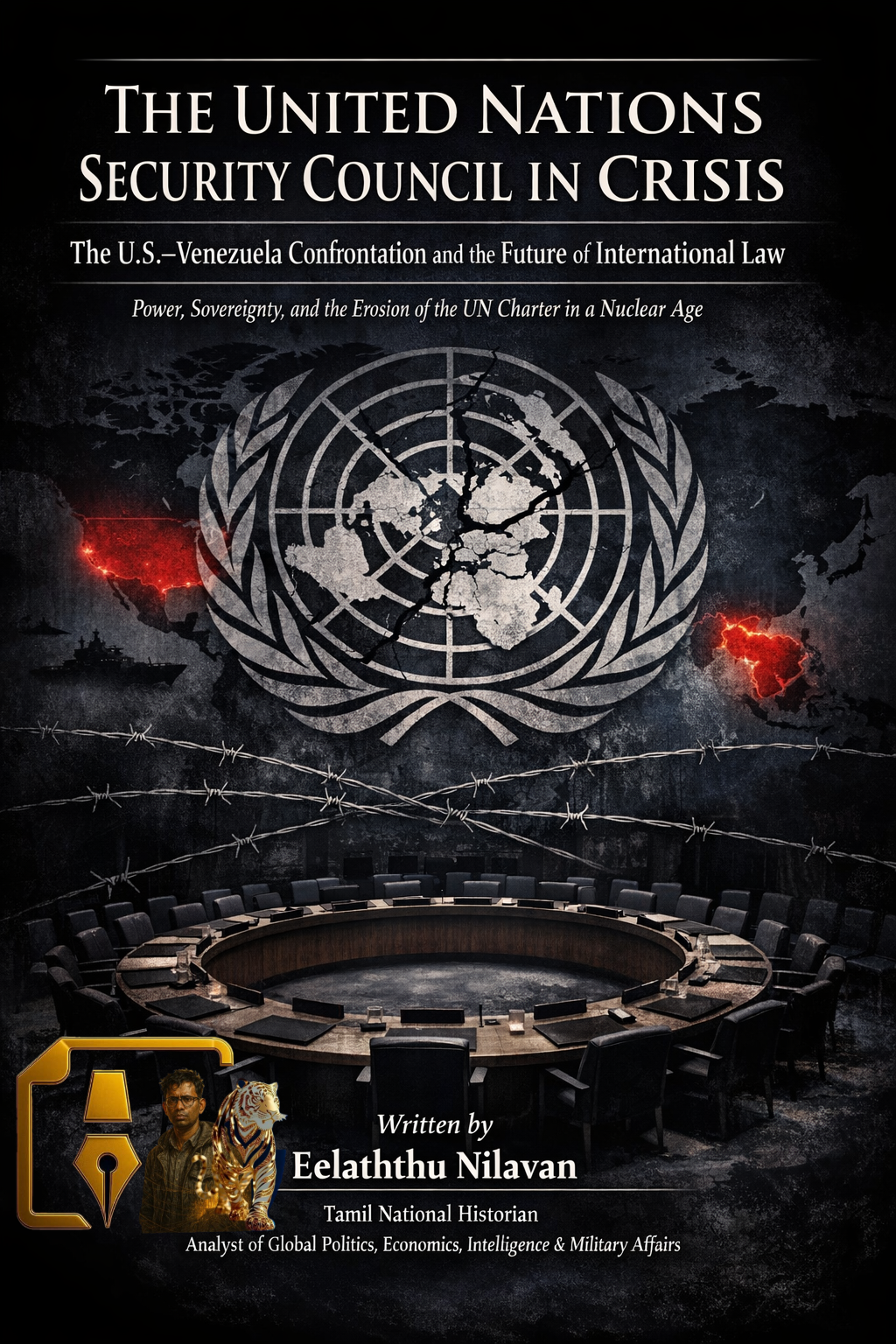
𝗧𝗛𝗘 𝗨.𝗦.–𝗩𝗘𝗡𝗘𝗭𝗨𝗘𝗟𝗔 𝗖𝗢𝗡𝗙𝗥𝗢𝗡𝗧𝗔𝗧𝗜𝗢𝗡 𝗔𝗡𝗗 𝗧𝗛𝗘 𝗙𝗨𝗧𝗨𝗥𝗘 𝗢𝗙 𝗜𝗡𝗧𝗘𝗥𝗡𝗔𝗧𝗜𝗢𝗡𝗔𝗟 𝗟𝗔𝗪
✦ 𝗜𝗡𝗧𝗥𝗢𝗗𝗨𝗖𝗧𝗜𝗢𝗡: 𝗔 𝗠𝗢𝗠𝗘𝗡𝗧 𝗧𝗛𝗔𝗧 𝗦𝗛𝗔𝗞𝗘𝗦 𝗧𝗛𝗘 𝗨𝗡 ✦
The United Nations Security Council was thrust into an extraordinary crisis following the United States’ confirmation that Venezuelan President Nicolás Maduro had been captured in Caracas during what Washington termed a “surgical law enforcement operation.”
The operation, conducted with military assistance and without Security Council authorization, immediately triggered sharp global condemnation, with Venezuela denouncing the act as kidnapping, aggression, and a flagrant breach of international law.

The confrontation has rapidly evolved beyond Venezuela, raising existential questions about state sovereignty, the authority of the UN Charter, and the future of global security governance.
✦✦ 𝗧𝗛𝗘 𝗨𝗡𝗜𝗧𝗘𝗗 𝗦𝗧𝗔𝗧𝗘𝗦’ 𝗡𝗔𝗥𝗥𝗔𝗧𝗜𝗩𝗘: “𝗟𝗔𝗪 𝗘𝗡𝗙𝗢𝗥𝗖𝗘𝗠𝗘𝗡𝗧, 𝗡𝗢𝗧 𝗪𝗔𝗥” ✦✦
The U.S. delegation framed the operation as non-military in character, insisting it did not constitute an act of war.

Legal Framing and Criminal Indictments
Washington asserted that:
• Nicolás Maduro is an “illegitimate ruler” and a fugitive from justice
• He has been indicted in New York on charges of:
• Narco-terrorism
• Weapons trafficking
• Coordinating drug flows into U.S. territory over a 15-year period
The arrest was explicitly compared to the 1989 capture of Panamanian leader Manuel Noriega, reinforcing a precedent-based justification.
National Security Claims
The U.S. accused the Maduro administration of:
• Partnering with Hezbollah
• Collaborating with criminal networks such as Tren de Aragua
• Conducting “irregular warfare” against American territory
Humanitarian Argument
The U.S. representative cited:
• Over 8 million Venezuelans displaced
• Systematic human rights abuses
• A regional refugee crisis attributed to Maduro’s rule
✦✦ 𝗩𝗘𝗡𝗘𝗭𝗨𝗘𝗟𝗔’𝗦 𝗥𝗘𝗕𝗨𝗧𝗧𝗔𝗟: “𝗔 𝗞𝗜𝗗𝗡𝗔𝗣𝗣𝗜𝗡𝗚 𝗢𝗙 𝗔 𝗦𝗢𝗩𝗘𝗥𝗘𝗜𝗚𝗡 𝗦𝗧𝗔𝗧𝗘” ✦✦
Caracas categorically rejected the U.S. account, presenting a starkly different narrative.
Violation of the UN Charter
Venezuela accused the United States of:
• Bombing its territory
• Violating Article 2(4) of the UN Charter
• Breaching the personal immunity of a sitting head of state
The arrest was described as a forcible abduction of the constitutional president and his wife, Cilia Flores.
Resource Motive and Neocolonialism
Venezuela argued the true motive was:
• Control over vast oil and energy reserves
• An attempt to impose resource dominance through force
• A revival of neocolonial interventionism
Continuity of State Power
Despite the crisis, Venezuela announced:
• Delcy Rodríguez sworn in as acting president
• Maintenance of constitutional order
• Institutional continuity in governance
✦✦ 𝗩𝗘𝗡𝗘𝗭𝗨𝗘𝗟𝗔’𝗦 𝗗𝗘𝗠𝗔𝗡𝗗𝗦 𝗔𝗧 𝗧𝗛𝗘 𝗨𝗡𝗦𝗖 ✦✦
Caracas formally urged the Security Council to:
• Demand the immediate release and safe return of Maduro and Flores
• Condemn the use of force against Venezuelan territory
• Reaffirm that resource acquisition by force is inadmissible under international law
✦✦ 𝗝𝗘𝗙𝗙𝗥𝗬 𝗦𝗔𝗖𝗛𝗦: “𝗧𝗛𝗜𝗦 𝗜𝗦 𝗔𝗕𝗢𝗨𝗧 𝗧𝗛𝗘 𝗦𝗨𝗥𝗩𝗜𝗩𝗔𝗟 𝗢𝗙 𝗧𝗛𝗘 𝗨𝗡 𝗖𝗛𝗔𝗥𝗧𝗘𝗥” ✦✦
Economist Jeffrey Sachs delivered one of the most consequential interventions of the session.
Core Legal Argument
Sachs emphasized:
• The issue is not Maduro’s character
• The real question is whether any state can impose regime change through force or coercion
He cited Article 2(4), warning that its erosion would render international law meaningless.
Historical Pattern of Regime Change
Referencing Lindsey O’Rourke’s research, Sachs highlighted:
• 70 U.S. regime change operations between 1947–1989
• A continuing pattern into the 21st century without UNSC authorization
✦✦ 𝗥𝗘𝗖𝗘𝗡𝗧 𝗨𝗡𝗔𝗨𝗧𝗛𝗢𝗥𝗜𝗭𝗘𝗗 𝗜𝗡𝗧𝗘𝗥𝗩𝗘𝗡𝗧𝗜𝗢𝗡𝗦 (𝗣𝗢𝗦𝗧–𝟮𝟬𝟬𝟬) ✦✦
Examples cited or implied in the debate include:
• Iraq (2003): Full-scale invasion without UNSC approval
• Libya (2011): NATO action exceeding civilian-protection mandate
• Ukraine (2014): External political and strategic interference
• Syria: Repeated strikes without host-state consent
• Yemen: Indirect military support without UN mandate
• Somalia: Air operations without clear UNSC authorization
• Pakistan & Afghanistan: Cross-border strikes and coercive actions
✦✦ 𝗧𝗛𝗘 𝗨.𝗦. 𝗧𝗥𝗔𝗖𝗞 𝗥𝗘𝗖𝗢𝗥𝗗 𝗜𝗡 𝗩𝗘𝗡𝗘𝗭𝗨𝗘𝗟𝗔 ✦✦
Sachs outlined a two-decade-long pressure campaign:
Economic Warfare
• Sanctions on PDVSA (2017–2020)
• 75% collapse in oil production
• 62% decline in real GDP per capita
Political Intervention
• 2019 recognition of Juan Guaidó
• Freezing of $7 billion in Venezuelan assets
Military Coercion
• Bombing operations in seven countries
• Explicit threats by senior U.S. officials against UN member states
✦✦ 𝗟𝗔𝗧𝗜𝗡 𝗔𝗠𝗘𝗥𝗜𝗖𝗔 𝗥𝗘𝗔𝗖𝗧𝗦: 𝗖𝗨𝗕𝗔, 𝗠𝗘𝗫𝗜𝗖𝗢, 𝗔𝗡𝗗 𝗗𝗜𝗩𝗜𝗦𝗜𝗢𝗡 ✦✦
Cuba: “A Criminal and Fascist Aggression”
Cuba reported:
• 32 Cuban deaths during U.S. operations
• Condemned the “kidnapping” of Maduro and Flores
• Accused Washington of reviving the Monroe Doctrine
Mexico: Warning of Regional Escalation
Mexico stressed:
• Clear violation of non-intervention principles
• Danger of destabilizing Latin America
• Dialogue as the only legitimate path
Paraguay: A Contrasting Voice
Paraguay supported the operation, branding Maduro’s administration a terrorist entity, and expressed hope for democratic transition.
✦✦ 𝗣𝗥𝗢𝗣𝗢𝗦𝗘𝗗 𝗨𝗡𝗦𝗖 𝗥𝗘𝗦𝗢𝗟𝗨𝗧𝗜𝗢𝗡𝗦 ✦✦
Jeffrey Sachs urged immediate steps:
• Cease and desist from all threats and force
• End the naval quarantine
• Withdraw U.S. military and intelligence assets
• Appoint a UN Special Envoy with a 14-day reporting mandate
✦✦ 𝗖𝗢𝗡𝗖𝗟𝗨𝗦𝗜𝗢𝗡: 𝗔 𝗧𝗘𝗦𝗧 𝗢𝗙 𝗚𝗟𝗢𝗕𝗔𝗟 𝗢𝗥𝗗𝗘𝗥 ✦✦
The confrontation over Venezuela is no longer a bilateral dispute.
It has become a defining test of whether the UN Charter remains a living instrument or collapses under power politics.
As Sachs warned the Council, in a nuclear-armed world, the erosion of international law does not lead to stability—but to international anarchy.


Written by
Eelaththu Nilavan
Tamil National Historian | Analyst of Global Politics, Economics, Intelligence & Military Affairs
06/01/2026
