

𝑨 𝑵𝒆𝒘 “𝑾𝒊𝒏𝒅𝒐𝒘 𝒐𝒇 𝑶𝒑𝒑𝒐𝒓𝒕𝒖𝒏𝒊𝒕𝒚” 𝒐𝒓 𝑻𝒉𝒆 𝑳𝒂𝒔𝒕 𝑫𝒊𝒑𝒍𝒐𝒎𝒂𝒕𝒊𝒄 𝑪𝒉𝒂𝒏𝒄𝒆?
At the U.N. disarmament forum in Geneva, Iranian Foreign Minister Abbas Araghchi declared that a “new window of opportunity” has opened after a second round of indirect negotiations with the United States. According to him, both sides have agreed on guiding principles for drafting a potential agreement addressing Tehran’s nuclear program.
He emphasized three pillars of Iran’s diplomatic position:
• Commitment to a negotiated settlement
• Technical cooperation with the International Atomic Energy Agency
• Recognition of Iran’s right to peaceful nuclear energy under international law
Araghchi framed the talks as regionally facilitated diplomacy rather than bilateral concessions, signaling that mediating states are playing a quiet but critical role.
❖ 𝑰𝒓𝒂𝒏’𝒔 𝑪𝒐𝒓𝒆 𝑫𝒐𝒄𝒕𝒓𝒊𝒏𝒆: 𝑵𝒖𝒄𝒍𝒆𝒂𝒓 𝑹𝒊𝒈𝒉𝒕𝒔 𝑾𝒊𝒕𝒉𝒐𝒖𝒕 𝑵𝒖𝒄𝒍𝒆𝒂𝒓 𝑾𝒆𝒂𝒑𝒐𝒏𝒔
Iran insists:
• Nuclear weapons have “no place” in its defense doctrine
• Uranium enrichment is a sovereign and legal right
• Western pressure is politically motivated rather than security-driven
Tehran also accuses Washington of undermining trust by withdrawing from previous nuclear agreements and allegedly launching military actions during negotiation periods. This narrative is central to Iran’s diplomatic messaging: it portrays itself as a state seeking legal parity rather than strategic escalation.
❖ 𝑲𝒉𝒂𝒎𝒆𝒏𝒆𝒊’𝒔 𝑾𝒂𝒓𝒏𝒊𝒏𝒈: 𝑹𝒉𝒆𝒕𝒐𝒓𝒊𝒄 𝒂𝒔 𝑫𝒆𝒕𝒆𝒓𝒓𝒆𝒏𝒄𝒆
Iran’s Supreme Leader Ali Khamenei amplified tensions with a stark warning: any U.S. strike could trigger a regional war. He claimed Iran possesses weapons capable of destroying major naval assets and dismissed American deployments as routine intimidation.
He also framed recent domestic unrest as a foreign-engineered coup attempt, blaming intelligence services linked to Washington and Israel. Such rhetoric serves two purposes:
• Domestic consolidation — portraying protests as external conspiracies
• Strategic deterrence — signaling readiness for escalation
❖ 𝑻𝒉𝒆 𝑷𝒆𝒏𝒕𝒂𝒈𝒐𝒏’𝒔 “𝑻𝒓𝒊𝒑𝒍𝒆-𝑻𝒉𝒓𝒆𝒂𝒕” 𝑩𝒖𝒊𝒍𝒅𝒖𝒑
The United States has simultaneously reinforced air, naval, and missile defense assets across the Middle East:
• Deployment of over 50 advanced stealth fighters
• Expansion of carrier strike presence
• Activation of regional missile defense systems
This multi-layered posture is widely interpreted as coercive diplomacy — applying military pressure to strengthen negotiating leverage rather than to initiate an immediate war.
❖ 𝑻𝒉𝒆 𝑺𝒕𝒓𝒂𝒊𝒕 𝒐𝒇 𝑯𝒐𝒓𝒎𝒖𝒛: 𝑻𝒉𝒆 𝑾𝒐𝒓𝒍𝒅’𝒔 𝑴𝒐𝒔𝒕 𝑫𝒂𝒏𝒈𝒆𝒓𝒐𝒖𝒔 𝑪𝒉𝒐𝒌𝒆𝒑𝒐𝒊𝒏𝒕
Iranian forces have conducted live-fire drills near the Strait of Hormuz, through which a significant portion of global oil shipments passes. Any disruption there could instantly impact:
• global energy prices
• shipping insurance markets
• Asian and European fuel supply chains
Iran has historically used this waterway as a strategic pressure valve, threatening closure whenever tensions escalate.
❖ 𝑻𝒉𝒆 𝑬𝒎𝒆𝒓𝒈𝒊𝒏𝒈 𝑨𝒙𝒊𝒔: 𝑴𝒐𝒔𝒄𝒐𝒘, 𝑩𝒆𝒊𝒋𝒊𝒏𝒈 & 𝑻𝒆𝒉𝒓𝒂𝒏
Joint naval exercises involving Russia and China alongside Iran indicate deepening military coordination. Analysts interpret this trilateral cooperation as:
• A challenge to Western maritime dominance
• A signal of multipolar alignment
• A rehearsal for coordinated crisis response
The symbolism is as important as the drills themselves: it shows Iran is not strategically isolated.
❖ 𝑻𝒓𝒖𝒎𝒑’𝒔 𝑺𝒕𝒂𝒏𝒄𝒆: 𝑵𝒆𝒈𝒐𝒕𝒊𝒂𝒕𝒆 𝒐𝒓 𝑭𝒂𝒄𝒆 𝑭𝒐𝒓𝒄𝒆
U.S. President Donald Trump has warned that failure to reach a deal could result in military action. His strategy blends:
• sanctions pressure
• military signaling
• diplomatic deadlines
This approach mirrors Cold War-era brinkmanship tactics designed to force concessions without immediate combat.
❖ 𝑻𝒉𝒆 𝑩𝒓𝒐𝒂𝒅𝒆𝒓 𝑮𝒍𝒐𝒃𝒂𝒍 𝑪𝒐𝒏𝒕𝒆𝒙𝒕
The crisis is unfolding amid wider geopolitical strain:
• The ongoing Russia–Ukraine war is reshaping European security
• Intensifying debates within NATO
• Expanding sanctions regimes across Eurasia
This convergence increases the risk that a regional clash could trigger wider confrontation among major powers.
❖ 𝑺𝒕𝒓𝒂𝒕𝒆𝒈𝒊𝒄 𝑨𝒏𝒂𝒍𝒚𝒔𝒊𝒔: 𝑩𝒍𝒖𝒇𝒇, 𝑩𝒓𝒊𝒏𝒌𝒎𝒂𝒏𝒔𝒉𝒊𝒑 𝒐𝒓 𝑷𝒓𝒆𝒍𝒖𝒅𝒆 𝒕𝒐 𝑾𝒂𝒓?
Three scenarios dominate expert assessments:
1. Negotiated Settlement
Military pressure forces compromise and a revised nuclear deal.
2. Controlled Escalation
Limited strikes or proxy clashes occur without full-scale war.
3. Systemic Conflict
Miscommunication or miscalculation triggers multi-state confrontation.
The current situation resembles a classic high-stakes signaling contest: both sides display strength while leaving diplomatic doors open.
✦ 𝑪𝒐𝒏𝒄𝒍𝒖𝒔𝒊𝒐𝒏: 𝑻𝒉𝒆 𝑾𝒐𝒓𝒍𝒅 𝑺𝒕𝒂𝒏𝒅𝒔 𝒂𝒕 𝒂 𝑫𝒊𝒑𝒍𝒐𝒎𝒂𝒕𝒊𝒄 𝑪𝒓𝒐𝒔𝒔𝒓𝒐𝒂𝒅𝒔
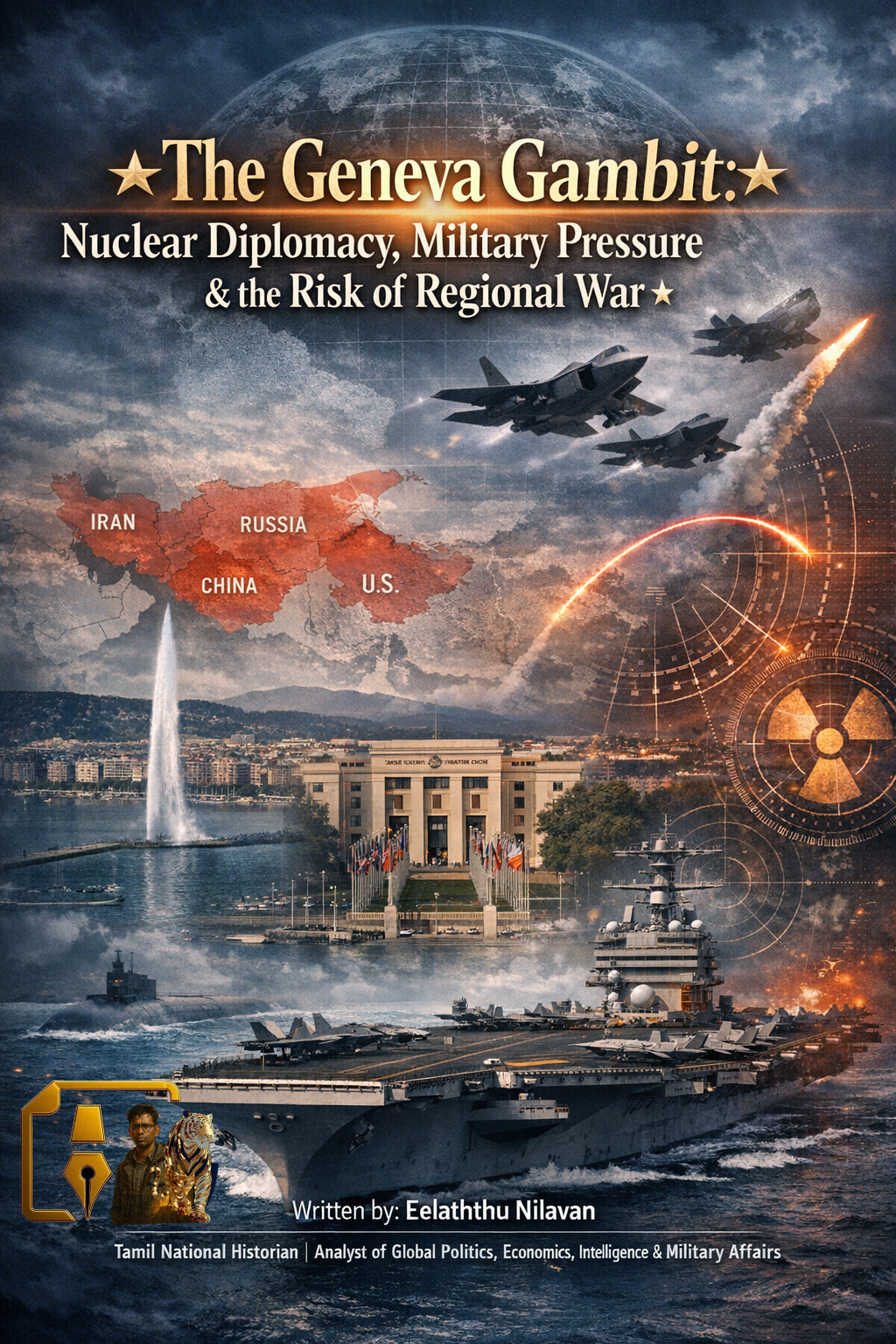
The Geneva talks reveal a paradox: diplomacy is advancing precisely while military tension peaks. Iran signals willingness to negotiate but refuses to compromise on strategic sovereignty. The United States signals readiness for talks while positioning an overwhelming force.
History shows such moments are decisive.
They either produce landmark agreements — or ignite conflicts that reshape global order.

Written by Eelaththu Nilavan
Tamil National Historian | Analyst of Global Politics, Economics, Intelligence & Military Affairs
19/02/2026
