
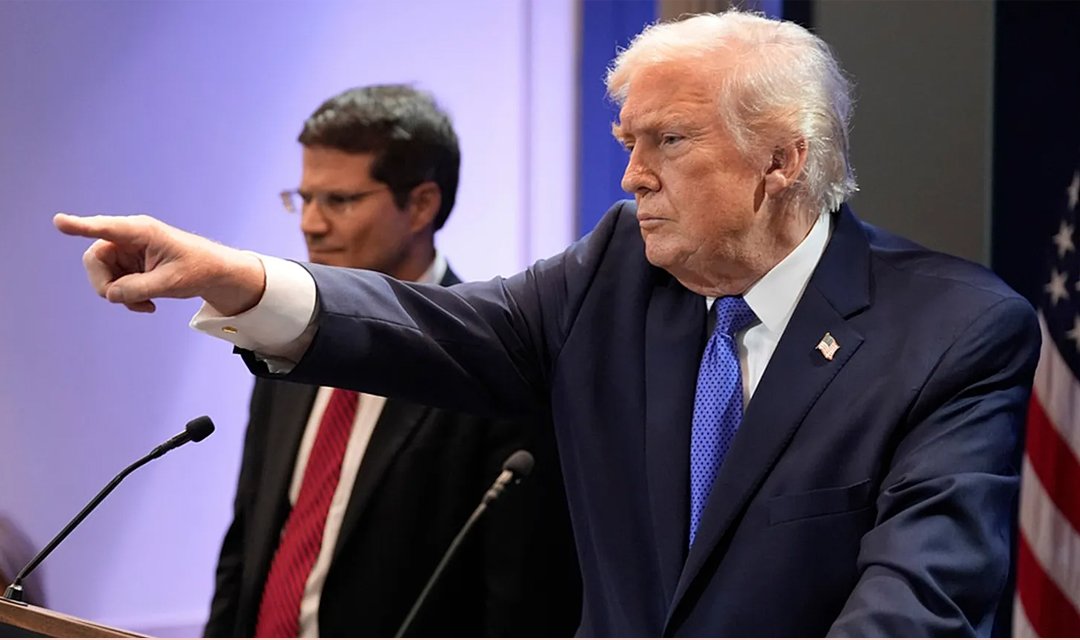
In a dramatic escalation of his trade agenda, U.S. President Donald Trump announced on Friday that he will impose a new 10% “global tariff,” just hours after the Supreme Court struck down the legal basis for many of his previously enacted import duties. The move signals the administration’s determination to maintain its hardline trade posture despite a major judicial rebuke.
A Defiant Response to a Landmark Ruling
The Supreme Court ruled 6–3 that the International Emergency Economic Powers Act (IEEPA) does not grant the president authority to impose broad tariffs, invalidating a significant portion of Trump’s sweeping “reciprocal” tariff framework. The decision represents one of the most consequential legal setbacks of Trump’s current term, undermining a central pillar of his economic strategy.
Speaking from the White House briefing room, Trump sharply criticized the ruling and the justices who supported it, calling the decision “deeply disappointing” and expressing that he was “absolutely ashamed” of members of the Court. He singled out Justices Neil Gorsuch and Amy Coney Barrett—both his own nominees—calling their votes “an embarrassment to their families.”
The New Tariff Mechanism: Section 122
Undeterred, Trump announced he will invoke Section 122 of the Trade Act of 1974 to impose a new 10% global tariff. Unlike the emergency powers previously used, Section 122 allows the president to levy temporary tariffs for up to 150 days, with extensions requiring congressional approval. Trump, however, dismissed concerns about the time limit, asserting that his administration retains “the right to do pretty much what we want to do.”
The new tariff will be applied on top of existing duties under Sections 232 and 301, which the administration emphasized will remain “in full force and effect.” Officials also indicated that additional investigations under Section 301 are underway, potentially paving the way for further trade actions.
Economic and Political Ripples
The ruling and Trump’s swift countermeasure have triggered uncertainty among global markets and trade partners. Analysts warn that the new tariff, though legally narrower, could still disrupt supply chains and intensify trade tensions. European economists noted that the decision “will not bring relief,” suggesting that the U.S. may continue to pursue aggressive trade enforcement through alternative legal channels.
The United Kingdom, which previously negotiated a preferential tariff arrangement under Trump’s earlier framework, is expected to retain its favorable position, though officials in London acknowledged that the situation introduces fresh uncertainty for businesses and investors.
A President Unmoved
Despite the legal setback, Trump insisted that his administration has restored “great certainty” to both the U.S. and global economies, framing the new tariff as a necessary tool to protect American industry. He reiterated his belief that the Court’s ruling was incorrect but emphasized that “very powerful alternatives” remain available to him.
As the administration prepares to formalize the new tariff order, economists, lawmakers, and international partners are bracing for the next phase of a trade strategy that continues to test the limits of presidential authority—and global economic stability.
