
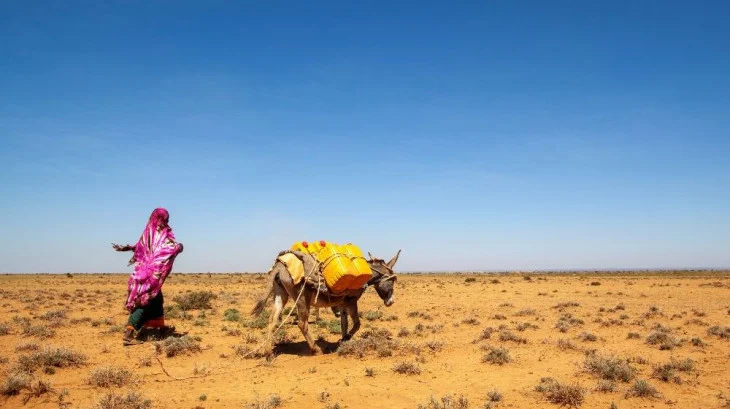
The United Nations World Food Programme (WFP) has issued an urgent warning that its life‑saving emergency food and nutrition assistance in Somalia may cease entirely by April unless immediate funding is secured. The alert comes amid one of the most severe hunger crises the country has faced in recent years, driven by consecutive failed rainy seasons, ongoing conflict, and a dramatic decline in humanitarian financing.
A Nation on the Brink
According to WFP data, at least 4.4 million people—roughly a quarter of Somalia’s population—are experiencing crisis‑level food insecurity or worse. Nearly one million women, men, and children are already enduring severe hunger, with conditions deteriorating rapidly across drought‑stricken regions.
Somalia, ranked among the world’s most climate‑vulnerable countries, has endured repeated cycles of drought and flooding. The government declared a national drought emergency in November after recurrent poor rainfall devastated crops, livestock, and livelihoods.
Funding Collapse Forces Drastic Cuts
The WFP—Somalia’s largest humanitarian agency—has already been forced to slash its operations dramatically. Emergency food assistance has dropped from 2.2 million people in early 2025 to just over 600,000, leaving only one in seven people in need receiving support. Nutrition programmes for pregnant and breastfeeding women and young children have also been cut sharply, falling from nearly 400,000 beneficiaries to just 90,000.
Ross Smith, WFP’s Director of Emergency Preparedness and Response, described the situation as “deteriorating at an alarming rate,” warning that families who have already lost everything are being pushed to the brink. Without immediate intervention, he said, the humanitarian, security, and economic consequences could be devastating and felt far beyond Somalia’s borders.
Compounding Crises and Global Funding Strains
The crisis has been exacerbated by a sharp drop in international funding. Earlier this year, the United States temporarily suspended aid to Somalia following reports of theft and interference, further straining humanitarian operations before resuming limited support in late January. Global aid budgets have also contracted significantly, with UN agencies reporting widespread shortfalls.
Medical humanitarian groups, including Doctors Without Borders (MSF), have reported rising cases of preventable diseases such as severe acute malnutrition, measles, diphtheria, and acute watery diarrhoea—conditions that worsen rapidly when food insecurity spikes.
A Critical Window for Action
The WFP estimates it needs $95 million to sustain operations between March and August. Without this funding, the agency warns that its already reduced assistance will grind to a halt by April, leaving millions without access to food or nutritional support.
Humanitarian officials stress that the coming weeks represent a decisive moment. Somalia narrowly avoided famine in 2022 thanks to large‑scale international mobilisation. Without similar action now, experts fear the country could face a catastrophic repeat—this time with even fewer resources available.
