
Indonesia, Morocco, Kazakhstan, Kosovo and Albania have pledged to send personnel to a proposed international force in the Gaza Strip, in what is being presented as the first concrete step towards deploying a multinational “International Stabilisation Force” (ISF) to the war‑ravaged territory.
The announcement was made by US Army General Jasper Jeffers, the designated commander of the future force, during a meeting of United States President Donald Trump’s so‑called Board of Peace in Washington, DC. The plan, still in its formative stages, is being closely watched by Palestinians, regional governments and international legal experts amid ongoing concerns about Israel’s military actions and the future status of Gaza.
Structure and mandate of the proposed force
General Jeffers said that Indonesia has agreed to take on the role of deputy commander within the ISF and will be one of the largest contributors of troops. He outlined an initial concept in which the force would first deploy to Rafah, in southern Gaza, with the long‑term ambition of building up to about 20,000 soldiers.
According to Jeffers, the ISF is envisioned as a stabilisation and security presence rather than a traditional combat mission. Its stated objectives include:
- Supporting basic security: Assisting in securing key crossings, infrastructure and aid routes.
- Backing local policing: Working alongside and helping train Palestinian police and civil security structures.
- Facilitating humanitarian access: Providing a more predictable security environment for humanitarian agencies and reconstruction efforts.
The force, as described so far, would not be operating under a United Nations or African Union mandate, distinguishing it from established multilateral peacekeeping missions such as the UN Interim Force in Lebanon (UNIFIL). Instead, it is being shaped through a US‑led political framework under the Board of Peace, raising questions about oversight, accountability and international legal grounding.
Indonesia’s prominent role and domestic sensitivities
Indonesian President Prabowo Subianto, who attended the Washington meeting alongside other world leaders, said Jakarta is prepared to contribute up to 8,000 personnel to the mission “to make this peace work” in Gaza.
Indonesia, the world’s largest Muslim‑majority country and a long‑time supporter of the Palestinian cause, has been one of the earliest and most vocal backers of the stabilisation plan. Indonesian officials have stressed several key points:
- Non‑combat role: Jakarta has repeatedly underlined that its troops will not participate in offensive combat operations and will focus on protection, stabilization and support functions.
- Commitment to international law: Indonesian leaders have framed their participation as an effort to help ensure that international humanitarian and human rights law are respected in Gaza.
- Reassuring domestic opinion: With strong public solidarity for Palestinians at home, the government has been careful to present the mission as aligned with Palestinian rights and not as a cover for entrenching Israeli control.
Indonesia already has extensive experience in UN peacekeeping, including as one of the largest troop contributors to UNIFIL in Lebanon, where its contingents have at times come under fire despite a formal ceasefire between Israel and Hezbollah. That experience is seen in Jakarta as both an asset and a warning about the risks of deployment in volatile theatres.
Other contributing states and regional support roles
Alongside Indonesia, four other countries have publicly signalled their willingness to contribute to the ISF:
- Kazakhstan: President Kassym‑Jomart Tokayev said his country will send an unspecified number of troops, including medical units, to support humanitarian and stabilisation tasks in Gaza.
- Morocco: Foreign Minister Nasser Bourita stated that Rabat is ready to deploy police officers, suggesting a focus on law‑and‑order and civil security functions rather than heavy military units.
- Kosovo: Authorities in Pristina have pledged to participate in the force, though detailed numbers and roles have not yet been made public.
- Albania: Following a recent two‑day official visit by its prime minister to Israel, Albania has also committed to contributing troops to the mission.
In addition, neighbouring Egypt and Jordan have indicated they will not send troops into Gaza but will instead provide training for Palestinian police officers. Their involvement is seen as important given their geographic proximity, security interests and longstanding roles in regional diplomacy.
Gaza’s devastation and contested political context
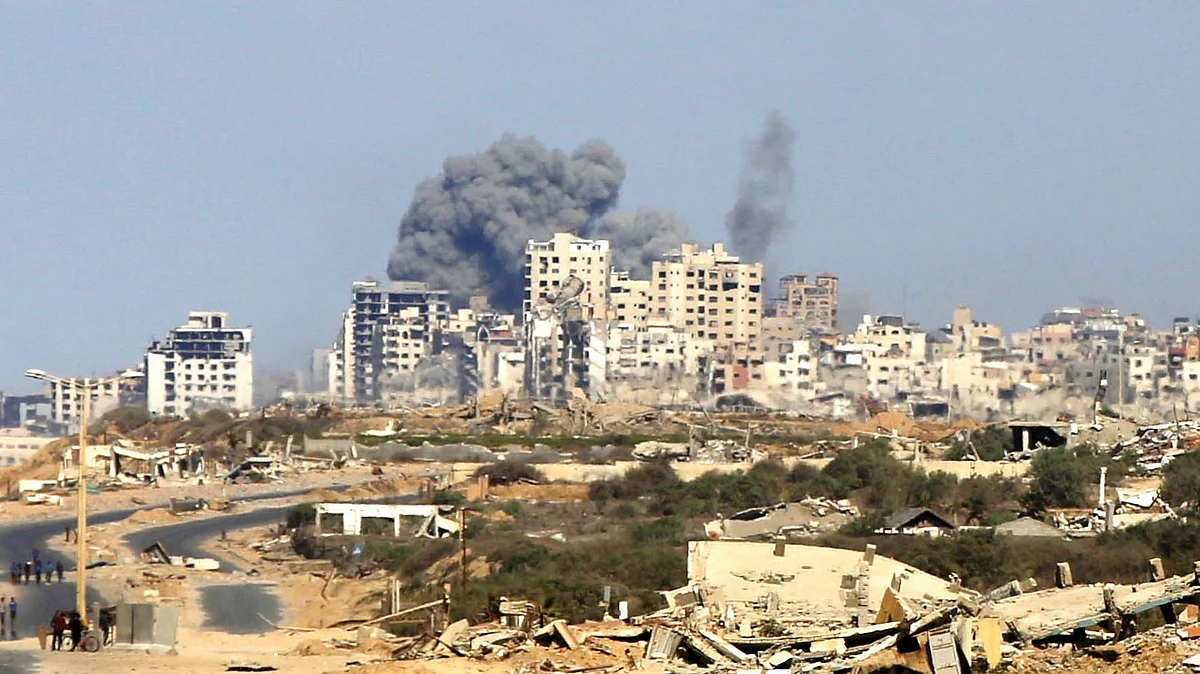
The stabilisation plan is emerging against the backdrop of catastrophic destruction in Gaza and a highly contested political landscape.
Israeli military operations, launched after the outbreak of the latest round of conflict with Hamas, have left large parts of the territory in ruins. Palestinian health authorities and humanitarian agencies report tens of thousands of Palestinians killed and injured, with many more displaced, amid widespread shortages of food, water, medical supplies, and shelter.
Some governments, human rights organisations, and legal experts have accused Israel of committing acts that may amount to genocide or other grave breaches of international law. Israel rejects those accusations, insisting its operations are aimed at dismantling armed groups and defending its security.
Palestinians and many of their supporters fear that, under the cover of security measures, Israel is carving out expanded “buffer zones” inside Gaza and tightening control over borders and aid flows. They worry that any new international force, if not clearly anchored in international law and Palestinian consent, could end up reinforcing a new status quo rather than restoring Palestinian rights and self‑determination.
Palestinian concerns and questions over legitimacy
Palestinian officials and civil society voices have expressed mixed reactions to the ISF proposal.
On one hand, there is recognition that Gaza’s shattered infrastructure and security vacuum may require some form of international presence to protect civilians, facilitate reconstruction, and deter further large‑scale violence. On the other hand, there are deep concerns about:
- Mandate and accountability: Whether the force will be clearly bound by international humanitarian and human rights law, and subject to independent oversight.
- Political framework: The fact that the initiative is being driven through a US‑led Board of Peace rather than the UN Security Council or a broadly agreed multilateral mechanism.
- Impact on occupation: Fears that the force could normalise or entrench Israeli control if it operates alongside, or in coordination with, Israeli security structures without a clear pathway to ending occupation and blockade.
Some Palestinian commentators argue that any international presence must be explicitly linked to a political process that addresses core issues—ending occupation, lifting the blockade, ensuring freedom of movement, and enabling Palestinian self‑governance—rather than focusing solely on “stability”.
Comparison with existing peacekeeping models
Analysts have noted that the proposed ISF differs in important ways from traditional UN peacekeeping missions:
- Mandate source: UN missions derive their authority from Security Council resolutions, whereas the ISF is being shaped through a US‑centric political initiative.
- Composition and perception: While UN missions typically draw from a wide range of contributing states under a multilateral umbrella, the ISF’s composition and leadership may be perceived as more closely aligned with US and certain regional interests.
- Rules of engagement: Details on the ISF’s rules of engagement, use of force, and coordination with local and regional actors have not yet been fully disclosed, leaving significant uncertainty.
Supporters of the plan argue that a more flexible, ad‑hoc coalition could deploy faster than a UN mission and might be better tailored to the specific conditions in Gaza. Critics counter that the lack of a UN mandate could undermine legitimacy and make it harder to ensure impartiality and accountability.
Next steps and unresolved questions
For now, the ISF remains a proposal rather than a deployed reality. Several key steps and questions lie ahead:
- Legal basis: Whether the force will seek some form of UN endorsement or operate solely based on bilateral and multilateral agreements.
- Engagement with Palestinians: How Palestinian authorities and representatives—both in Gaza and the wider Palestinian political spectrum—will be consulted and involved in shaping the mandate.
- Coordination with humanitarian actors: Ensuring that the presence of foreign troops does not impede, but rather facilitates, the work of UN agencies, NGOs, and local organizations.
- Exit strategy: Clarifying how long the force is expected to remain, and what benchmarks would determine its drawdown or transformation.
As diplomatic discussions continue, the people of Gaza remain caught between devastation on the ground and competing international visions for their future. Whether the proposed International Stabilization Force becomes a meaningful step towards security and reconstruction—or another layer in a complex and contested conflict landscape—will depend on decisions taken in the coming weeks and months, far from the ruined streets where its impact will ultimately be felt.
