

Table of Contents
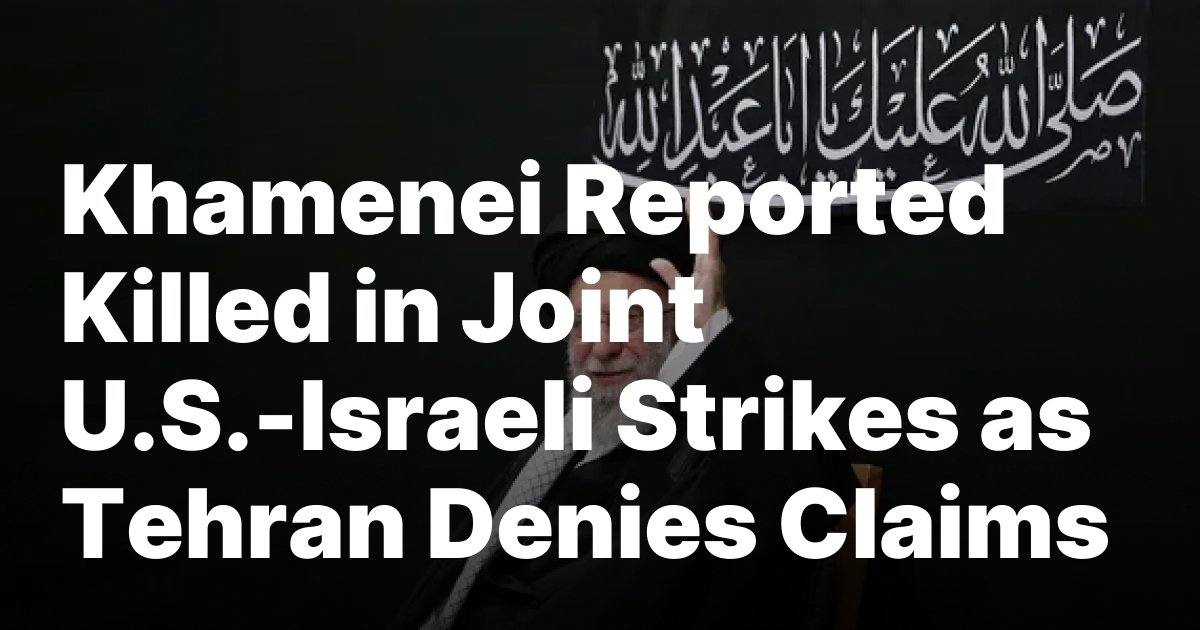
Iran’s Supreme Leader, Ayatollah Ali Khamenei, has reportedly been killed in a series of coordinated U.S.–Israeli airstrikes on Tehran, according to senior Israeli officials. The claims, which emerged early Saturday, have triggered a wave of uncertainty across the Middle East as Iranian authorities continue to deny his death and accuse foreign powers of conducting “mental warfare.”
Conflicting Accounts of Khamenei’s Fate
Israeli officials told Reuters that Khamenei, 86, was killed when strikes flattened his heavily fortified compound in central Tehran. Satellite imagery shows extensive destruction and black smoke rising from the site.
However, Iranian state media insists the Supreme Leader is “safe and sound,” while other Iranian officials claim he was moved to a secure location before the attack. Iran’s Foreign Minister Abbas Aragchi stated in an interview that Khamenei was alive “as far as I know,” though he provided no evidence.
The contradictory statements have fueled speculation, especially as Khamenei has not appeared publicly since the strikes began.

Scale and Impact of the Strikes
The joint U.S.–Israeli operation targeted Iran’s top leadership and military infrastructure. Israeli Prime Minister Benjamin Netanyahu said there were “growing signs” that Khamenei had been killed, adding that Israel had “destroyed the compound of the tyrant Khamenei.”
Key developments include:
- Flattening of Khamenei’s compound, with Israeli officials claiming his body has been recovered.
- Widespread casualties, with Iran’s Red Crescent reporting at least 201 deaths across the country.
- Strikes on civilian areas, including a girls’ school, where at least 85 people were killed.
- Destruction of senior leadership, including multiple IRGC commanders and political officials.
The U.S. confirmed its involvement, with President Donald Trump describing the operation as a necessary step to “end a security threat” and encourage Iranians to “take over your government.”
Iran’s Response and Regional Escalation
Iran retaliated with missile strikes targeting U.S. and Israeli military sites across the Middle East. Debris from one such attack reportedly caused a fire outside Dubai’s Fairmont The Palm hotel, though the cause has not been officially confirmed.
Tehran has closed its airspace, and security forces have blocked roads around government buildings. The Iranian Security Council has instructed residents to remain in protected areas.
Khamenei’s Legacy and the Uncertain Road Ahead
Ayatollah Khamenei, who assumed power in 1989, shaped Iran into a formidable regional force, expanding its influence through alliances with groups such as Hezbollah and Hamas. He oversaw decades of tension with the West, domestic crackdowns, and Iran’s controversial nuclear program.
U.S. intelligence assessments prior to the attack suggested that if Khamenei were killed, he would likely be replaced by hardline IRGC figures—an outcome that could further entrench Iran’s confrontational posture.
With no confirmed successor and conflicting reports about the Supreme Leader’s fate, Iran now stands at a pivotal moment. The coming days may determine whether the nation faces deeper instability, leadership consolidation, or a broader regional conflict.

