

Table of Contents
A Deep Strategic Assessment of Escalation, Energy Security, and the Risk of Regional War
✦ 𝑻𝒉𝒆 𝑺𝒕𝒓𝒂𝒊𝒕 𝒐𝒇 𝑯𝒐𝒓𝒎𝒖𝒛: 𝑻𝒉𝒆 𝑾𝒐𝒓𝒍𝒅’𝒔 𝑴𝒐𝒔𝒕 𝑪𝒓𝒊𝒕𝒊𝒄𝒂𝒍 𝑬𝒏𝒆𝒓𝒈𝒚 𝑪𝒉𝒐𝒌𝒆𝒑𝒐𝒊𝒏𝒕
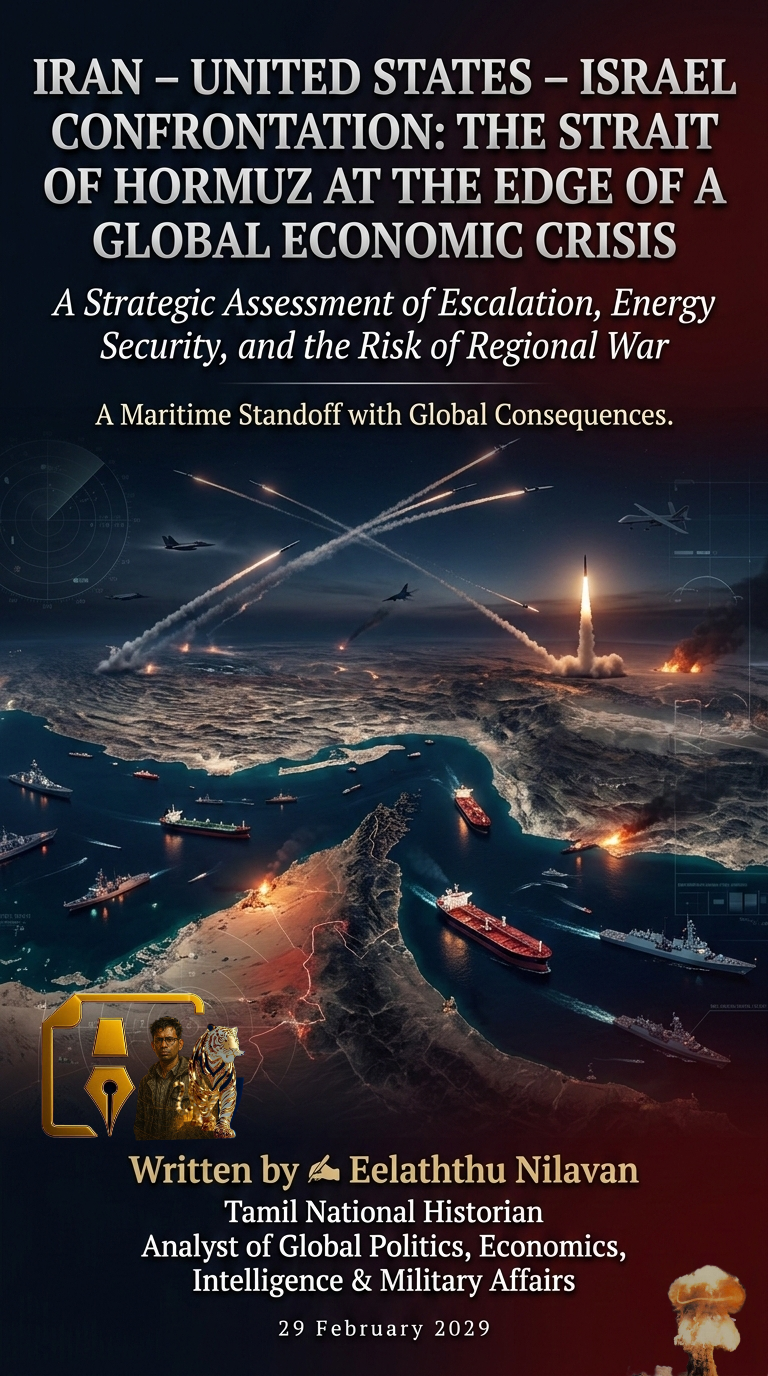
The narrow maritime corridor of the Strait of Hormuz has once again become the epicenter of global anxiety. With over 20% of the world’s oil consumption—roughly 20 million barrels per day—passing through this passage between Iran and Oman, any disruption threatens immediate shockwaves across global markets.
The Islamic Revolutionary Guard Corps (IRGC) has reportedly declared that no vessels may cross the strait, raising fears of a de facto blockade. This is not merely a regional maneuver—it is a potential economic weapon capable of:
• Sending oil prices into triple-digit territory

• Triggering LNG shortages, especially from Qatar
• Disrupting global supply chains from Asia to Europe
• Causing stock market volatility worldwide
Energy-import dependent economies in Europe and Asia would feel the shock within days.
✦ 𝑶𝒑𝒆𝒓𝒂𝒕𝒊𝒐𝒏 𝑬𝒑𝒊𝒄 𝑭𝒖𝒓𝒚: 𝑻𝒉𝒆 𝑺𝒕𝒓𝒊𝒌𝒆𝒔 𝑻𝒉𝒂𝒕 𝑰𝒈𝒏𝒊𝒕𝒆𝒅 𝒕𝒉𝒆 𝑪𝒓𝒊𝒔𝒊𝒔
The present escalation reportedly followed coordinated U.S.–Israeli strikes inside Iran, described as targeting ballistic missile infrastructure and senior military figures.
U.S. President Donald Trump announced joint combat operations, framing them as defensive actions aimed at neutralizing long-term threats.
Tehran responded with what it described as a calibrated but powerful retaliation:
• Missile strikes on U.S. bases in Qatar, Kuwait, UAE, Bahrain, Iraq, and Syria
• A large-scale drone offensive toward Israel
• Claims of targeting 14 U.S.-linked military facilities
Among the key installations named were:
• U.S. Fifth Fleet headquarters in Bahrain
• Al-Udeid Air Base in Qatar
• Al-Dhafra Air Base in the UAE
• Prince Sultan Air Base in Saudi Arabia
• Camp Arifjan in Kuwait
• Ain al-Assad base in Iraq
Iran’s Khatam al-Anbia Central Military Headquarters claimed the operation was executed with “utmost precision,” though independent verification of casualty figures remains unavailable.
✦ 𝑻𝒉𝒆 𝑰𝒓𝒂𝒏𝒊𝒂𝒏 𝑾𝒂𝒓𝒏𝒊𝒏𝒈: “𝑾𝒆𝒂𝒑𝒐𝒏𝒔 𝒀𝒐𝒖’𝒗𝒆 𝑵𝒆𝒗𝒆𝒓 𝑺𝒆𝒆𝒏 𝑩𝒆𝒇𝒐𝒓𝒆”
Senior Iranian officials have issued chilling warnings that only “lower-tier capabilities” have been deployed so far.
Advisers within the IRGC structure claim:
• Advanced undisclosed missile systems remain unused
• Future operations would be “more forceful and extensive”
• Gulf states facilitating U.S. operations could become “legitimate military targets”
Iranian Foreign Minister Abbas Araghchi signaled openness to de-escalation—but only if U.S. and Israeli strikes cease immediately. He also dismissed regime change narratives as unrealistic and destabilizing.
✦ 𝑻𝒉𝒆 𝑮𝒍𝒐𝒃𝒂𝒍 𝑹𝒆𝒂𝒄𝒕𝒊𝒐𝒏: 𝑫𝒊𝒗𝒊𝒅𝒆𝒅 𝑾𝒐𝒓𝒍𝒅, 𝑼𝒏𝒊𝒕𝒆𝒅 𝑭𝒆𝒂𝒓
The international response has been swift—and fractured.
The Secretary-General of the United Nations, António Guterres, warned that the escalation undermines international peace and security and violates obligations under the UN Charter.
European leaders, including:
• Ursula von der Leyen
• Emmanuel Macron
called for urgent restraint and diplomatic engagement.
Russia condemned the strikes as “unprovoked aggression,” while Canada and Australia supported efforts aimed at preventing Iranian nuclear capability.
The world now stands politically divided—but economically vulnerable.
✦ 𝑻𝒉𝒆 𝑬𝒏𝒆𝒓𝒈𝒚 𝑵𝒊𝒈𝒉𝒕𝒎𝒂𝒓𝒆 𝑺𝒄𝒆𝒏𝒂𝒓𝒊𝒐
If the Strait of Hormuz remains restricted for even two weeks:
• Oil prices could spike dramatically
• LNG supplies from Qatar would shrink
• Asian manufacturing supply chains would slow
• Inflationary pressures would surge globally
• Insurance premiums for Gulf shipping would skyrocket
Strategically, the U.S. Fifth Fleet—based in Bahrain—would face enormous pressure to guarantee freedom of navigation. Yet any direct naval clash risks open war.
✦ 𝑹𝒆𝒈𝒊𝒐𝒏𝒂𝒍 𝑨𝒄𝒕𝒐𝒓𝒔 𝒂𝒕 𝒂 𝑽𝒐𝒍𝒂𝒕𝒊𝒍𝒆 𝑪𝒓𝒐𝒔𝒔𝒓𝒐𝒂𝒅𝒔
Gulf monarchies now face a strategic dilemma:
• Maintain security partnerships with Washington
• Avoid provoking Tehran
• Prevent domestic economic destabilization
Meanwhile, Yemen’s Houthi movement has publicly aligned itself with Iran, signaling willingness to escalate maritime and missile pressure.
Jordan has reportedly intercepted missiles over its territory. UAE airspace closures signal real-time anxiety.
The regional theater is no longer a contained Israel–Iran exchange—it is a multi-front confrontation.
✦ 𝑻𝒉𝒆 𝑹𝒊𝒔𝒌 𝒐𝒇 𝑹𝒆𝒈𝒊𝒎𝒆 𝑪𝒉𝒂𝒏𝒈𝒆 𝒂𝒏𝒅 𝑺𝒕𝒂𝒕𝒆 𝑪𝒐𝒍𝒍𝒂𝒑𝒔𝒆
Analysts are now debating:
• Could sustained strikes weaken Iran’s command structure?
• Is regime destabilization an implicit objective?
• What happens if state institutions fracture?
There is no unified opposition force inside Iran capable of immediate nationwide governance. A destabilized Iran could create power vacuums exploited by extremist groups—repeating lessons from Iraq and Libya.
Israel’s priority appears strategic neutralization of Iranian military capability—regardless of internal chaos that might follow.
✦ 𝑻𝒉𝒆 𝑵𝒆𝒙𝒕 48 𝑯𝒐𝒖𝒓𝒔: 𝑾𝒉𝒂𝒕 𝑾𝒊𝒍𝒍 𝑫𝒆𝒕𝒆𝒓𝒎𝒊𝒏𝒆 𝑾𝒂𝒓 𝒐𝒓 𝑫𝒊𝒑𝒍𝒐𝒎𝒂𝒄𝒚?
Three factors will determine whether this becomes:
• A short, contained military exchange
• A prolonged regional war
• Or a global economic crisis
1. Naval posture in the Strait of Hormuz
2. Scale of Iranian missile deployment
3. Whether backchannel diplomacy resumes
The margin for miscalculation is razor-thin.
✦ 𝑪𝒐𝒏𝒄𝒍𝒖𝒔𝒊𝒐𝒏: 𝑨 𝑾𝒐𝒓𝒍𝒅 𝑶𝒏 𝑬𝒅𝒈𝒆
The crisis is no longer theoretical.
The combination of:
• Direct U.S.–Israel strikes inside Iran
• Iranian missile retaliation across Gulf states
• Threats to close the Strait of Hormuz
• Global diplomatic fractures
has created one of the most dangerous geopolitical moments of the decade.
If escalation continues unchecked, this confrontation could evolve from a regional standoff into a worldwide economic and military emergency.
The next moves—military or diplomatic—will define not only the Middle East, but the stability of the global order itself.

Written by Eelaththu Nilavan
Tamil National Historian | Analyst of Global Politics, Economics, Intelligence & Military Affairs
01/03/2029

