

Table of Contents
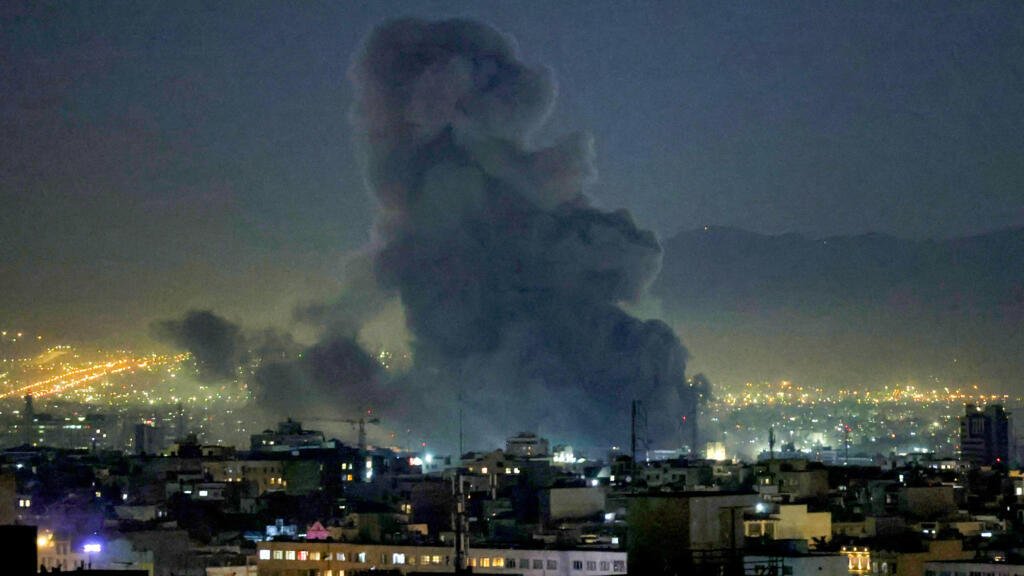
European equities opened the week under heavy pressure as escalating Middle East tensions reverberated across global financial markets. The downturn followed a dramatic series of U.S. and Israeli strikes on Iran over the weekend, prompting retaliatory attacks that led Gulf regulators to suspend trading across key exchanges.
European Indices Turn Deep Red
Markets across Europe fell sharply at Monday’s open, reflecting widespread investor anxiety over the widening conflict.
- The Euro Stoxx 50 dropped 2%, while the broader Stoxx 600 slid 1.8%.
- Major national indices followed suit: Germany’s DAX slipped around 1%, France’s CAC 40 fell more than 1.4%, and Italy’s FTSE MIB declined roughly 1.8%.
- The FTSE 100 in London proved slightly more resilient, edging down 0.3%.
- Spain’s IBEX 35 saw one of the steepest losses, falling more than 2%.
The sell-off extended beyond Europe. Japan’s Nikkei 225 plunged over 2.3%, while U.S. futures pointed to further weakness, with the E-mini S&P 500 down more than 1.6% and the E-mini NASDAQ off over 2%.
Gulf Exchanges Close to Stem Panic Selling
In an extraordinary move, authorities in the United Arab Emirates ordered the Abu Dhabi Securities Exchange and the Dubai Financial Market to close for two days. The decision came after the country was struck by 165 ballistic missiles, 541 drones, and 2 cruise missiles over 48 hours—an unprecedented escalation that raised fears of destabilization in one of the world’s most critical business hubs.

Kuwait also suspended trading until further notice, while other Gulf markets saw steep declines when open. The closures were aimed at preventing panic-driven sell-offs as the region grappled with the most severe disruption to business activity since the COVID‑19 pandemic.
Energy and Safe-Haven Assets Surge
While equities tumbled, commodities surged as investors sought safety and braced for potential supply shocks:
- U.S. crude oil initially spiked 8%, later trading nearly 6% higher at $71 per barrel.
- Brent crude climbed 6.2% to $77.38 per barrel.
- Precious metals rallied, with gold up 2.5%, silver rising 2%, and platinum gaining 1.2%.
The Strait of Hormuz—through which a significant share of the world’s oil supply passes—has seen shipping traffic disrupted, intensifying concerns about global energy security.
Broader Economic Ripples
The conflict has rattled global markets at a time when European equities had been enjoying a prolonged rally. Analysts warn that volatility may persist as long as military operations continue and geopolitical risks remain elevated.
In the Gulf, the economic fallout is expected to be uneven. While higher oil prices may bolster revenues for producers like Saudi Arabia and Qatar, sectors dependent on trade, logistics, and tourism—particularly in the UAE—face mounting pressure.

