

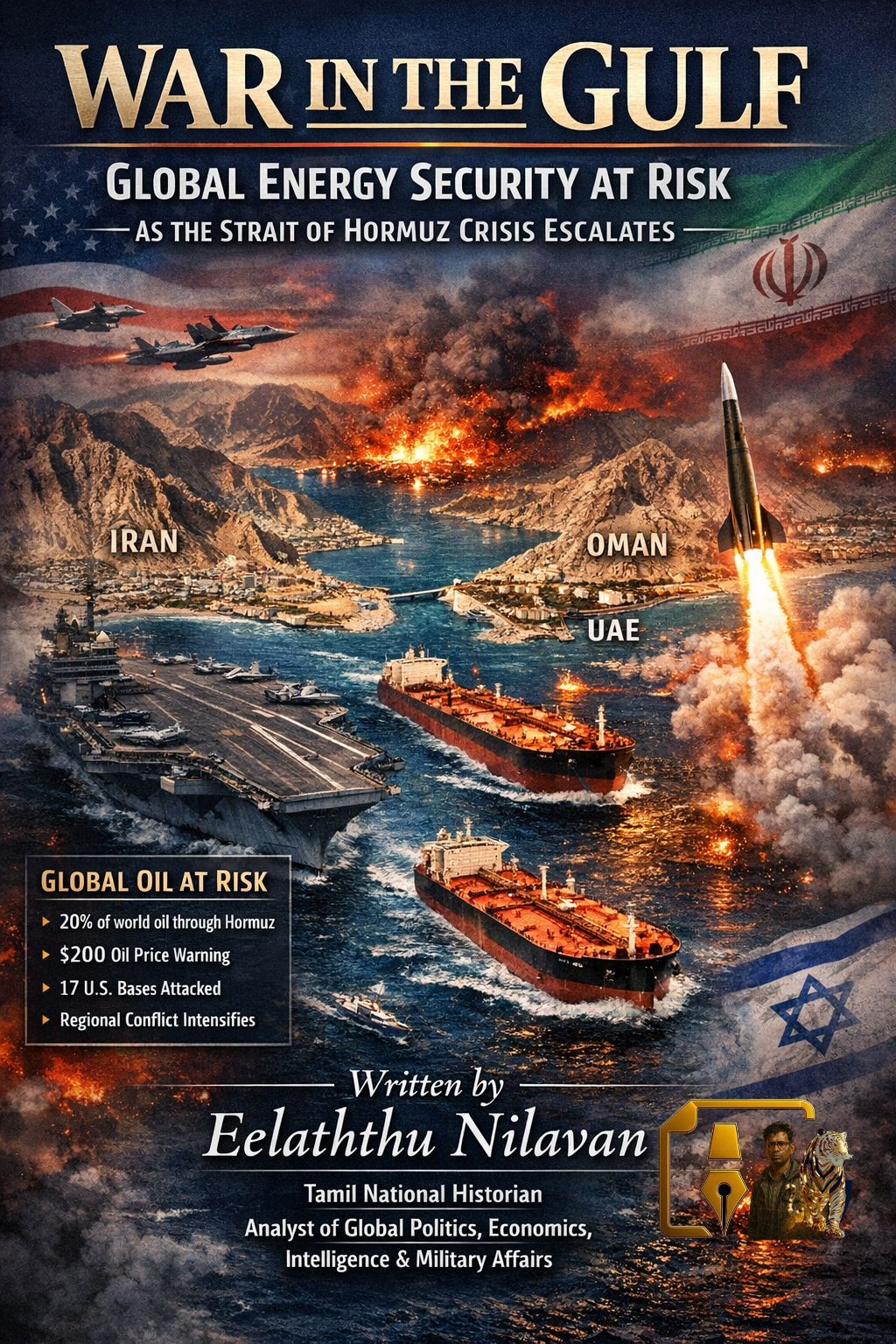
𝙂𝙇𝙊𝘽𝘼𝙇 𝙒𝘼𝙍 𝙎𝙃𝘼𝘿𝙊𝙒 𝙁𝘼𝙇𝙇𝙎 𝙊𝙉 𝙏𝙃𝙀 𝙎𝙏𝙍𝘼𝙄𝙏 𝙊𝙁 𝙃𝙊𝙍𝙈𝙐𝙕
The ongoing war between the United States, Iran, and Israel has entered a dangerous new phase, with the strategically vital Strait of Hormuz emerging as the central battleground of global energy security.
Iranian military leadership has issued a dramatic warning: not a single drop of oil destined for the United States or its allies will be allowed to pass through the Strait. The announcement from Iran’s Khatam al-Anbiya Central Headquarters signals a potential disruption to one of the world’s most important maritime energy routes.
Approximately 20% of global oil shipments pass through this narrow corridor linking the Persian Gulf to the Gulf of Oman. Any disruption here could trigger one of the largest economic shocks in modern history.
𝙄𝙍𝘼𝙉’𝙎 𝙍𝙀𝘿 𝙇𝙄𝙉𝙀: “𝙉𝙊𝙏 𝘼 𝘿𝙍𝙊𝙋 𝙊𝙁 𝙊𝙄𝙇”
Iranian military spokesperson Ebrahim Zolfaghari delivered a stark message to global shipping companies and governments.
He warned that:
• Any vessel transporting oil linked to the United States, Israel, or allied nations could be classified as a legitimate military target.
• Iranian forces claim they now hold “full initiative” within the Strait.
• The country is prepared to impose a total energy blockade if hostilities continue.
Tehran’s strategic doctrine increasingly emphasizes economic warfare, aiming to make continued military confrontation prohibitively costly for Western powers.
𝙈𝘼𝙍𝙄𝙏𝙄𝙈𝙀 𝘼𝙏𝙏𝘼𝘾𝙆: 𝙁𝙄𝙍𝙀 𝙄𝙉 𝙏𝙃𝙀 𝙎𝙏𝙍𝘼𝙄𝙏
The warning was quickly followed by a dramatic incident.
A Thai-registered bulk carrier, Mayori Nari, was struck by a projectile while sailing through the Strait toward India.
The attack resulted in:
• A massive onboard fire
• 20 crew members abandoning ship
• Three sailors reported missing
Although responsibility has not been officially confirmed, the incident highlights the extreme vulnerability of global shipping lanes in the region.
Maritime security authorities such as United Kingdom Maritime Trade Operations have warned all vessels operating in the region to maintain maximum alert status.
𝙏𝙃𝙀 “$200 𝙊𝙄𝙇 𝘽𝙊𝙈𝘽”
Iran has also issued a severe economic warning.
Officials claim that expanding the conflict across the Gulf could push oil prices to $200 per barrel, a scenario that would:
• Trigger global inflation
• Disrupt energy markets
• Push several developing economies into economic crisis
The global oil market is extremely sensitive to disruptions in Hormuz because the corridor carries exports from major producers including:
• Saudi Arabia
• United Arab Emirates
• Kuwait
• Qatar
Even a temporary closure could cause energy shockwaves across Europe, Asia, and North America.
𝙄𝙍𝘼𝙉’𝙎 𝙍𝙀𝙏𝘼𝙇𝙄𝘼𝙏𝙄𝙊𝙉: 𝙎𝙏𝙍𝙄𝙆𝙀𝙎 𝙊𝙉 𝙐.𝙎. 𝘽𝘼𝙎𝙀𝙎
Iran’s retaliation has already targeted American military infrastructure across the Middle East.
According to battlefield assessments:
• At least 17 U.S. military sites have been struck.
• Major bases attacked include:
• Al Udeid Air Base
• Prince Sultan Air Base
• Ali Al‑Salem Air Base
• Camp Buehring
Some attacks reportedly damaged advanced defense systems such as THAAD missile defense system, a key component of American ballistic missile defense.
Casualties have also been reported among U.S. forces stationed across the Gulf.
𝙈𝙄𝙎𝙎𝙄𝙇𝙀 𝙒𝘼𝙍: 𝙄𝙍𝘼𝙉 𝙎𝙏𝙍𝙄𝙆𝙀𝙎 𝙄𝙎𝙍𝘼𝙀𝙇
The conflict has simultaneously intensified between Iran and Israel.
Iran’s Islamic Revolutionary Guard Corps reportedly launched large waves of ballistic missiles toward Israeli targets, including Tel Aviv, Haifa, and military facilities near Jerusalem.
Reports claim the strikes included the use of Khorramshahr missile systems capable of carrying extremely heavy warheads.
At the same time, Hezbollah launched large rocket barrages from Lebanon, forcing Israel to respond with widespread air strikes.
𝙏𝙃𝙀 𝙐.𝙉. 𝘿𝙄𝙋𝙇𝙊𝙈𝘼𝙏𝙄𝘾 𝘾𝙍𝙄𝙎𝙄𝙎
At the United Nations Security Council, diplomatic divisions have become increasingly visible.
Russia’s ambassador Vassily Nebenzia criticized the Council’s draft resolution, arguing it ignored the root cause of the crisis — the initial military strikes against Iran.
Russia proposed an alternative resolution calling for:
• An immediate ceasefire
• Protection of civilians
• Regional security guarantees
• A return to negotiations
However, the proposal failed to gain sufficient support.
Meanwhile, Gulf states including Bahrain, Qatar, United Arab Emirates, Kuwait, and Saudi Arabia accused Iran of launching drone and missile strikes against civilian infrastructure.
𝙏𝙃𝙀 𝘾𝙊𝙎𝙏 𝙊𝙁 𝙒𝘼𝙍: 𝘼𝙈𝙀𝙍𝙄𝘾𝘼’𝙎 𝘽𝙄𝙇𝙇𝙄𝙊𝙉-𝘿𝙊𝙇𝙇𝘼𝙍 𝘾𝘼𝙈𝙋𝘼𝙄𝙂𝙉
The war has already consumed enormous financial resources.
The U.S. military campaign — referred to by Donald Trump as “Operation Epic Fury” — has reportedly cost:
• $11.3 billion in just six days
• $5.6 billion in munitions during the first two days alone
The administration may soon request $50 billion in additional funding from Congress.
Critics in Washington warn that the conflict risks becoming another prolonged Middle Eastern war with unpredictable consequences.
𝙄𝙍𝘼𝙉’𝙎 𝙏𝙃𝙍𝙀𝙀 𝘾𝙊𝙉𝘿𝙄𝙏𝙄𝙊𝙉𝙎 𝙁𝙊𝙍 𝙋𝙀𝘼𝘾𝙀
Iranian President Masoud Pezeshkian has outlined three conditions for ending the war:
• Recognition of Iran’s legitimate national rights
• Reparations for damage caused during the conflict
• International guarantees preventing future attacks
Diplomatic mediation efforts involving Vladimir Putin are reportedly underway.
𝙂𝙇𝙊𝘽𝘼𝙇 𝙄𝙈𝙋𝙇𝙄𝘾𝘼𝙏𝙄𝙊𝙉𝙎: 𝘼 𝙒𝙊𝙍𝙇𝘿 𝙊𝙉 𝙀𝘿𝙂𝙀
The conflict now threatens to transform into one of the largest geopolitical crises of the 21st century.
Three major risks loom:
Energy Collapse
Closure of the Strait of Hormuz could paralyze global oil markets.
Regional War Expansion
Multiple countries across West Asia are already involved directly or indirectly.
Great Power Confrontation
Rising tensions between Western powers and Russia could complicate diplomatic solutions.
𝘾𝙊𝙉𝘾𝙇𝙐𝙎𝙄𝙊𝙉: 𝙏𝙃𝙀 𝙒𝙊𝙍𝙇𝘿’𝙎 𝙈𝙊𝙎𝙏 𝘿𝘼𝙉𝙂𝙀𝙍𝙊𝙐𝙎 𝙎𝙀𝘼 𝙇𝘼𝙉𝙀
The Strait of Hormuz has historically been one of the most sensitive strategic chokepoints in global geopolitics. Today it stands at the center of a confrontation involving nuclear-capable states, global energy markets, and fragile regional alliances.
If the current trajectory continues, the crisis could evolve into a defining geopolitical turning point, reshaping the balance of power across the Middle East and beyond.
The coming weeks may determine whether the world moves toward diplomacy — or a far wider war.

Written by Eelaththu Nilavan
Tamil National Historian | Analyst of Global Politics, Economics, Intelligence & Military Affairs
12/03/2026
