

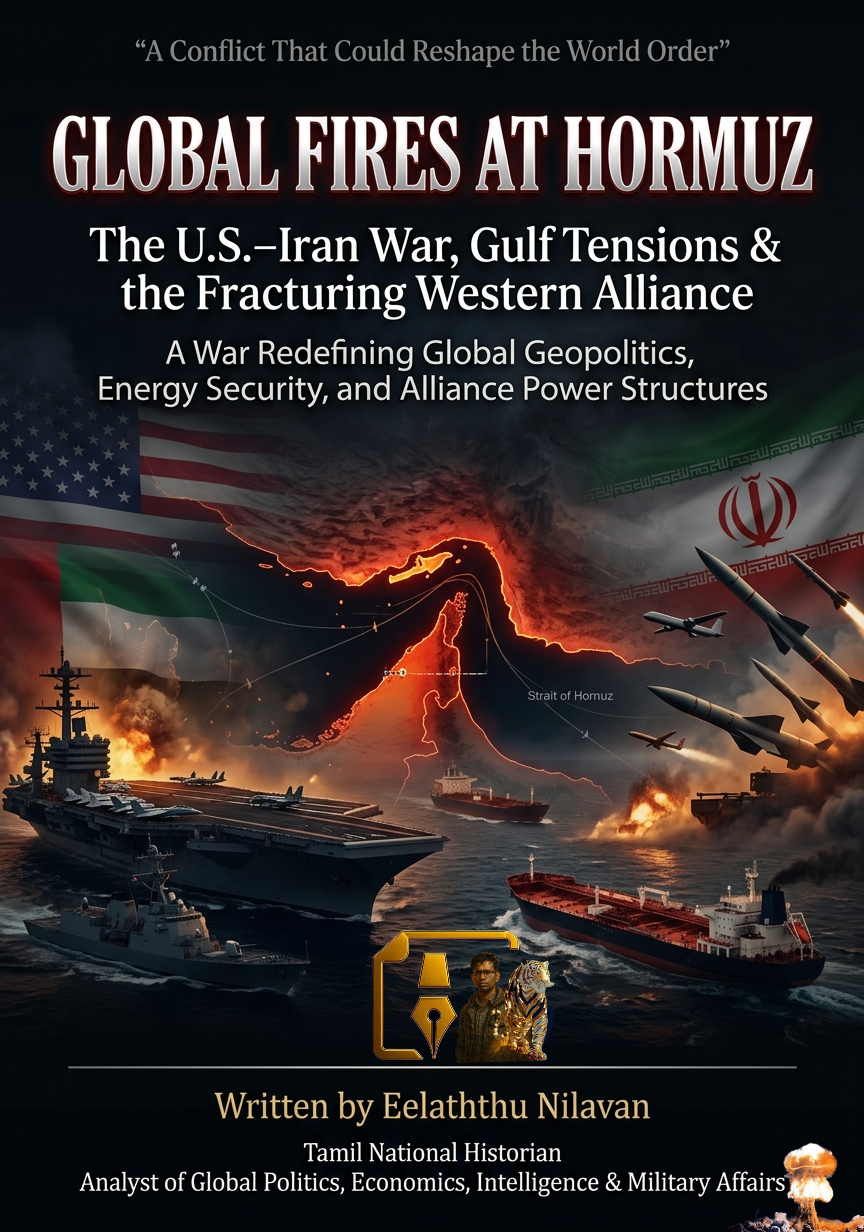
𝑨 𝑾𝑨𝑹 𝑻𝑯𝑨𝑻 𝑹𝑬𝑫𝑬𝑭𝑰𝑵𝑬𝑺 𝑮𝑬𝑶𝑷𝑶𝑳𝑰𝑻𝑰𝑪𝑺
The ongoing confrontation between the United States under Donald Trump and the Islamic Republic of Iran has evolved into one of the most dangerous geopolitical crises of the 21st century. What began as a targeted military campaign has now spiraled into a multi-front conflict involving Gulf states, Israel, and indirect global actors such as Russia and China.
At the heart of this crisis lies the Strait of Hormuz—a narrow maritime corridor through which nearly 20% of the world’s oil supply flows. Its disruption has transformed a regional war into a global economic emergency.
𝑮𝑼𝑳𝑭 𝑺𝑻𝑨𝑻𝑬𝑺: 𝑭𝑹𝑶𝑴 𝑪𝑨𝑼𝑻𝑰𝑶𝑵 𝑻𝑶 𝑪𝑶𝑵𝑭𝑹𝑶𝑵𝑻𝑨𝑻𝑰𝑶𝑵
Traditionally cautious in confronting Iran, Gulf Arab states have undergone a dramatic strategic shift. Countries such as Saudi Arabia, the United Arab Emirates, Qatar, Bahrain, and Kuwait are now urging Washington to decisively degrade Iran’s military power.
This change is driven by direct Iranian strikes on critical infrastructure—airports, ports, and energy facilities—raising existential fears about regime survival, economic collapse, and long-term regional security.
Yet, paradoxically, these same states remain reluctant to join the war directly. Their dilemma is clear:
• They want Iran neutralized
• But fear of becoming the battlefield
• And distrust whether the U.S. will stay committed long-term
This “strategic dependency without participation” defines the Gulf’s current posture.
𝑻𝑯𝑬 𝑺𝑻𝑹𝑨𝑰𝑻 𝑶𝑭 𝑯𝑶𝑹𝑴𝑼𝒁: 𝑻𝑯𝑬 𝑾𝑶𝑹𝑳𝑫’𝑺 𝑬𝑵𝑬𝑹𝑮𝒀 𝑵𝑬𝑹𝑽𝑬
The crisis has elevated the Strait of Hormuz from a strategic concern to a global pressure point. Iranian actions—ranging from naval threats to missile strikes—have effectively constrained oil flows.
Consequences include:
• Oil prices surging beyond $100 per barrel
• Severe volatility in global markets
• Increased insurance and shipping risks
• Energy insecurity in Europe and Asia
Despite claims by Donald Trump that the U.S. is energy independent, the globalized nature of oil markets ensures that no country remains insulated from Hormuz disruptions.
𝑰𝑵𝑻𝑬𝑳𝑳𝑰𝑮𝑬𝑵𝑪𝑬 𝑭𝑨𝑰𝑳𝑼𝑹𝑬 𝑶𝑹 𝑺𝑻𝑹𝑨𝑻𝑬𝑮𝑰𝑪 𝑴𝑰𝑺𝑪𝑨𝑳𝑪𝑼𝑳𝑨𝑻𝑰𝑶𝑵?
Pre-war intelligence assessments warned that military strikes would not collapse Iran’s political system. Instead, they predicted the strengthening of the Islamic Revolutionary Guard Corps (IRGC).
Two weeks into the war, this prediction appears accurate:
• Iran’s regime remains intact
• The IRGC has consolidated power
• Hardline elements dominate decision-making
Rather than weakening Tehran, the war has reinforced its internal unity and resistance narrative.
𝑻𝑯𝑬 𝑾𝑰𝑫𝑬𝑵𝑰𝑵𝑮 𝑾𝑨𝑹: 𝑭𝑹𝑶𝑴 𝑻𝑬𝑯𝑹𝑨𝑵 𝑻𝑶 𝑻𝑯𝑬 𝑮𝑼𝑳𝑭
Iran’s retaliation has expanded the battlefield far beyond its borders. Missile and drone strikes have targeted:
• Energy facilities in the Gulf
• U.S. military installations
• Strategic maritime assets
• Diplomatic zones such as Baghdad
Additionally, Iran has issued threats against major U.S. naval platforms, including the USS Gerald R. Ford, signaling a willingness to escalate into direct naval confrontation.
Casualty figures underline the intensity:
• 200 U.S. troops wounded
• 13 confirmed killed
• Thousands of targets struck across both sides
𝑵𝑨𝑻𝑶 𝑭𝑹𝑨𝑪𝑻𝑼𝑹𝑬: 𝑻𝑯𝑬 𝑾𝑬𝑺𝑻 𝑵𝑶 𝑳𝑶𝑵𝑮𝑬𝑹 𝑼𝑵𝑰𝑻𝑬𝑫
A defining feature of this crisis is the growing divide between the United States and its European allies.
Key NATO members such as Germany, France, the United Kingdom, Spain, and Italy have refused to participate in military operations in Hormuz.
Leaders like Emmanuel Macron and Keir Starmer emphasize:
• De-escalation over confrontation
• Diplomatic solutions over military escalation
• Avoidance of “open-ended war.”
This has triggered sharp criticism from Donald Trump, exposing a deep transatlantic rift that could reshape NATO’s future.
𝑹𝑼𝑺𝑺𝑰𝑨–𝑪𝑯𝑰𝑵𝑨 𝑭𝑨𝑪𝑻𝑶𝑹: 𝑻𝑯𝑬 𝑺𝑯𝑨𝑫𝑶𝑾 𝑨𝑳𝑳𝑰𝑨𝑵𝑪𝑬
Iran is not isolated. It operates within an emerging geopolitical axis involving Russia and China.
Potential support includes:
• Russian intelligence and battlefield tactics
• Chinese economic backing and diplomatic shielding
• Shared anti-Western strategic objectives
This alignment transforms the conflict from a regional war into a potential global confrontation.
𝑰𝑺𝑹𝑨𝑬𝑳’𝑺 𝑯𝑰𝑮𝑯-𝑽𝑨𝑳𝑼𝑬 𝑺𝑻𝑹𝑰𝑲𝑬𝑺
Israeli operations have escalated dramatically, targeting high-level Iranian figures, including:
• Gholamreza Soleimani (confirmed killed)
• Ali Larijani (status uncertain)
Such strikes signal a shift toward decapitation strategies—targeting political leadership rather than just military infrastructure—raising the risk of uncontrolled escalation.
𝑬𝑪𝑶𝑵𝑶𝑴𝑰𝑪 𝑨𝑵𝑫 𝑫𝑶𝑴𝑬𝑺𝑻𝑰𝑪 𝑩𝑳𝑶𝑾𝑩𝑨𝑪𝑲
The war is not only reshaping geopolitics but also domestic politics within the United States.
Hakeem Jeffries has criticized the conflict as a “reckless war of choice,” arguing that:
• Billions are being diverted from domestic needs
• Healthcare and economic pressures are worsening
• The war lacks a clear exit strategy
Meanwhile, global economic consequences include:
• Rising inflation due to energy costs
• Market instability
• Increased defense spending worldwide
𝑻𝑯𝑬 𝑭𝑼𝑻𝑼𝑹𝑬: 𝑨 𝑾𝑨𝑹 𝑾𝑰𝑻𝑯𝑶𝑼𝑻 𝑨 𝑪𝑳𝑬𝑨𝑹 𝑬𝑵𝑫
The current trajectory suggests a prolonged and complex conflict with no immediate resolution.
Key risks ahead include:
• Full-scale regional war across the Middle East
• Direct confrontation between major powers
• Long-term disruption of global energy systems
• Collapse of traditional alliance structures
The central paradox remains:
Efforts to weaken Iran may have instead strengthened it.
𝑪𝑶𝑵𝑪𝑳𝑼𝑺𝑰𝑶𝑵: 𝑨 𝑫𝑨𝑵𝑮𝑬𝑹𝑶𝑼𝑺 𝑩𝑨𝑳𝑨𝑵𝑪𝑬
The U.S.–Iran war has exposed deep contradictions in global strategy:
• Gulf states demand action but avoid participation
• Europe seeks peace while the U.S. escalates
• Iran grows stronger under pressure
• Global powers quietly reposition
As the Strait of Hormuz remains contested, the world stands at a critical juncture—where miscalculation could trigger a conflict far beyond the Middle East.

Written by Eelaththu Nilavan
Tamil National Historian | Analyst of Global Politics, Economics, Intelligence & Military Affairs
18/03/2026
The views expressed in this article are the author’s own and do not necessarily reflect Amizhthu’s editorial stance.
