

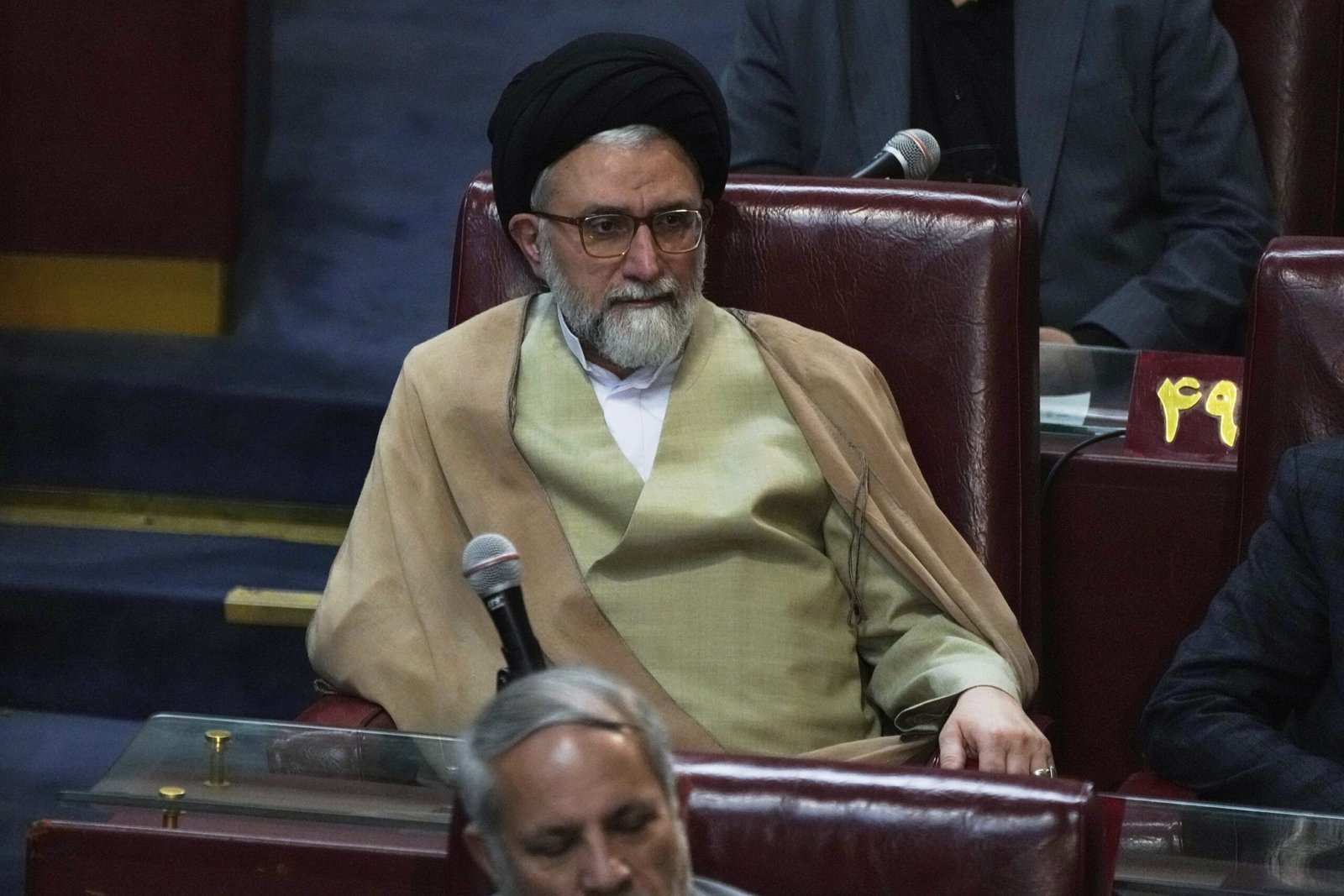
JERUSALEM, Israel — March 18, 2026 — Israel’s government says its forces have killed Esmail Khatib, Iran’s intelligence minister, in an overnight strike—marking what Israeli officials describe as the third targeted killing of a senior Iranian figure in just two days.
Israeli Defence Minister Israel Katz announced the claim early Wednesday, saying the operation was part of a broader campaign aimed at disrupting Iran’s security leadership. Katz added that the military had been granted advance authorisation to strike additional senior Iranian officials without seeking further political approval.
Iran has not yet issued a formal confirmation or denial regarding Khatib’s reported death. State media in Tehran has acknowledged the deaths of other senior officials in recent days, including Ali Larijani, a top security figure, and Gholamreza Soleimani, commander of the Basij paramilitary force. Both were killed in earlier Israeli strikes, according to Iranian outlets.
Intensifying Cross‑Border Attacks
The latest strike comes amid a rapid escalation of hostilities between Israel and Iran, with both sides exchanging missile and drone attacks across multiple fronts. Israeli analysts quoted in regional media say the killing of Khatib—if confirmed—would represent a significant blow to Iran’s intelligence apparatus, describing him as closely aligned with Iran’s new supreme leader.
Iran, for its part, has launched retaliatory attacks on Israeli territory following the earlier assassinations of Larijani and Soleimani. At least two people were reported killed in Israel during recent Iranian strikes, according to Israeli authorities.
Regional Fallout and Wider Security Concerns
The violence has spilled beyond Israel and Iran, with attacks reported near the U.S. embassy in Baghdad and multiple Gulf states intercepting drones and missiles believed to be linked to the conflict. Bahrain, Kuwait, Qatar, Saudi Arabia, and the United Arab Emirates all reported defensive actions in the past 24 hours.
Diplomats across the region have warned that the rapid succession of assassinations and retaliatory strikes risks drawing neighboring countries deeper into the conflict. An adviser to the UAE’s president recently suggested that Abu Dhabi may consider joining a U.S.-led coalition to secure maritime routes in the Strait of Hormuz, a critical global shipping corridor.
No Safe Haven, Israeli Officials Say
An Israeli military intelligence official, speaking anonymously due to the sensitivity of the operations, said recent strikes were intended to send a message that “Iranian leaders have no safe place.” The official claimed that Soleimani, the Basij commander, was killed while hiding in a tent in a wooded area—an account that has not been independently verified.
Iran Signals Defiance
Iranian Foreign Minister Abbas Araghchi said earlier this week that the country’s political system remains stable despite the assassinations, insisting that the deaths of senior officials would not weaken Iran’s resolve. Iranian leaders held public funeral ceremonies for Larijani and other military figures, vowing that their deaths would strengthen the nation’s armed forces.
Outlook
With both Israel and Iran signalling readiness for further action, regional observers warn that the conflict may continue to widen. Israel’s defence minister has publicly stated that “more surprises” should be expected as the country wages simultaneous campaigns against Iran and Hezbollah.
Neither Israel nor Iran has indicated any immediate interest in de‑escalation, leaving the region bracing for further instability in the days ahead.
