
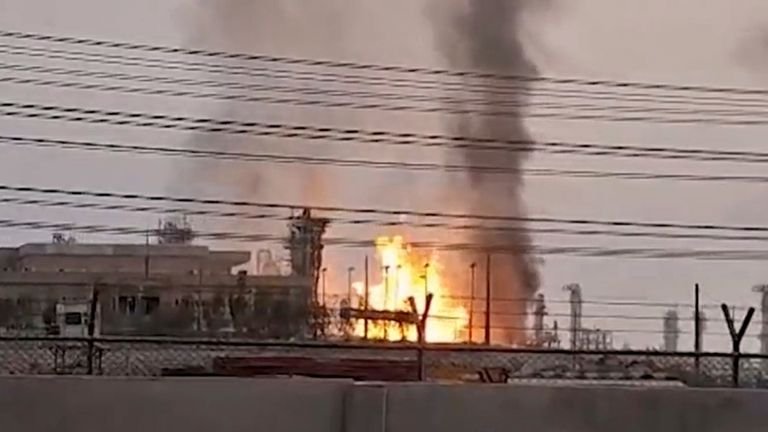
DOHA, Qatar — 18 March 2026 — Oil prices climbed sharply on Wednesday after Iranian officials accused Israel of striking a section of the South Pars gasfield, one of the world’s largest natural gas hubs. The incident has intensified concerns that escalating tensions in the Middle East could disrupt energy supplies and fuel a new round of global inflation.
Iran’s Ministry of Petroleum said the strike caused a temporary shutdown of several processing units at the offshore complex, though full details of the damage remain unclear. Local authorities reported no immediate casualties. Israel has not publicly commented on the allegation, consistent with its long‑standing policy of strategic ambiguity regarding regional military operations.
Energy analysts said the market reaction was swift. Brent crude rose more than 4% in early trading, while natural gas futures in Europe and Asia also jumped. Traders cited fears that any prolonged disruption at South Pars — a field jointly shared by Iran and Qatar — could tighten global supply at a time when inventories are already strained.
“This is a critical facility for regional and global energy flows,” said Lina Haddad, a Middle East energy researcher at the London‑based Institute for Strategic Resources. “Even a short‑term outage can rattle markets, but the bigger concern is the possibility of retaliatory actions that widen the conflict.”
The strike comes amid months of heightened tensions between Israel and Iran, with both countries accusing each other of covert attacks and cyber operations. Western diplomats have warned that any direct confrontation risks destabilizing shipping routes in the Gulf, through which a significant share of the world’s oil supply passes.
Economists worry that a sustained period of elevated oil and gas prices could complicate efforts by central banks to keep inflation under control. Several major economies have only recently begun to see price pressures ease after years of volatility linked to the pandemic and geopolitical shocks.
“Energy costs feed into everything — transport, manufacturing, food production,” said Mark Ellison, a senior economist at the Global Policy Forum. “If prices remain high for several weeks, we could see renewed inflationary pressure just as policymakers were hoping for stability.”
Qatar, which operates the adjoining North Field and is a key global exporter of liquefied natural gas, said its facilities were unaffected. However, officials expressed concern about the potential for regional spillover and called for “maximum restraint” from all parties.
The United Nations urged de‑escalation, warning that further military actions could endanger civilian infrastructure and disrupt essential energy supplies. Several European governments echoed the call, emphasizing the need to protect global energy stability.
As of late Wednesday, Iranian engineers were assessing the extent of the damage at South Pars. The government said production would resume “as soon as safely possible,” though it did not provide a timeline.
Global markets are expected to remain volatile in the coming days as investors watch for signs of further escalation or diplomatic intervention.
