

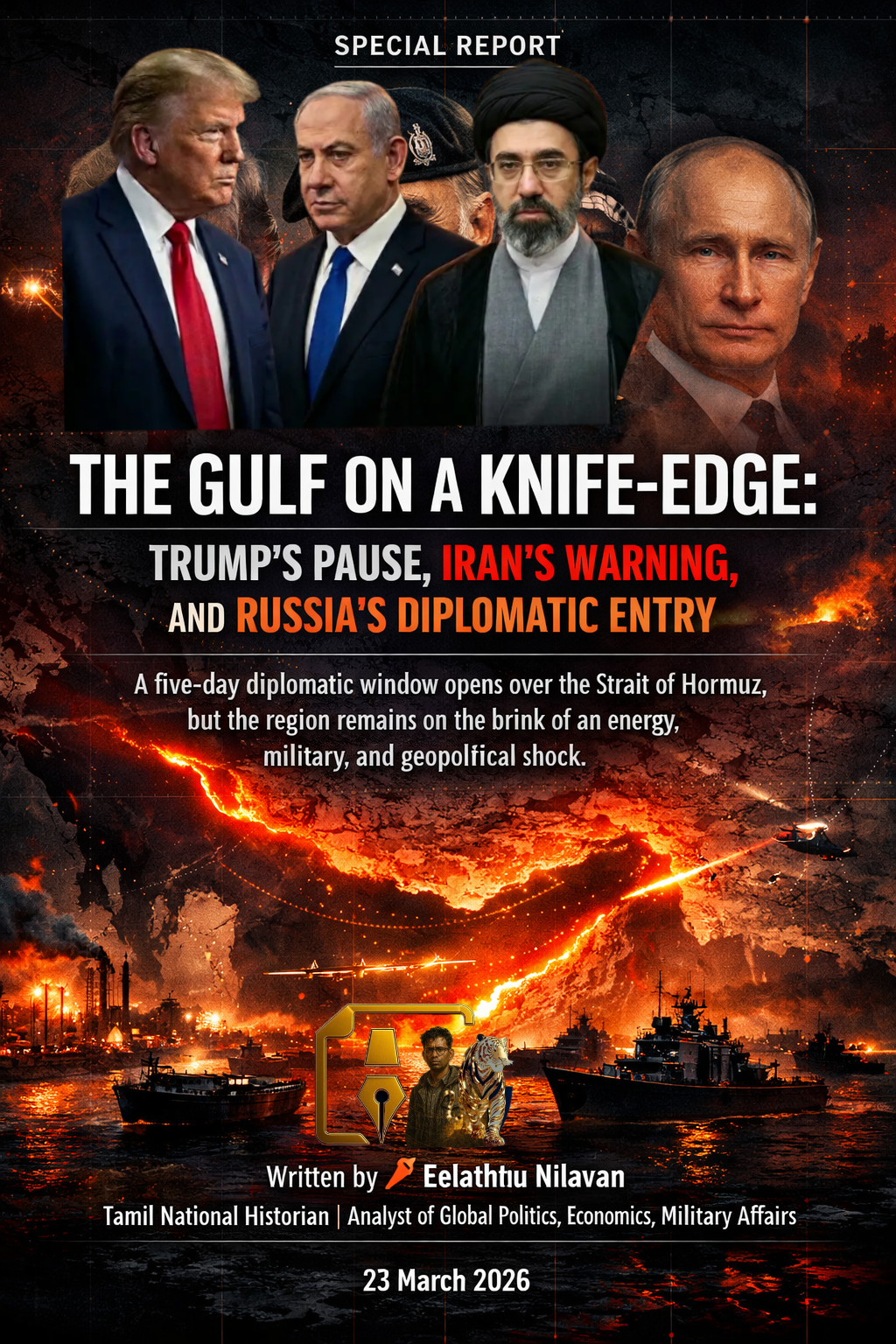
𝑨 𝒇𝒊𝒗𝒆-𝒅𝒂𝒚 𝒅𝒊𝒑𝒍𝒐𝒎𝒂𝒕𝒊𝒄 𝒘𝒊𝒏𝒅𝒐𝒘 𝒐𝒑𝒆𝒏𝒔 𝒐𝒗𝒆𝒓 𝑯𝒐𝒓𝒎𝒖𝒛, 𝒃𝒖𝒕 𝒕𝒉𝒆 𝒓𝒆𝒈𝒊𝒐𝒏 𝒓𝒆𝒎𝒂𝒊𝒏𝒔 𝒐𝒏 𝒕𝒉𝒆 𝒃𝒓𝒊𝒏𝒌 𝒐𝒇 𝒂𝒏 𝒆𝒏𝒆𝒓𝒈𝒚, 𝒎𝒊𝒍𝒊𝒕𝒂𝒓𝒚, 𝒂𝒏𝒅 𝒈𝒆𝒐𝒑𝒐𝒍𝒊𝒕𝒊𝒄 𝒔𝒉𝒐𝒄𝒌
𝑨 𝑭𝒓𝒂𝒈𝒊𝒍𝒆 𝑷𝒂𝒖𝒔𝒆, 𝑵𝒐𝒕 𝑷𝒆𝒂𝒄𝒆
A dangerous diplomatic-military showdown is now unfolding across the Gulf, centered on Iran, the United States, Russia, and the strategic Strait of Hormuz. On March 23, U.S. President Donald Trump announced a five-day postponement of planned strikes on Iranian power plants and energy infrastructure, saying Washington had held “very good and productive” conversations aimed at resolving hostilities. Markets immediately reacted with relief, oil prices fell, and the sense of imminent escalation briefly eased. But the reality is harsher: this is not a peace breakthrough. It is a temporary suspension inside an active crisis.
The pause came after Trump had earlier threatened to attack Iran’s power network unless Tehran reopened the Strait of Hormuz within 48 hours. Iran responded with a doctrine of direct retaliation, warning that if its electricity infrastructure were hit, it would answer by striking Israeli power facilities and regional energy sites that supply U.S. bases. That exchange alone shows how close the region has moved to an infrastructure war, where civilian electricity, ports, and shipping lanes become instruments of coercion.
𝑹𝒖𝒔𝒔𝒊𝒂 𝑺𝒕𝒆𝒑𝒔 𝑰𝒏: 𝑫𝒊𝒑𝒍𝒐𝒎𝒂𝒄𝒚, 𝑫𝒆𝒕𝒆𝒓𝒓𝒆𝒏𝒄𝒆, 𝒂𝒏𝒅 𝑺𝒕𝒓𝒂𝒕𝒆𝒈𝒊𝒄 𝑺𝒊𝒈𝒏𝒂𝒍𝒍𝒊𝒏𝒈
Iran’s outreach to Russia is one of the most important developments in this phase of the crisis. Moscow has positioned itself as both a diplomatic shield and a strategic backer of Tehran’s core interests. Russia’s public line is carefully framed: the Kremlin is calling for a political-diplomatic settlement while warning that attacks on sensitive Iranian sites, especially nuclear-related facilities, could produce “irreparable consequences.” That language is not casual. It is meant to deter further escalation, raise the cost of any U.S. or Israeli strike expansion, and underline that Russia intends to remain a major power broker in the Middle East.
This matters because Russia is not entering as a neutral peace broker in the abstract. Its position gives Iran leverage. Even if Moscow does not directly intervene militarily, diplomatic backing from Russia strengthens Tehran’s negotiating hand and complicates Washington’s calculations. In practical terms, that means Iran can approach any talks with the United States while signaling that it is not isolated, not strategically cornered, and still capable of widening the geopolitical cost of war.
𝑻𝒉𝒆 𝑺𝒕𝒓𝒂𝒊𝒕 𝒐𝒇 𝑯𝒐𝒓𝒎𝒖𝒛: 𝑻𝒉𝒆 𝑪𝒉𝒐𝒌𝒆 𝑷𝒐𝒊𝒏𝒕 𝑻𝒉𝒂𝒕 𝑪𝒐𝒖𝒍𝒅 𝑺𝒉𝒂𝒌𝒆 𝒕𝒉𝒆 𝑾𝒐𝒓𝒍𝒅
The center of gravity in this confrontation remains the Strait of Hormuz. It is one of the most critical maritime passages in the world, carrying a major share of global oil and gas flows. Even partial disruption there reverberates instantly through oil markets, freight insurance, naval deployments, and inflation expectations far beyond the Middle East. Reuters reported that although a small number of ships have managed to pass, most vessels remain stuck and maritime traffic is still severely disrupted, leaving hundreds of ships and thousands of seafarers stranded in the Gulf.
Iran has escalated its threats around the waterway in several ways. Its officials have warned that any attack on Iran’s southern coast or islands could trigger mine-laying and effectively close the Gulf to maritime traffic. Tehran has also indicated that access through Hormuz is no longer a neutral commercial matter but part of a sovereign security regime under Iranian control. That transforms the strait from an international trade artery into a bargaining tool in wartime strategy.
Some claims circulating in the wider information space, such as a fixed $2 million transit fee and a collapse to only 5% of normal shipping, are not yet solidly established by the most reliable reporting I found. What is clearly supported is that traffic has fallen sharply and that only limited passage is taking place under exceptional conditions.
𝑻𝒓𝒖𝒎𝒑’𝒔 𝑭𝒊𝒗𝒆-𝑫𝒂𝒚 𝑾𝒊𝒏𝒅𝒐𝒘: 𝑫𝒆-𝒆𝒔𝒄𝒂𝒍𝒂𝒕𝒊𝒐𝒏 𝒐𝒓 𝑪𝒐𝒆𝒓𝒄𝒊𝒗𝒆 𝑫𝒊𝒑𝒍𝒐𝒎𝒂𝒄𝒚?
Trump’s pause should not be read as simple restraint. It is better understood as coercive diplomacy under a deadline. The White House has not abandoned force; it has delayed force. The strikes remain on the table if the diplomatic opening fails. That makes the five-day period less a peace process than a pressure phase in which Washington is testing whether threats can extract a strategic concession without immediately paying the price of war expansion.
At the same time, the diplomacy itself remains murky. Trump says there were productive contacts. Iranian-linked reporting has denied that any direct or indirect negotiations took place in the form described by Washington. That contradiction is significant. It means there may be backchannels, intermediaries, or signaling exercises underway, but there is still no confirmed, stable framework for a negotiated settlement. So the diplomatic track exists, but it is thin, deniable, and fragile.
𝑰𝒏𝒇𝒓𝒂𝒔𝒕𝒓𝒖𝒄𝒕𝒖𝒓𝒆 𝑾𝒂𝒓: 𝑷𝒐𝒘𝒆𝒓, 𝑾𝒂𝒕𝒆𝒓, 𝑷𝒐𝒓𝒕𝒔, 𝒂𝒏𝒅 𝑪𝒊𝒗𝒊𝒍𝒊𝒂𝒏 𝑹𝒊𝒔𝒌
One of the most alarming aspects of the current crisis is the widening target set. This is no longer just about missile exchanges or naval signaling. Energy grids, power plants, desalination facilities, shipping corridors, and support systems for military bases are all being drawn into the confrontation. Iran’s retaliatory messaging makes clear that if its domestic power network is attacked, the response could hit not only Israel but also Gulf infrastructure linked to U.S. deployments.
That raises the possibility of a regional systems war. In the Gulf, water and electricity are inseparable national-security assets. Desalination plants sustain daily life for millions. Electricity underpins hospitals, logistics, communications, and industry. Once both sides begin treating these networks as legitimate targets, the line between military escalation and humanitarian crisis starts to collapse.
𝑴𝒂𝒓𝒌𝒆𝒕𝒔 𝑯𝒂𝒗𝒆 𝑹𝒆𝒂𝒄𝒕𝒆𝒅—𝑩𝒖𝒕 𝑻𝒉𝒆 𝑹𝒊𝒔𝒌 𝑰𝒔 𝑺𝒕𝒊𝒍𝒍 𝑨𝒍𝒊𝒗𝒆
Financial markets treated Trump’s announcement as a relief signal. Oil prices dropped from their intraday highs, the dollar weakened, and equities rebounded as investors priced in a lower immediate probability of a direct U.S. strike on Iranian infrastructure. But markets are reacting to a pause in escalation, not a durable settlement. Brent crude still remains well above pre-crisis levels, and any renewed attack on Hormuz traffic, Gulf infrastructure, or Iranian energy assets could trigger another violent upward move in prices.
That is the central economic reality: the world has been reminded that a narrow maritime corridor can still shake currencies, fuel costs, interest-rate expectations, and shipping systems across continents in a matter of hours.
𝑾𝒉𝒂𝒕 𝑰𝒓𝒂𝒏 𝑾𝒂𝒏𝒕𝒔, 𝑾𝒉𝒂𝒕 𝑾𝒂𝒔𝒉𝒊𝒏𝒈𝒕𝒐𝒏 𝑾𝒂𝒏𝒕𝒔, 𝒂𝒏𝒅 𝑾𝒉𝒚 𝑻𝒉𝒆 𝑮𝒂𝒑 𝑹𝒆𝒎𝒂𝒊𝒏𝒔 𝑾𝒊𝒅𝒆
Beneath the immediate military crisis lies a larger strategic deadlock. Iran wants security guarantees, strategic recognition, and room to preserve its sovereignty and deterrent posture. The United States wants restored navigation through Hormuz, tighter limits on Iranian capabilities, and an end to threats against regional infrastructure and allied positions. Those are not minor differences. They are competing visions of regional order.
That is why the present moment may be both a step toward de-escalation and a strategic realignment at the same time. It can be de-escalatory in the short term if the five-day pause prevents immediate strikes. But it is also a realignment because Iran is visibly leaning harder on Russia for diplomatic depth and geopolitical insulation, while Russia is using the crisis to reassert itself as an indispensable actor in Middle Eastern security affairs. The result may not be peace. It may simply be a new balance of confrontation.
𝑪𝒐𝒏𝒄𝒍𝒖𝒔𝒊𝒐𝒏: 𝑨 𝑵𝒆𝒘 𝑷𝒉𝒂𝒔𝒆 𝒊𝒏 𝒕𝒉𝒆 𝑴𝒊𝒅𝒅𝒍𝒆 𝑬𝒂𝒔𝒕 𝑪𝒓𝒊𝒔𝒊𝒔
The current situation is best understood as a suspended escalation. Trump has paused, not stepped back. Iran has warned, not yielded. Russia has entered more visibly, not as a detached mediator, but as a power signaling that Tehran’s interests must be taken seriously. Hormuz remains the world’s most dangerous pressure valve, and every day of disrupted shipping increases the chance that diplomacy will be overtaken by military logic.
So yes—this could still become a path to de-escalation. But at this hour, it looks more like a strategic holding pattern in which all parties are repositioning for the next move. The Middle East is not stepping out of danger. It is entering a new phase where diplomacy, deterrence, infrastructure warfare, and great-power rivalry are becoming inseparable.

Written by Eelaththu Nilavan
Tamil National Historian.
Analyst of Global Politics, Economics, Intelligence & Military Affairs
23 March 2026
The views expressed in this article are the author’s own and do not necessarily reflect Amizhthu’s editorial stance.
