

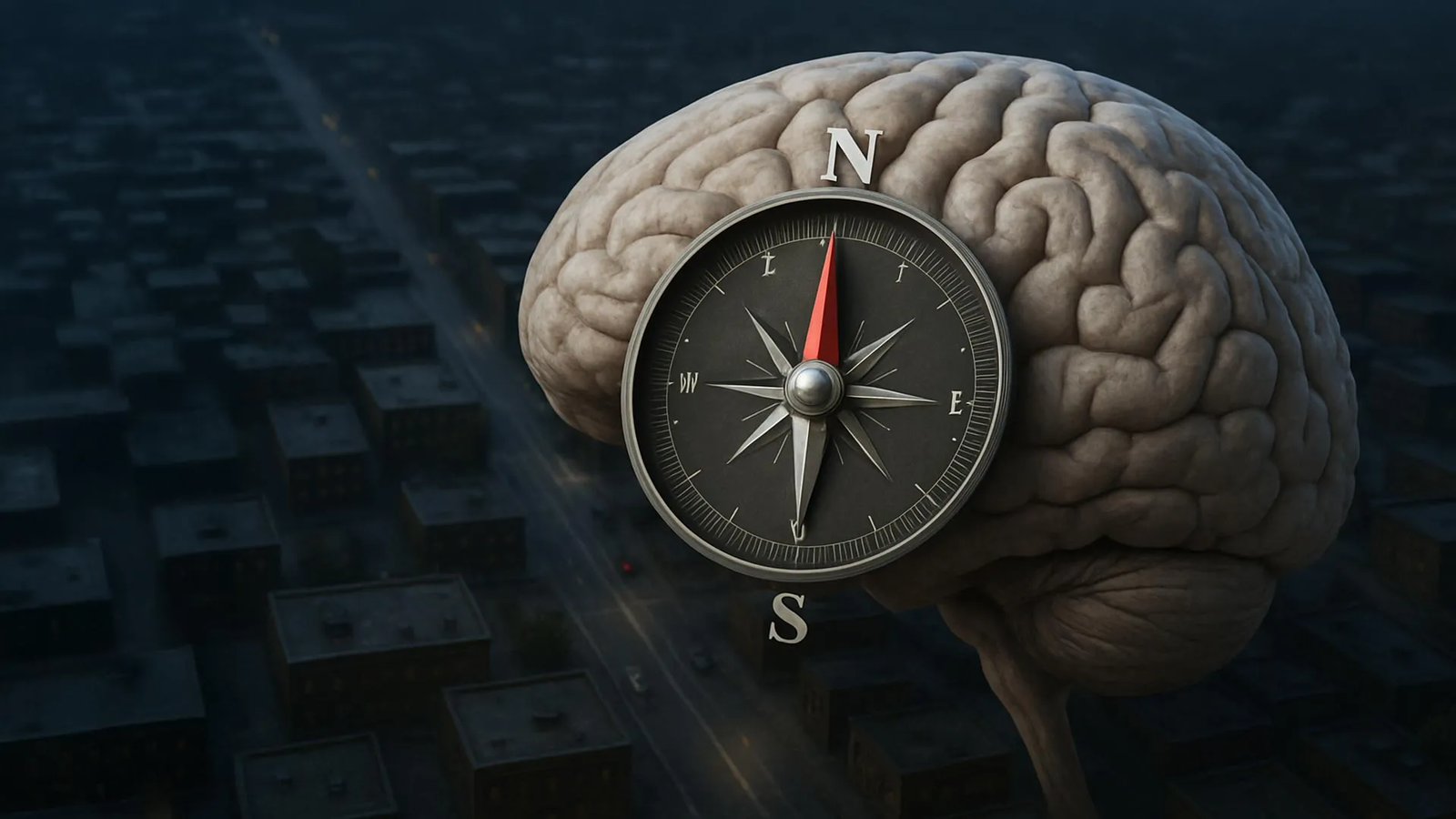
BERLIN, Germany — March 24, 2026 — A German neuroscientist has uncovered new evidence of how the human brain builds and maintains its internal navigational system, marking what colleagues describe as a significant step forward in understanding spatial memory and orientation.
Dr. Lena Hartwig, a cognitive neuroscientist at the Max Planck Institute for Human Cognitive and Brain Sciences, led the research team that identified a previously unobserved pattern of neural activity linked to how people map their surroundings. The findings, published this week in the journal Nature Neuroscience, suggest that the brain uses a more dynamic and adaptable system for navigation than previously believed.
🧠 A closer look at the discovery
According to the study, the team used high‑resolution functional MRI and intracranial recordings from volunteer participants to observe how the brain responds when navigating unfamiliar environments. Hartwig’s group found that a cluster of neurons in the entorhinal cortex — a region already known for housing “grid cells” — appears to shift its firing patterns depending on environmental complexity.
“We’ve long known that grid cells help form an internal coordinate system,” Hartwig said in a press briefing. “What we’re now seeing is that this system is far more flexible. The brain seems to adjust its navigational grid in real time, almost like recalibrating a map as new information comes in.”
Independent experts say the work adds important nuance to decades of research on spatial cognition. Dr. Michael Alvarez, a neuroscientist at University College London who was not involved in the study, noted that the findings “help bridge the gap between animal research and human navigation studies,” adding that the results “could reshape how we think about memory disorders that affect orientation.”
🔬 Why it matters
The entorhinal cortex is one of the first regions affected in Alzheimer’s disease, often leading to early symptoms such as disorientation and difficulty navigating familiar places. Hartwig’s team believes that understanding how the brain’s internal mapping system adapts could eventually inform new diagnostic tools or therapeutic approaches.
“This doesn’t translate into a treatment tomorrow,” Hartwig cautioned. “But it gives us a clearer target. If we understand how healthy navigation works, we can better identify what goes wrong in neurodegenerative conditions.”
🧭 Broader implications
Beyond clinical applications, the research may influence fields ranging from robotics to virtual‑reality design. Engineers have long looked to biological navigation systems for inspiration, and the discovery of a more fluid neural mapping mechanism could lead to more adaptive navigation algorithms.
The study also raises new questions about how the brain integrates sensory information — such as visual cues, movement, and memory — to maintain a sense of direction. Hartwig’s team plans to conduct follow‑up experiments using immersive VR environments to test how the navigational system responds to conflicting or ambiguous cues.
📚 Source attribution
The information in this article is based on statements from the Max Planck Institute for Human Cognitive and Brain Sciences, interviews conducted during a public press briefing, and the peer‑reviewed study published in Nature Neuroscience.
