


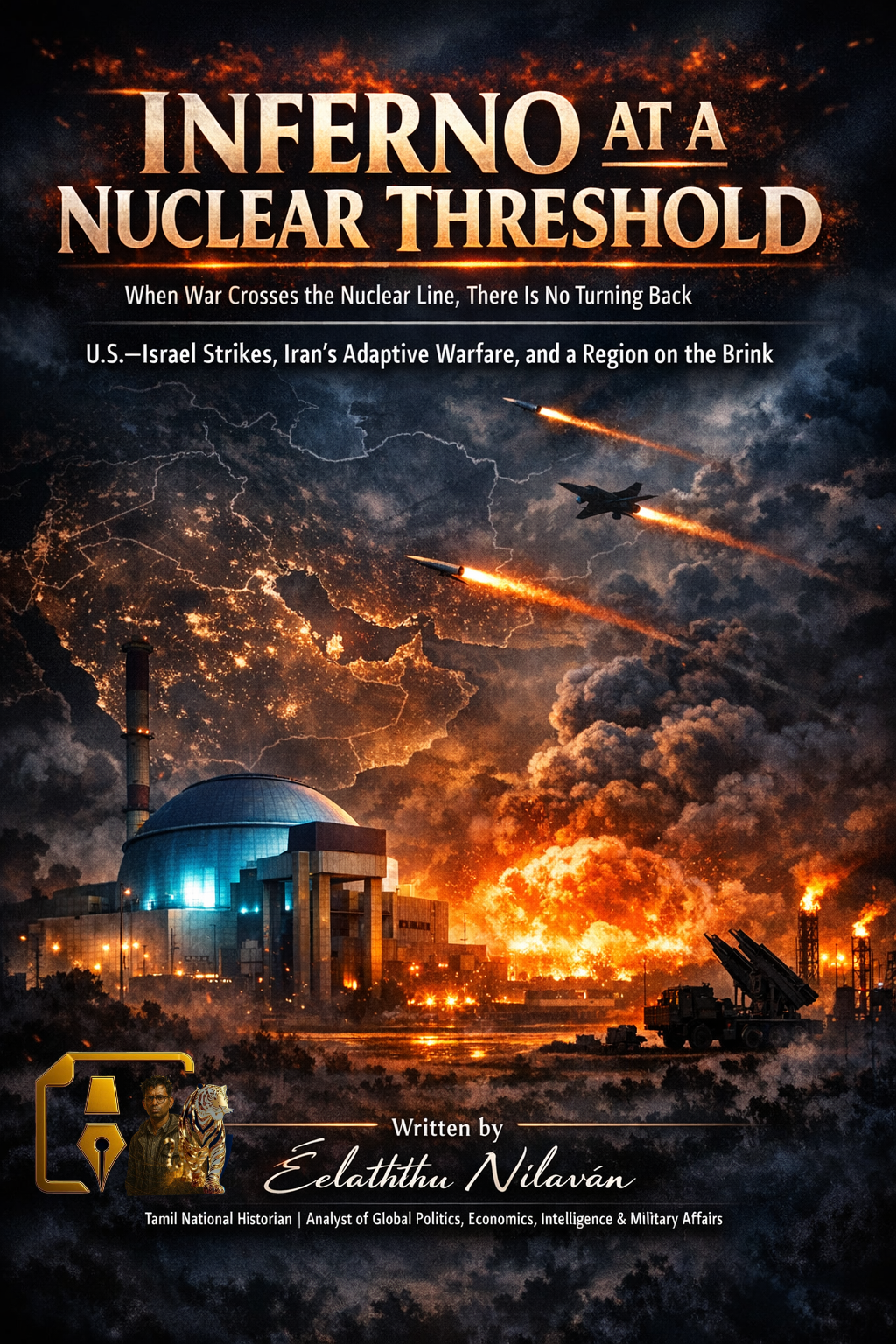
𝑨 𝑾𝑶𝑹𝑳𝑫 𝑶𝑵 𝑻𝑯𝑬 𝑩𝑹𝑰𝑵𝑲 𝑶𝑭 𝑨 𝑵𝑼𝑪𝑳𝑬𝑨𝑹 𝑪𝑹𝑰𝑺𝑰𝑺
The escalating confrontation between Iran, United States, and Israel has entered an unprecedented and highly volatile phase. Missile and air strikes targeting sensitive nuclear-linked infrastructure—particularly the Bushehr Nuclear Power Plant—have triggered global alarm.
Russia has issued stark warnings that the situation is approaching a “dangerous threshold,” emphasizing that attacks on nuclear facilities risk catastrophic radiological consequences. Echoing concerns from the International Atomic Energy Agency, Moscow underscored that such actions violate long-standing non-proliferation norms.
IAEA Director General Rafael Grossi confirmed damage to the facility and the death of a worker—marking a deeply troubling escalation where civilian nuclear infrastructure is no longer off-limits.
𝑵𝑼𝑪𝑳𝑬𝑨𝑹 𝑺𝑨𝑭𝑬𝑻𝒀 𝑼𝑵𝑫𝑬𝑹 𝑻𝑯𝑹𝑬𝑨𝑻
Iranian officials, led by Foreign Minister Abbas Araqchi, have warned of a potential “radiological disaster” if strikes continue near safeguarded facilities such as Natanz, Bushehr, Khondab-Arak, and Ardakan-Yazd.
The crisis highlights a dangerous erosion of global nuclear governance. Tehran has accused the international community of inaction and criticized leaks within oversight bodies, warning that continued violations could permanently damage trust in institutions like the United Nations and the IAEA.
𝑰𝑹𝑨𝑵’𝑺 𝑨𝑫𝑨𝑷𝑻𝑰𝑽𝑬 𝑾𝑨𝑹 𝑴𝑨𝑪𝑯𝑰𝑵𝑬
Despite sustained bombardment, Iran has demonstrated remarkable battlefield resilience. Intelligence assessments indicate that missile launchers and underground silos are being restored within hours of being struck.
Key dynamics shaping the battlefield include:
• Rapid Recovery: Engineering teams are rapidly excavating damaged bunkers and restoring launch systems.
• Decoy Networks: Extensive use of fake targets complicates U.S. and Israeli damage assessments.
• Sustained Firepower: Iran reportedly maintains the ability to launch 15–30 ballistic missiles and up to 100 drones daily.
• Strategic Depth: Critical systems are being relocated deeper underground, reducing vulnerability.
These tactics are challenging claims from Washington that Iran’s capabilities have been significantly degraded.
𝑻𝑯𝑬 𝑺𝑯𝑨𝑫𝑶𝑾 𝑾𝑨𝑹 𝑶𝑭 𝑵𝑨𝑹𝑹𝑨𝑻𝑰𝑽𝑬𝑺
A parallel information war is unfolding alongside kinetic operations. While the White House and Pentagon assert operational success, intelligence leaks suggest a far more complex reality.
Former U.S. President Donald Trump announced the successful rescue of a downed American officer following the destruction of an F-15E Strike Eagle over Iran.
However, Iranian state media presents a conflicting account—claiming U.S. forces conducted strikes near the pilot’s hiding location, raising questions about the true nature of the mission.
𝑯𝑰𝑮𝑯-𝑹𝑰𝑺𝑲 𝑹𝑬𝑺𝑪𝑼𝑬 𝑰𝑵 𝑯𝑶𝑺𝑻𝑰𝑳𝑬 𝑻𝑬𝑹𝑹𝑰𝑻𝑶𝑹𝒀
The rescue operation itself stands out as one of the most complex in modern warfare:
• A wounded officer evaded capture for over 24–48 hours in mountainous terrain.
• U.S. special forces, supported by airpower and intelligence assets, executed a high-risk extraction.
• The Central Intelligence Agency reportedly deployed deception tactics to mislead Iranian forces.
• U.S. forces destroyed stranded aircraft—including C-130 Hercules planes and a Black Hawk helicopter—to prevent technological capture.
The operation underscores both the reach and vulnerability of U.S. military power inside contested territory.
𝑹𝑬𝑮𝑰𝑶𝑵𝑨𝑳 𝑭𝑰𝑹𝑬𝑺: 𝑻𝑯𝑬 𝑮𝑼𝑳𝑭 𝑰𝑮𝑵𝑰𝑻𝑬𝑺
The conflict is no longer contained within Iran. A wave of drone and missile strikes has engulfed the Gulf:
• In Abu Dhabi, fires erupted at the Borouge petrochemical plant.
• Saudi Arabia intercepted a cruise missile targeting its territory.
• Kuwait suffered attacks on oil facilities, power plants, and desalination infrastructure.
• Bahrain faced major fires at the Bapco Energies refinery.
• In Tel Aviv, Iran claimed drone strikes targeting Ben Gurion International Airport.
These strikes signal a transition toward full regional warfare, with energy infrastructure as a primary target.
𝑺𝑻𝑹𝑨𝑰𝑻 𝑶𝑭 𝑯𝑶𝑹𝑴𝑼𝒁: 𝑻𝑯𝑬 𝑬𝑵𝑬𝑹𝑮𝒀 𝑪𝑯𝑶𝑲𝑬𝑷𝑶𝑰𝑵𝑻
Iran’s reported move to restrict passage through the Strait of Hormuz marks a critical escalation.
This narrow corridor handles nearly 20% of global oil trade, making it one of the most strategically vital waterways on Earth. Any sustained disruption could trigger:
• Global oil price shocks
• Supply chain instability
• Economic ripple effects across Europe and Asia
𝑴𝑼𝑵𝑰𝑻𝑰𝑶𝑵 𝑾𝑨𝑹: 𝑺𝑻𝑹𝑨𝑰𝑵 𝑶𝑵 𝑼.𝑺. 𝑺𝑻𝑶𝑪𝑲𝑷𝑰𝑳𝑬𝑺
Reports indicate that U.S. reserves of high-precision weapons—particularly long-range cruise missiles—are being rapidly depleted.
From an estimated 2,300 units pre-war, stockpiles may have fallen to around 425, raising concerns about:
• Sustained operational capability
• Strategic readiness in other theaters
• Long-term deterrence credibility
𝑻𝑯𝑬 “𝑪𝑯𝑰𝑵𝑬𝑺𝑬 𝑳𝑰𝑭𝑬𝑳𝑰𝑵𝑬”
Despite heavy strikes, Iran’s missile program continues—supported by external supply chains.
Evidence points to shipments of sodium perchlorate—a key component in solid-fuel missiles—originating from Chinese ports and reaching Iranian territory.
This highlights a critical strategic reality:
• Destroying infrastructure is not enough
• Supply chains are the true backbone of modern warfare
• Dual-use trade makes enforcement extremely difficult
𝑻𝑯𝑬 𝑹𝑰𝑺𝑲 𝑶𝑭 𝑼𝑵𝑪𝑶𝑵𝑻𝑹𝑶𝑳𝑳𝑬𝑫 𝑬𝑺𝑪𝑨𝑳𝑨𝑻𝑰𝑶𝑵
The convergence of multiple high-risk factors—nuclear facility strikes, regional energy attacks, direct U.S.–Iran confrontation, and great-power involvement—suggests the conflict is nearing a critical inflection point.
If current trajectories continue, the world could face:
• A direct multi-state war across the Middle East
• A nuclear safety crisis with global consequences
• Severe disruption to global energy markets
• A breakdown of international norms governing warfare

𝑾𝒓𝒊𝒕𝒕𝒆𝒏 𝒃𝒚 𝓔𝓮𝓵𝓪𝓽𝓱𝓽𝓱𝓾 𝓝𝓲𝓵𝓪𝓿𝓪𝓷
Tamil National Historian | Analyst of Global Politics, Economics, Intelligence & Military Affairs
05/04/2026
The views expressed in this article are the author’s own and do not necessarily reflect Amizhthu’s editorial stance.
