



Ukraine and the United States have agreed on a revised 20‑point peace framework aimed at ending the nearly four‑year war with Russia, Ukrainian President Volodymyr Zelenskyy confirmed this week, as Moscow confronts the aftermath of another deadly bombing that killed two police officers.
The updated plan, negotiated over several days between U.S. and Ukrainian officials, introduces new proposals for security guarantees, territorial arrangements, and potential economic zones in eastern Ukraine. Zelenskyy described the framework as “the main basis for ending the war,” though he acknowledged that several sensitive issues—particularly the future of the Donbas region—remain unresolved.
A Plan with New Concessions and New Ambitions
According to details shared by Ukrainian officials, the plan includes:
- Robust, NATO‑style security guarantees for Ukraine.
- EU membership support and long‑term defense commitments.
- Retention of an 800,000‑strong Ukrainian army, a point Kyiv insisted on during negotiations.
- A proposal for a demilitarised or free economic zone in parts of the eastern territories currently occupied by Russia—an idea Zelenskyy said could help break the stalemate over Donbas governance.
U.S. negotiators have reportedly backed the concept of a special economic zone as a compromise measure, though Russia has not yet publicly endorsed or rejected the idea. The Kremlin confirmed only that it has received the plan and is “formulating” its position.
Bombing in Moscow Heightens Tensions
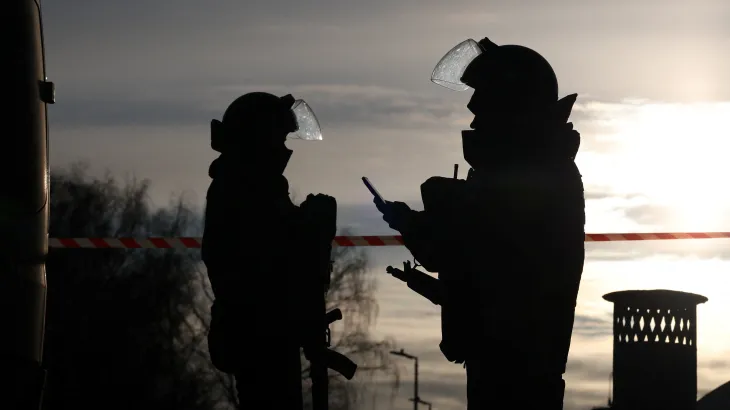
The diplomatic developments come amid renewed instability inside Russia. On Wednesday, a bombing in Moscow killed two police officers—the second fatal attack in the capital in just three days, following the assassination of a Russian general earlier in the week.
Russian authorities have not publicly identified suspects, and Ukraine has neither confirmed nor denied involvement. Kyiv has previously acknowledged responsibility for certain targeted operations inside Russia, though it has remained silent on the latest incidents.
The attacks have intensified pressure on the Kremlin, which has been grappling with internal security concerns while simultaneously weighing the new peace proposal.
International Reactions and Next Steps
European leaders have cautiously welcomed the updated framework, describing it as the most substantial movement toward a negotiated settlement in months. However, diplomats warn that the most contentious issues—territorial control, demilitarisation terms, and the status of the Zaporizhzhia Nuclear Power Plant—will require direct talks between national leaders.
Zelenskyy has said he expects to meet U.S. President Donald Trump “in the near future” to finalize the remaining points and discuss “sensitive issues” related to territorial arrangements.
Meanwhile, Russia’s response remains the critical unknown. Kremlin spokesperson Dmitry Peskov confirmed that Moscow has received the plan but offered no timeline for a formal reply.
A Fragile Opening
Despite the uncertainty, analysts say the combination of intensified internal pressure on Russia and renewed diplomatic engagement from Washington has created a rare opening for progress.
Whether the new plan becomes a turning point—or another stalled attempt—will depend on the coming weeks of high‑stakes negotiations.
