


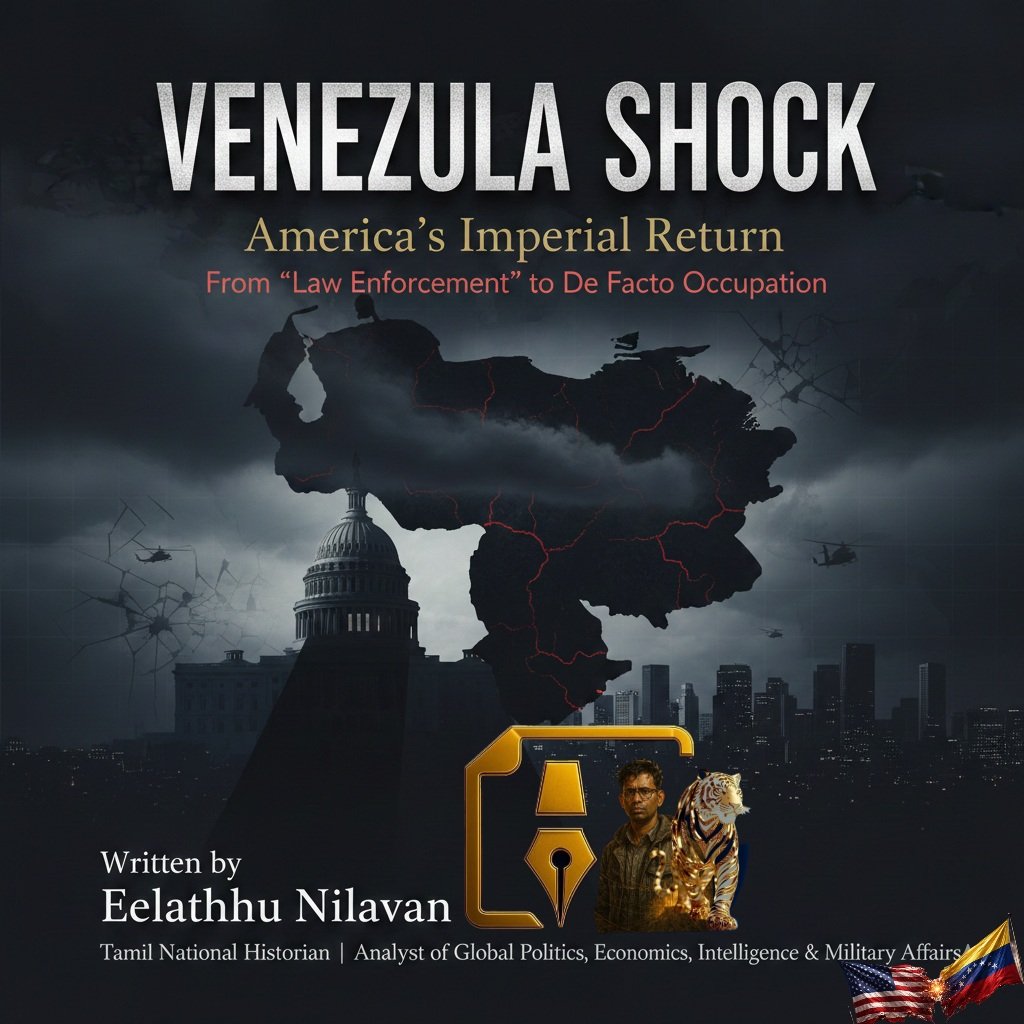
𝑭𝒓𝒐𝒎 “𝑳𝒂𝒘 𝑬𝒏𝒇𝒐𝒓𝒄𝒆𝒎𝒆𝒏𝒕” 𝒕𝒐 𝑫𝒆 𝑭𝒂𝒄𝒕𝒐 𝑶𝒄𝒄𝒖𝒑𝒂𝒕𝒊𝒐𝒏
𝐓𝐡𝐞 𝐎𝐩𝐞𝐫𝐚𝐭𝐢𝐨𝐧 𝐓𝐡𝐚𝐭 𝐑𝐞𝐰𝐫𝐨𝐭𝐞 𝐆𝐥𝐨𝐛𝐚𝐥 𝐑𝐮𝐥𝐞𝐬
The United States’ sudden military operation against Venezuela marks one of the most dramatic ruptures in the post–Cold War international system. With U.S. forces striking Caracas, detaining President Nicolás Maduro and First Lady Cilia Flores, and transferring them to American soil, Washington crossed a threshold unseen in modern geopolitics.

President Donald Trump framed the assault not as a war, but as a “successful law enforcement operation.” Yet the declaration that Washington is now “in charge” of Caracas, alongside the announcement of a state of emergency and temporary U.S. control, has shattered any illusion that this was a narrow or limited action.
To critics worldwide, this was not policing.
It was regime removal by force.
𝐌𝐚𝐝𝐮𝐫𝐨’𝐬 𝐃𝐞𝐭𝐞𝐧𝐭𝐢𝐨𝐧: 𝐀 𝐏𝐫𝐞𝐜𝐞𝐝𝐞𝐧𝐭 𝐖𝐢𝐭𝐡𝐨𝐮𝐭 𝐏𝐫𝐞𝐜𝐞𝐝𝐞𝐧𝐭
The capture and overseas detention of a sitting head of state represents a seismic legal and political rupture.
At the United Nations Security Council, Venezuela’s ambassador Samuel Reinaldo Moncada Acosta described the operation as:
• An illegitimate armed attack
• A kidnapping of a constitutionally recognized president
• A violation of the UN Charter, Geneva Conventions, and head-of-state immunity
As Caracas scrambled to preserve institutional continuity, Executive Vice President Delcy Rodríguez was sworn in as acting president, underscoring the depth of the crisis and the uncertainty surrounding Venezuela’s sovereignty.
𝐆𝐫𝐞𝐚𝐭 𝐏𝐨𝐰𝐞𝐫 𝐁𝐚𝐜𝐤𝐥𝐚𝐬𝐡: 𝐓𝐡𝐞 𝐖𝐨𝐫𝐥𝐝 𝐑𝐞𝐬𝐩𝐨𝐧𝐝𝐬
𝐑𝐮𝐬𝐬𝐢𝐚: “𝐀𝐧 𝐈𝐫𝐚𝐪-𝐒𝐭𝐲𝐥𝐞 𝐃𝐢𝐬𝐚𝐬𝐭𝐞𝐫”
Russian Senator Alexey Pushkov issued one of the starkest warnings, comparing the operation to 19th-century imperialism and the “Wild West” doctrine of power over law. He cautioned that early tactical success—just as in Iraq, Libya, and Afghanistan—often metastasizes into long-term strategic catastrophe.
At the UNSC, Russia went further, branding the operation a criminal act of aggression, alleging civilian casualties and accusing Washington of seeking control over Venezuela’s energy resources.
𝐂𝐡𝐢𝐧𝐚: “𝐏𝐨𝐰𝐞𝐫 𝐀𝐛𝐨𝐯𝐞 𝐌𝐮𝐥𝐭𝐢𝐥𝐚𝐭𝐞𝐫𝐚𝐥𝐢𝐬𝐦”
Beijing delivered a blistering rebuke, condemning what it called:
• Unilateral illegal bullying
• Open contempt for the UN Charter
• The transformation of the U.S. into a self-appointed “world police”
China demanded the immediate release of Maduro and warned that military coercion only produces endless instability, drawing parallels to past American interventions across the Middle East and Latin America.
𝐉𝐚𝐩𝐚𝐧: 𝐐𝐮𝐢𝐞𝐭 𝐃𝐨𝐮𝐛𝐭𝐬, 𝐃𝐞𝐞𝐩 𝐂𝐨𝐧𝐜𝐞𝐫𝐧𝐬
Tokyo avoided outright condemnation, but openly questioned the legality of changing a government by force. Japanese officials warned that such actions weaken U.S. credibility—especially when Washington claims to defend international norms elsewhere.
𝐄𝐮𝐫𝐨𝐩𝐞 𝐒𝐩𝐥𝐢𝐭𝐬: 𝐓𝐡𝐞 𝐓𝐫𝐚𝐧𝐬𝐚𝐭𝐥𝐚𝐧𝐭𝐢𝐜 𝐅𝐫𝐚𝐜𝐭𝐮𝐫𝐞
The European Union’s response exposed deep internal contradictions.
• 26 of 27 member states, led by EU foreign policy chief Kaja Kallas, called for respect for international law.
• France welcomed the end of Maduro’s rule but urged democratic transition.
• Germany described the legal basis as “complex.”
• Spain rejected interventions violating international law.
• Hungary, under Viktor Orbán, openly broke ranks.
Orbán declared the operation proof that the liberal world order has collapsed, warning that a more dangerous and unstable era has begun—one where rules are optional and force reigns.
Brussels now fears that unchecked U.S. unilateralism, once normalized abroad, could one day threaten Europe’s own strategic perimeter—from the Arctic to the North Atlantic.
𝐒𝐭𝐫𝐞𝐞𝐭𝐬 𝐑𝐞𝐬𝐢𝐬𝐭: 𝐆𝐥𝐨𝐛𝐚𝐥 𝐏𝐫𝐨𝐭𝐞𝐬𝐭𝐬 𝐄𝐫𝐮𝐩𝐭
From Las Palmas in the Canary Islands to Latin America, protests erupted against what demonstrators labeled imperial aggression.
Chants of “Yankee go home” and banners reading “Trump, get out of Venezuela” reflected widespread anger at:
• Alleged fabricated narratives of narcotrafficking
• The use of force to justify regime change
• A return to Cold War–era interventionism
These protests signal that the backlash is not confined to governments—it is societal and transnational.
𝐕𝐞𝐧𝐞𝐳𝐮𝐞𝐥𝐚 𝐚𝐬 𝐚 𝐓𝐞𝐬𝐭 𝐂𝐚𝐬𝐞 𝐟𝐨𝐫 𝐚 𝐍𝐞𝐰 𝐖𝐨𝐫𝐥𝐝
Across diplomatic chambers and global media, one phrase is repeatedly invoked:
Venezuela is a test case.
A test of whether:
• International law still restrains power
• Sovereignty still means anything
• Or whether the world is drifting toward a system where might replaces rules
Critics argue that what happened in Caracas signals the return of empire, not through colonies, but through enforced compliance, extraterritorial arrests, and military-backed legality.
𝐂𝐨𝐧𝐜𝐥𝐮𝐬𝐢𝐨𝐧: 𝐓𝐡𝐞 𝐄𝐧𝐝 𝐨𝐟 𝐭𝐡𝐞 𝐏𝐨𝐬𝐭-𝐖𝐚𝐫 𝐈𝐥𝐥𝐮𝐬𝐢𝐨𝐧
The seizure of Venezuela’s president has done more than destabilize a nation—it has destabilized the idea of a rules-based world.
Whether this moment becomes a temporary shock or the formal burial of the post-1945 order now depends on how other powers respond—not just in words, but in action.
One reality is already clear:
The age of plausible deniability is over. Power has stepped into the open.
Written by

Written by
Eelamthu Nilavan
Tamil National Historian | World Politics, Economics, Intelligence, and Military Affairs Analyst
06/01/2026
