


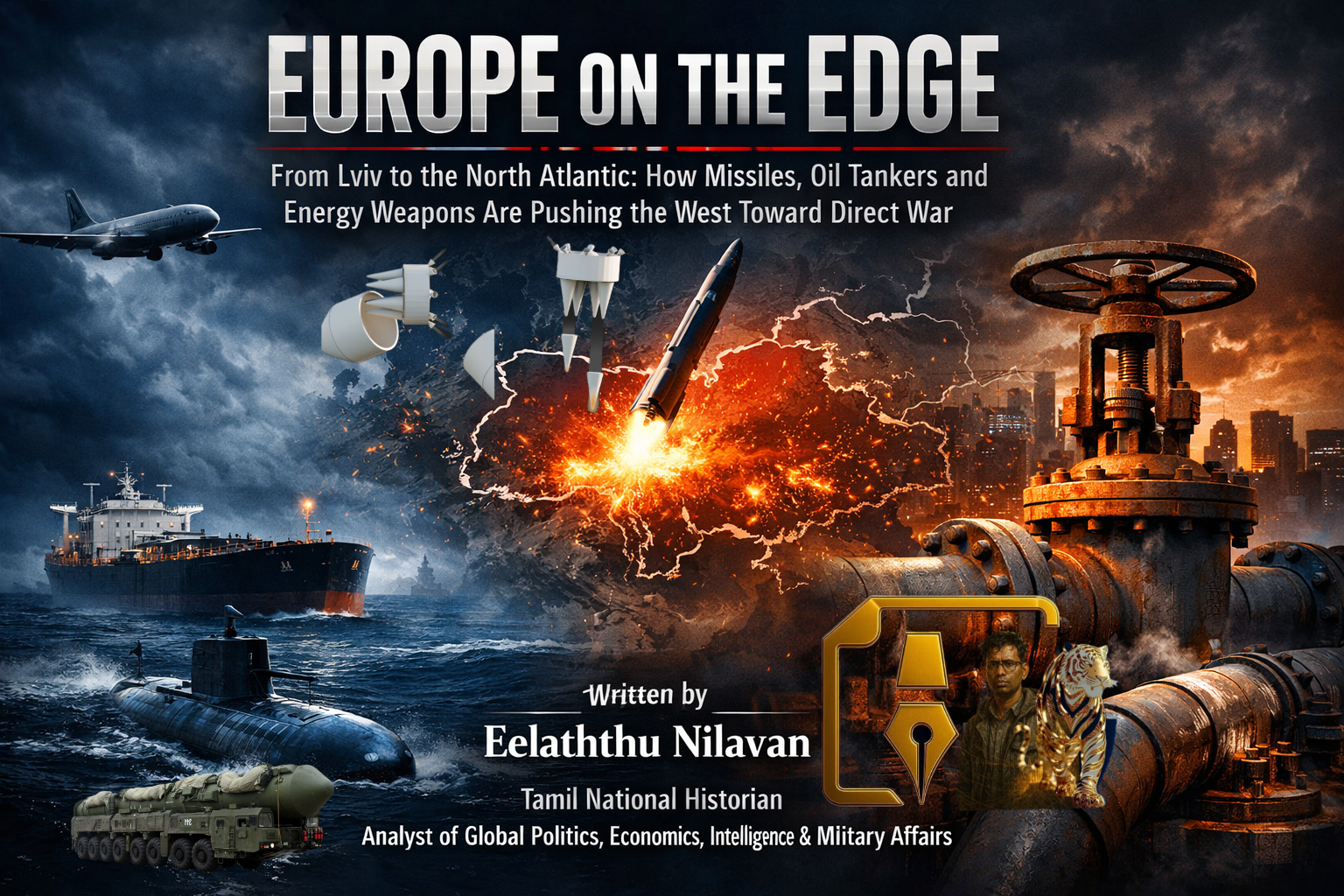
✦ 𝗟𝘃𝗶𝘃 𝗦𝘁𝗿𝘂𝗰𝗸: 𝗥𝘂𝘀𝘀𝗶𝗮 𝗕𝗿𝗶𝗻𝗴𝘀 𝗕𝗮𝗹𝗹𝗶𝘀𝘁𝗶𝗰 𝗪𝗮𝗿𝗳𝗮𝗿𝗲 𝘁𝗼 𝗡𝗔𝗧𝗢’𝘀 𝗗𝗼𝗼𝗿𝘀𝘁𝗲𝗽
Russia’s overnight strike on Lviv, Ukraine’s western logistical hub located barely 40 miles from NATO and EU territory, marks a profound escalation in the war. For the first time, Moscow has demonstrated a willingness to deploy experimental intermediate-range ballistic missile technology perilously close to NATO’s eastern frontier.

The weapon reportedly used — the Oreshnik missile, derived from the RS-26 Rubizh platform — belongs to a class once explicitly banned under the now-collapsed INF Treaty. Its reappearance signals not only military intent, but a deliberate political message:
the post-Cold War arms control architecture is dead.
The strike hit critical infrastructure and industrial zones, igniting fires, destroying humanitarian storage facilities, disrupting power supply, and killing at least four civilians across the region. Air raid sirens echoed nationwide, following an unusually blunt warning from the U.S. Embassy in Kyiv, which had flagged the likelihood of a “significant Russian air assault.”
✦ 𝗢𝗿𝗲𝘀𝗵𝗻𝗶𝗸: 𝗧𝗲𝗰𝗵𝗻𝗼𝗹𝗼𝗴𝘆 𝗔𝘀 𝗗𝗲𝘁𝗲𝗿𝗿𝗲𝗻𝗰𝗲
Unlike conventional cruise missile attacks, analysts noted that the Lviv strike bore the hallmarks of a saturation-style assault, suggesting either multiple launches or complex missile trajectories designed to overwhelm Ukrainian air defenses.
The Oreshnik’s significance lies not merely in its destructive power, but in its strategic symbolism:
• It reintroduces intermediate-range strike capability into Europe
• It bypasses decades of arms control norms
• It shortens NATO decision-making time in any future escalation scenario
This is warfare not just against Ukraine, but against the European security order itself.
✦ 𝗧𝗵𝗲 𝗡𝗼𝗿𝘁𝗵 𝗔𝘁𝗹𝗮𝗻𝘁𝗶𝗰 𝗙𝗿𝗼𝗻𝘁: 𝗧𝗵𝗲 “𝗠𝗮𝗿𝗶𝗻𝗲𝗿𝗮 𝗜𝗻𝗰𝗶𝗱𝗲𝗻𝘁”
As missiles strike Eastern Europe, the North Atlantic has quietly become a second active theater of confrontation.
The seizure of the Russian-flagged tanker Marinera by U.S. Navy SEALs, following a 17-day pursuit, has triggered one of the most dangerous naval standoffs since the Cold War. Russia’s deployment of the Yasen-M class nuclear-powered submarine Kazan transformed what Washington framed as a sanctions enforcement action into a direct superpower confrontation.
Moscow’s response has been unequivocal:
• The boarding was labeled “piracy on the high seas”
• U.S. sanctions were dismissed as legally irrelevant under international maritime law
• The incident was framed as a dangerous precedent undermining freedom of navigation
The message from the Kremlin is clear:
sanctions enforcement is now indistinguishable from acts of war.
✦ 𝗨𝗞 𝗘𝗻𝘁𝗮𝗻𝗴𝗹𝗲𝗺𝗲𝗻𝘁: 𝗙𝗿𝗼𝗺 𝗦𝘂𝗽𝗽𝗼𝗿𝘁 𝘁𝗼 𝗖𝗼-𝗕𝗲𝗹𝗹𝗶𝗴𝗲𝗿𝗲𝗻𝗰𝗲
Britain’s role has shifted dramatically. Under Prime Minister Keir Starmer, the UK has authorized:
• Military bases and airspace for US operations
• Surveillance aircraft and naval assets
• Logistical support for tanker interceptions
Simultaneously, Starmer has floated a “declaration of intent” regarding potential troop deployment to Ukraine, pending a parliamentary vote. Critics warn that the line between indirect support and direct participation has already been crossed.
London is no longer a bystander — it is an operational node.
✦ 𝗧𝗵𝗲 𝗨𝗡 𝗗𝗿𝗮𝘄𝘀 𝗮 𝗟𝗶𝗻𝗲: 𝗢𝗶𝗹, 𝗦𝗼𝘃𝗲𝗿𝗲𝗶𝗴𝗻𝘁𝘆 & 𝗜𝗻𝘁𝗲𝗿𝗻𝗮𝘁𝗶𝗼𝗻𝗮𝗹 𝗟𝗮𝘄
Against this backdrop, the United Nations has delivered a rare public rebuke to Washington. In response to US rhetoric surrounding Venezuelan oil and tanker seizures, the UN reaffirmed a foundational principle:
Natural resources belong to the people of the sovereign state — not to external powers.
The UN’s insistence that all maritime enforcement must comply with international law implicitly challenges the expanding doctrine of sanctions-based interdiction, warning that it risks eroding the legal framework governing the global commons.
✦ 𝗘𝗻𝗲𝗿𝗴𝘆 𝗔𝘀 𝗮 𝗪𝗲𝗮𝗽𝗼𝗻: 𝗘𝘂𝗿𝗼𝗽𝗲’𝘀 𝗦𝗲𝗹𝗳-𝗜𝗻𝗳𝗹𝗶𝗰𝘁𝗲𝗱 𝗖𝗿𝗶𝘀𝗶𝘀
Russia’s complete shutdown of gas supplies to Europe has exposed the structural fragility of the continent’s economy:
• Industrial output in Germany collapsing by 40%
• Rolling blackouts in major European capitals
• Skyrocketing energy prices pushing households into fuel poverty
Yet the most damning contradiction lies elsewhere.
While Europe publicly lectures India and others for buying Russian oil, the EU itself paid Russia an estimated $8.4 billion for LNG in 2025, with imports not only continuing but increasing.
This hypocrisy underscores a brutal truth: Europe is simultaneously funding the war it claims to oppose.
✦ 𝗧𝗵𝗲 𝗘𝗻𝗱𝗴𝗮𝗺𝗲: 𝗔 𝗪𝗼𝗿𝗹𝗱 𝗦𝗹𝗶𝗱𝗶𝗻𝗴 𝗧𝗼𝘄𝗮𝗿𝗱 𝗠𝘂𝗹𝘁𝗶-𝗗𝗼𝗺𝗮𝗶𝗻 𝗖𝗼𝗻𝗳𝗹𝗶𝗰𝘁
From ballistic missiles over Lviv, to submarines in the GIUK gap, to energy pipelines weaponized into tools of coercion, the conflict has escaped the boundaries of Ukraine.
This is no longer a regional war.
It is a systemic breakdown of the post-WWII order, where:
• Military force replaces diplomacy
• Sanctions replace law
• Energy replaces armies
• And escalation becomes normalized
Europe now stands at a historic crossroads — not between East and West, but between strategic autonomy and irreversible decline.

Written by
Eelaththu Nilavan
Tamil National Historian | Analyst of Global Politics, Economics, Intelligence & Military Affairs
09/01/2026
