

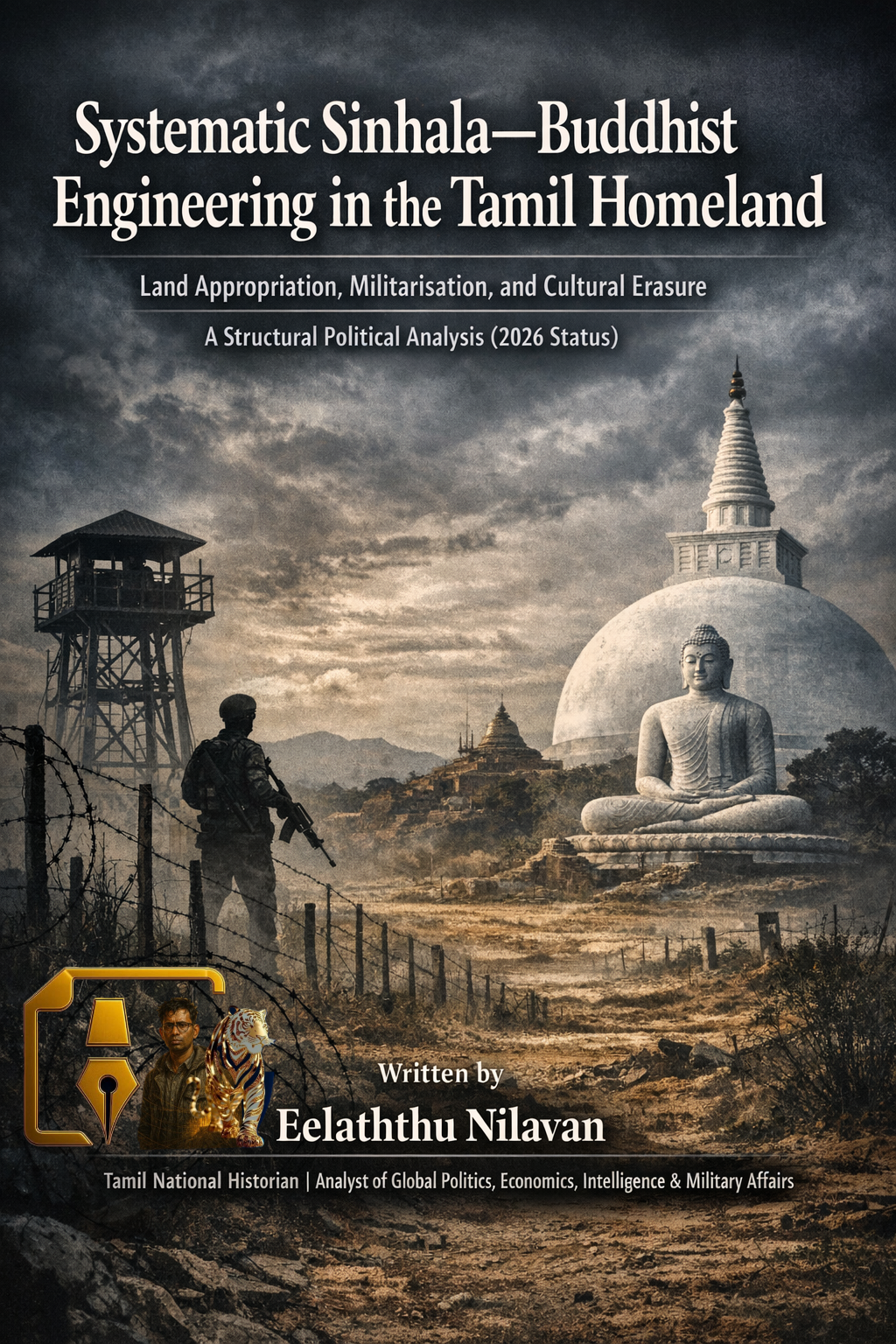
A Structural Analysis of Land Appropriation, Militarisation, and Cultural Erasure (2026 Status)
𝗜𝗻𝘁𝗿𝗼𝗱𝘂𝗰𝘁𝗶𝗼𝗻: 𝗙𝗿𝗼𝗺 𝗣𝗼𝘀𝘁-𝗪𝗮𝗿 𝗥𝗲𝗰𝗼𝗻𝘀𝘁𝗿𝘂𝗰𝘁𝗶𝗼𝗻 𝘁𝗼 𝗦𝘁𝗿𝘂𝗰𝘁𝘂𝗿𝗮𝗹 𝗚𝗲𝗻𝗼𝗰𝗶𝗱𝗲

Since the formal end of the armed conflict in 2009, Sri Lanka’s Northern and Eastern Provinces—historically recognised as the Tamil homeland—have not entered a genuine post-war recovery phase. Instead, they have been subjected to a slow, calculated, and institutionalised process of structural destruction, best understood as Structural Genocide.
This process does not rely on mass killings. Rather, it functions through:
• Permanent land dispossession
• State-backed demographic restructuring
• Militarisation of civilian space
• Cultural and religious overwriting
• Administrative and legal manipulation
At its core, this is a state-driven Sinhala–Buddhist political project, implemented through military power, civilian departments, and religious symbolism.
𝗜. 𝗣𝗿𝗶𝘃𝗮𝘁𝗲 𝗟𝗮𝗻𝗱 𝗮𝘀 𝗮 𝗪𝗲𝗮𝗽𝗼𝗻: 𝗕𝘂𝗱𝗱𝗵𝗶𝘀𝘁 𝗘𝗻𝗰𝗿𝗼𝗮𝗰𝗵𝗺𝗲𝗻𝘁 𝗶𝗻 𝗝𝗮𝗳𝗳𝗻𝗮
The Jaffna Peninsula represents one of the most striking examples of post-war cultural engineering. Here, private Tamil land has become the primary target—not incidental collateral.
𝗧𝗵𝗮𝗶𝘁𝘁𝗶 𝗧𝗶𝘀𝘀𝗮 𝗥𝗮𝗷𝗮𝗺𝗮𝗵𝗮 𝗩𝗶𝗵𝗮𝗿𝗮: 𝗔 𝗦𝘆𝗺𝗯𝗼𝗹 𝗼𝗳 𝗦𝘁𝗮𝘁𝗲 𝗜𝗺𝗽𝘂𝗻𝗶𝘁𝘆
In Valikamam North, Thaitti village, more than 12 Tamil families’ legally owned private lands were forcibly seized under military protection to construct the Tissa Rajamaha Vihara.
Key characteristics of this encroachment:
• No valid land acquisition procedure
• No consent from landowners
• No lawful religious construction permits
• Ongoing court cases are ignored in practice
Despite documentary proof and sustained legal resistance by the owners, the land remains occupied—demonstrating how law functions selectively when Sinhala–Buddhist expansion is involved.
𝗛𝗶𝗴𝗵 𝗦𝗲𝗰𝘂𝗿𝗶𝘁𝘆 𝗭𝗼𝗻𝗲𝘀 𝗮𝘀 𝗖𝗼𝘃𝗲𝗿𝘁 𝗖𝗼𝗻𝘀𝘁𝗿𝘂𝗰𝘁𝗶𝗼𝗻 𝗦𝗽𝗮𝗰𝗲𝘀
In areas such as Palaly and Kankesanthurai, private lands remain fenced off under the pretext of “national security.”
However:
• Landowners are denied access
• Civilian activity is prohibited
• Buddhist shrines, stupas, and monk residences quietly emerge within these zones
This reveals a disturbing contradiction:
If land is too “sensitive” for its Tamil owners, how is it safe for permanent religious construction?
𝗖𝘂𝗹𝘁𝘂𝗿𝗮𝗹 𝗜𝗻𝘃𝗮𝘀𝗶𝗼𝗻 𝗶𝗻 𝗡𝗼𝗻-𝗦𝗶𝗻𝗵𝗮𝗹𝗮 𝗔𝗿𝗲𝗮𝘀
In Mathagal and Nagadeepa, where no Sinhala civilian population exists, Buddhist religious markers are installed along coastal and private lands.
This is not worship—it is territorial marking, aimed at:
• Altering future ownership claims
• Establishing “historical presence” narratives
• Normalising Sinhala–Buddhist dominance
𝗜𝗜. “𝗔𝗿𝗰𝗵𝗮𝗲𝗼𝗹𝗼𝗴𝘆” 𝗮𝘀 𝗮 𝗟𝗲𝗴𝗮𝗹 𝗪𝗲𝗮𝗽𝗼𝗻
The Department of Archaeology has emerged as one of the most powerful tools of land appropriation in the North-East.
𝗞𝘂𝗿𝘂𝗻𝗱𝘂𝗿 𝗠𝗮𝗹𝗮𝗶 (𝗠𝘂𝗹𝗹𝗮𝗶𝘁𝗶𝘃𝘂): 𝗘𝗿𝗮𝘀𝗶𝗻𝗴 𝗟𝗶𝘃𝗶𝗻𝗴 𝗛𝗶𝗻𝗱𝘂 𝗛𝗲𝗿𝗶𝘁𝗮𝗴𝗲
At Kurundur Malai:
• An active Ayyanar–Siva worship site was suppressed
• Court restrictions were ignored
• A large vihara was completed regardless
Approximately 300 acres of surrounding Tamil agricultural land were seized, cutting off livelihoods and access.
𝗩𝗲𝗱𝗱𝘂𝗸𝗸𝘂𝗻𝗮𝗮𝗿𝗶 𝗠𝗮𝗹𝗮𝗶 (𝗩𝗮𝘃𝘂𝗻𝗶𝘆𝗮)
A centuries-old Saiva worship site is now undergoing forced Buddhist transformation:
• Tamil religious symbols removed
• Statues damaged or displaced
• Worship criminalised
This reflects a deliberate attempt to redefine sacred geography.
𝗕𝗮𝘁𝘁𝗶𝗰𝗮𝗹𝗼𝗮 & 𝗧𝗿𝗶𝗻𝗰𝗼𝗺𝗮𝗹𝗲𝗲 (2025–2026)
Sudden “archaeological surveys” in areas like Vakarai and Thalaiyadi have resulted in:
• Immediate civilian displacement
• Land transferred to state control
• No transparency or community consultation
𝗜𝗜𝗜. 𝗕𝗿𝗲𝗮𝗸𝗶𝗻𝗴 𝘁𝗵𝗲 𝗧𝗮𝗺𝗶𝗹 𝗛𝗼𝗺𝗲𝗹𝗮𝗻𝗱: 𝗧𝗿𝗶𝗻𝗰𝗼𝗺𝗮𝗹𝗲𝗲 – 𝗠𝗮𝗻𝗮𝗹𝗮𝗮𝗿 𝗦𝘁𝗿𝗮𝘁𝗲𝗴𝘆
One of the most dangerous state objectives is the geographical severing of the North and East.
𝗠𝗮𝗻𝗮𝗹𝗮𝗮𝗿 (𝗪𝗲𝗹𝗶 𝗢𝘆𝗮)
• Tamil villages renamed with Sinhala terminology
• Thousands of Sinhala families settled
• Military-backed administration imposed
This zone functions as a demographic wall, blocking Tamil territorial continuity.
𝗞𝘂𝗰𝗰𝗵𝗮𝘃𝗲𝗹𝗶 & 𝗧𝗲𝗻𝗻𝗮𝗺𝗮𝗿𝗮𝘃𝗮𝗱𝗶
Through planned settlements, the Sinhala population has risen to 36%, a dramatic shift from pre-independence demographics—irreversibly altering political representation.
𝗜𝗩. 𝗙𝗼𝗿𝗲𝘀𝘁𝗿𝘆 𝗮𝗻𝗱 𝗚𝗿𝗮𝘇𝗶𝗻𝗴 𝗟𝗮𝗻𝗱 𝗦𝗲𝗶𝘇𝘂𝗿𝗲
𝗠𝗮𝘆𝗶𝗹𝗮𝘁𝗵𝗮𝗺𝗮𝗱𝘂 – 𝗠𝗮𝘁𝗵𝗮𝘃𝗮𝗻𝗮𝗶
Traditional Tamil grazing lands have been:
• Occupied by Sinhala settlers
• Protected by monks and security forces
• Rendered inaccessible to Tamil cattle farmers
Livelihood destruction here is economic ethnic cleansing.
𝗠𝘂𝗹𝗹𝗮𝗶𝘁𝗶𝘃𝘂
Land declared “forest reserves” suddenly becomes available when:
• Buddhist structures are proposed
• Monks request access
The law applies only when the Tamil presence must be erased.
𝗩. 𝗠𝗶𝗹𝗶𝘁𝗮𝗿𝗶𝘀𝗮𝘁𝗶𝗼𝗻 𝗮𝗻𝗱 𝘁𝗵𝗲 𝗖𝗼𝗹𝗹𝗮𝗽𝘀𝗲 𝗼𝗳 𝗖𝗶𝘃𝗶𝗹 𝗚𝗼𝘃𝗲𝗿𝗻𝗮𝗻𝗰𝗲
With a ratio of one soldier for every six civilians, the North-East remains under de facto military rule.
A recurring pattern is visible:
• A small Buddha statue is placed
• The military provides protection
• A vihara is constructed
• A Sinhala settlement follows
Civil administrators attempting resistance face direct political pressure from Colombo, rendering civil governance symbolic.
𝗖𝗼𝗻𝗰𝗹𝘂𝘀𝗶𝗼𝗻: 𝗔 𝗣𝗿𝗼𝗷𝗲𝗰𝘁 𝗼𝗳 𝗘𝗿𝗮𝘀𝘂𝗿𝗲
What has unfolded since 2009 is not religious expression.
It is a calculated strategy to dismantle an indigenous people’s relationship with land, history, and power.
From Jaffna’s private plots to Batticaloa’s grazing fields, the Sinhala–Buddhist state expansion seeks to transform Tamils into:
• Permanent minorities
• Landless communities
• Politically fragmented populations
If left unchallenged, this project will succeed not through violence alone—but through time, bureaucracy, and silence.
Written by


Eelaththu Nilavan
Tamil National Historian | Analyst of Global Politics, Economics, Intelligence & Military Affairs
