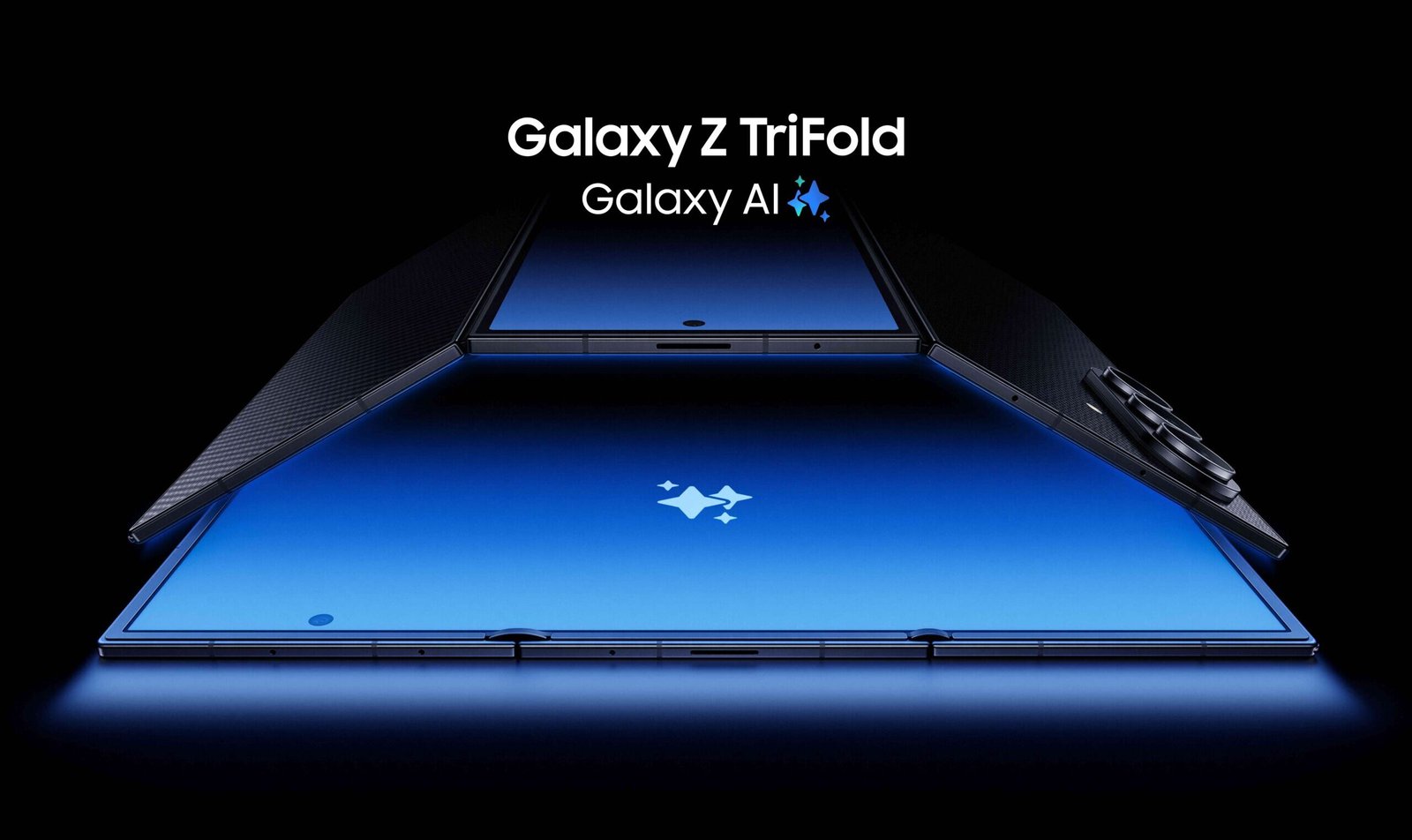
Samsung’s Galaxy Z TriFold is a premium tri‑fold foldable that unfolds to a 10‑inch Dynamic AMOLED 2X display, uses a Snapdragon 8 Elite platform, 16 GB RAM, a 5,600 mAh three‑cell battery, and targets productivity and media use; it launched in Korea in Dec 2025 with wider rollouts planned in Q1 2026.
Research brief — what this deep review covers
Scope: design, hardware, software, durability, market positioning, competitors, risks, and recommendations for Amizhthu’s Tech Reviews.
Key questions to guide the review: Who is the TriFold for? How does it compare to the Z Fold 7 and Huawei tri‑folds? Is it durable and practical day‑to‑day? What are the price/availability implications?
Dimensions/weight:309 g; folded thickness ~12.9 mm, unfolded ~3.9–4.2 mm.
Comparison table — TriFold vs Z Fold 7 vs Huawei Mate XT
Model
Main screen size
Folded thickness
Battery
Weight
Target use
Galaxy Z TriFold
10.0″
12.9 mm
5,600 mAh (3‑cell)
309 g
Productivity / tablet replacement
Galaxy Z Fold 7
~7.6″
~8.9 mm
~4,400 mAh
~275 g
Balanced foldable (phone + tablet)
Huawei Mate XT
~10.2″
varies (outward fold)
similar large cell
heavier
Large‑screen media device
Strengths, weaknesses, and evidence
Strengths:Unmatched screen real estate for mobile DeX, multitasking, and media; engineering (dual hinges, reinforced display layers) shows Samsung’s maturity in foldables.
Weaknesses:Pocketability trade‑off — noticeably thicker and heavier when folded; learning curve for correct folding; repair costs and long‑term durability remain concerns for flexible panels.
Unique engineering note: Samsung’s inward‑fold design encloses the main display and uses a three‑cell battery layout to balance weight and capacity.
Risks, limitations, and practical advice
Durability & repair cost: flexible inner displays remain fragile; repair can be expensive, and hinges can trap dust — Samsung offers a one‑time 50% display repair discount in some markets, but long‑term resilience is unproven.
App ecosystem fit: few apps currently optimized for a 10″ tri‑fold canvas; real productivity gains depend on developer support and One UI/DeX optimizations.
Price & availability: initial pricing in Korea ~3.59M KRW (~$2,400) with expected higher U.S. pricing; limited initial production suggests scarcity and premium positioning.