


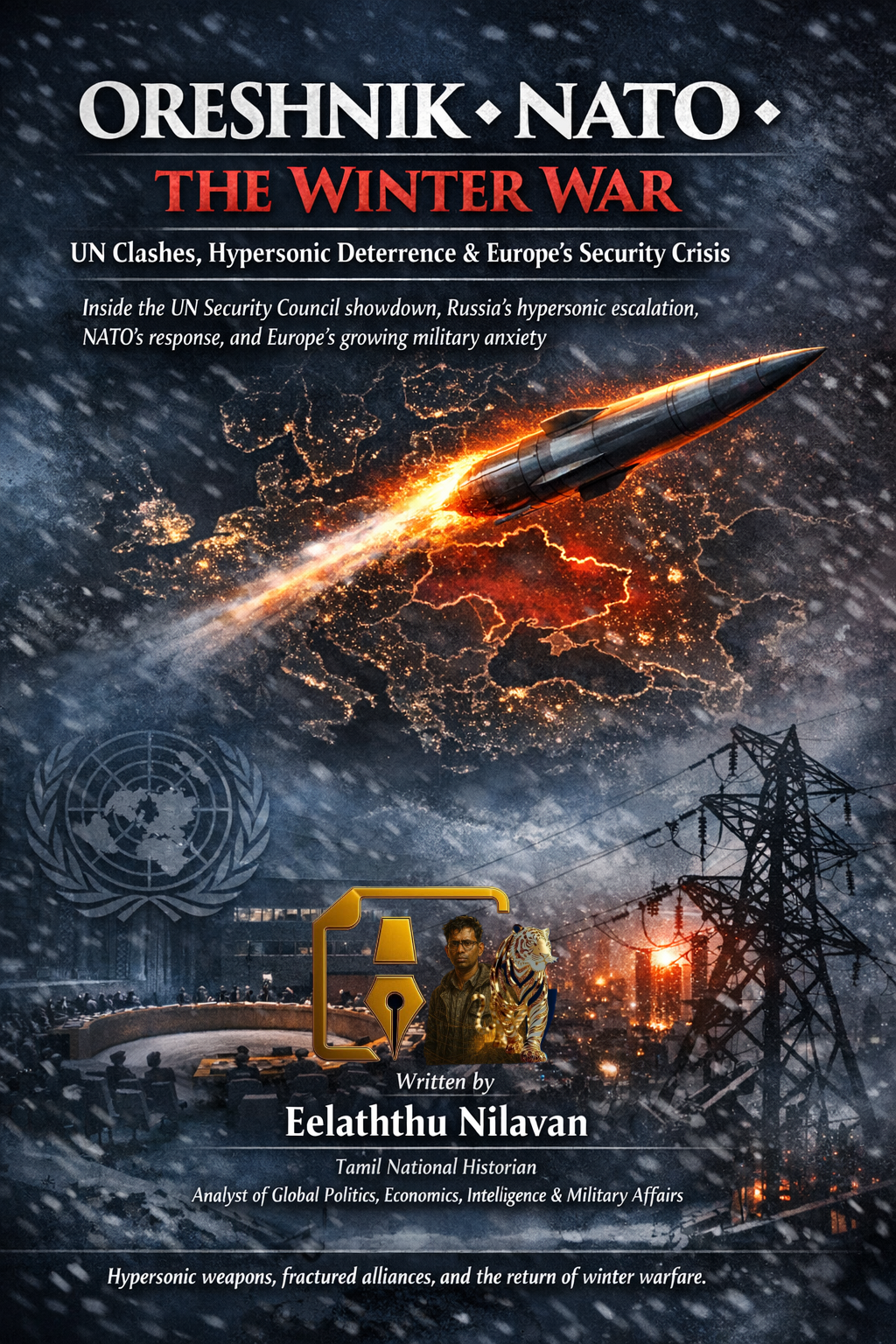
𝐔𝐍 𝐂𝐥𝐚𝐬𝐡𝐞𝐬, 𝐇𝐲𝐩𝐞𝐫𝐬𝐨𝐧𝐢𝐜 𝐃𝐞𝐭𝐞𝐫𝐫𝐞𝐧𝐜𝐞 & 𝐄𝐮𝐫𝐨𝐩𝐞’𝐬 𝐒𝐞𝐜𝐮𝐫𝐢𝐭𝐲 𝐂𝐫𝐢𝐬𝐢𝐬
𝐈𝐍𝐓𝐑𝐎𝐃𝐔𝐂𝐓𝐈𝐎𝐍: 𝐀 𝐃𝐀𝐍𝐆𝐄𝐑𝐎𝐔𝐒 𝐓𝐔𝐑𝐍𝐈𝐍𝐆 𝐏𝐎𝐈𝐍𝐓
January 2026 marks one of the most volatile moments in the Russia–Ukraine conflict since 2022. An emergency United Nations Security Council (UNSC) session revealed not only a sharp military escalation but also a collapse of diplomatic language, mutual delegitimisation, and a dangerous shift toward psychological warfare, hypersonic deterrence, and winter-based coercion.

At the center of the storm is Russia’s claimed deployment of the Oreshnik hypersonic missile system, NATO’s accelerated weapons transfers to Ukraine, and Europe’s growing fear that it is militarily fragmented, strategically dependent, and unprepared for war.
𝐓𝐇𝐄 𝐑𝐔𝐒𝐒𝐈𝐀𝐍 𝐂𝐀𝐒𝐄: “𝐒𝐄𝐋𝐄𝐂𝐓𝐈𝐕𝐄 𝐁𝐋𝐈𝐍𝐃𝐍𝐄𝐒𝐒” 𝐀𝐍𝐃 𝐓𝐄𝐑𝐑𝐎𝐑𝐈𝐒𝐌 𝐀𝐋𝐋𝐄𝐆𝐀𝐓𝐈𝐎𝐍𝐒
Russian Ambassador Vassily Nebenzia delivered an explosive address accusing the UN Secretariat and Western states of “political colorblindness” and deliberately ignoring Ukrainian attacks on Russian civilians.
◉ Civilian Attack Allegations
Russia claims:
• A New Year’s Eve 2026 strike on a resort town in the Kherson region killed 29 civilians, including children
• 367 civilians injured and 56 killed by Ukrainian strikes in December 2025 alone
• Belgorod region left partially powerless, affecting 500,000 civilians
Ukraine has not confirmed these claims, while Western diplomats dismissed some as fabrications or staged provocations.
𝐎𝐑𝐄𝐒𝐇𝐍𝐈𝐊: 𝐇𝐘𝐏𝐄𝐑𝐒𝐎𝐍𝐈𝐂 𝐖𝐄𝐀𝐏𝐎𝐍 𝐎𝐑 𝐏𝐎𝐋𝐈𝐓𝐈𝐂𝐀𝐋 𝐌𝐄𝐒𝐒𝐀𝐆𝐄?
Russia confirmed massive air and missile strikes between January 3–9, 2026, targeting:
• Transport corridors
• Airfields
• Ports
• Energy infrastructure
The centerpiece was the Oreshnik missile, described by Moscow as:
• Hypersonic
• Nuclear-capable
• Currently unstoppable by air defense
◉ Strategic Significance
• Second reported use near Lviv, just 50–60 km from Poland (NATO border)
• Designed not just for destruction, but deterrence signalling
• Aimed at testing NATO’s escalation thresholds
Ukraine dismissed Oreshnik as “overhyped intimidation, calling it a sign of Russian weakness rather than strength.
𝐖𝐄𝐀𝐏𝐎𝐍𝐈𝐙𝐀𝐓𝐈𝐎𝐍 𝐎𝐅 𝐖𝐈𝐍𝐓𝐄𝐑: 𝐄𝐍𝐄𝐑𝐆𝐘 𝐀𝐒 𝐀 𝐁𝐀𝐓𝐓𝐋𝐄𝐅𝐈𝐄𝐋𝐃
UN officials and European diplomats condemned Russia for striking energy infrastructure during –15°C to –20°C temperatures.
◉ Humanitarian Impact
• Millions without heat, electricity, or water
• Hospitals and civilian shelters under strain
• UN launching a $2.31 billion humanitarian appeal for 2026
Ukraine accused Russia of deliberately timing attacks to break civilian resistance, a charge Moscow rejected, blaming Ukrainian air defense interceptions for civilian casualties.
𝐓𝐇𝐄 𝐖𝐄𝐒𝐓 𝐑𝐄𝐒𝐏𝐎𝐍𝐃𝐒: 𝐏𝐑𝐎𝐉𝐄𝐂𝐓 𝐍𝐈𝐆𝐇𝐓𝐅𝐀𝐋𝐋 & 𝐄𝐒𝐂𝐀𝐋𝐀𝐓𝐈𝐎𝐍 𝐑𝐈𝐒𝐊𝐒
Britain announced “Project Nightfall, a new missile program for Ukraine.
◉ Nightfall Missile Capabilities
• 500 km range
• 200 kg warhead
• Supersonic
• Cost: $1 million per missile
• Production: ~10 missiles per month
Russia framed this as proof that NATO is directly enabling deep strikes into Russian territory, while analysts warn it increases retaliatory and miscalculation risks.
𝐍𝐀𝐓𝐎’𝐒 𝐀𝐍𝐗𝐈𝐄𝐓𝐘: 𝐄𝐔𝐑𝐎𝐏𝐄 𝐅𝐄𝐄𝐋𝐒 𝐔𝐍𝐏𝐑𝐄𝐏𝐀𝐑𝐄𝐃
European unease dominated the UNSC debate.
◉ “Bonsai Armies” Crisis
EU Defence Commissioner Andrius Kubilius warned:
• Europe relies on 27 fragmented national forces
• Russia’s military spending equals 85% of total EU defence (PPP-adjusted)
• The US is shifting focus to the Indo-Pacific
◉ Proposed Solutions
• 100,000-strong standing European army
• European Security Council, including the UK
• Faster joint decision-making outside NATO paralysis
This reflects a growing fear that NATO unity is strained, and Europe may be left exposed.
𝐃𝐈𝐏𝐋𝐎𝐌𝐀𝐂𝐘 𝐂𝐎𝐋𝐋𝐀𝐏𝐒𝐈𝐍𝐆: 𝐂𝐄𝐀𝐒𝐄𝐅𝐈𝐑𝐄 𝐑𝐄𝐉𝐄𝐂𝐓𝐄𝐃
Russia:
• Rejected ceasefire proposals
• Called Zelensky’s conditions “absurd.”
• Warned that negotiation terms will worsen over time
Ukraine:
• Demanded immediate air defense transfers
• Accused Russia of fabricating pretexts
• Claimed Russia faces economic stagnation, labor shortages, and massive casualties
Meanwhile, US diplomats suggested peace talks under President Trump are closer than ever—yet battlefield actions contradict diplomatic optimism.
𝐈𝐍𝐅𝐎𝐑𝐌𝐀𝐓𝐈𝐎𝐍 𝐖𝐀𝐑: 𝐓𝐇𝐄 𝐁𝐀𝐓𝐓𝐋𝐄 𝐎𝐅 𝐍𝐀𝐑𝐑𝐀𝐓𝐈𝐕𝐄𝐒
The UNSC clash revealed a deeper struggle:
• Weapons credibility
• Perception management
• Global opinion shaping
Oreshnik has become less a missile and more a symbol—used to intimidate, reassure allies, and fracture enemy morale.
𝐂𝐎𝐍𝐂𝐋𝐔𝐒𝐈𝐎𝐍: 𝐀 𝐖𝐀𝐑 𝐄𝐍𝐓𝐄𝐑𝐈𝐍𝐆 𝐀 𝐍𝐄𝐖 𝐏𝐇𝐀𝐒𝐄
The January 2026 UNSC emergency session confirms one reality:
This war is no longer just about territory—it is about deterrence thresholds, alliance cohesion, hypersonic supremacy, and Europe’s future security architecture.
With diplomacy weakened, escalation normalized, and winter weaponized, the conflict is entering its most dangerous psychological and strategic phase yet.


Written by
Eelaththu Nilavan
Tamil National Historian | Analyst of Global Politics, Economics, Intelligence & Military Affairs
