


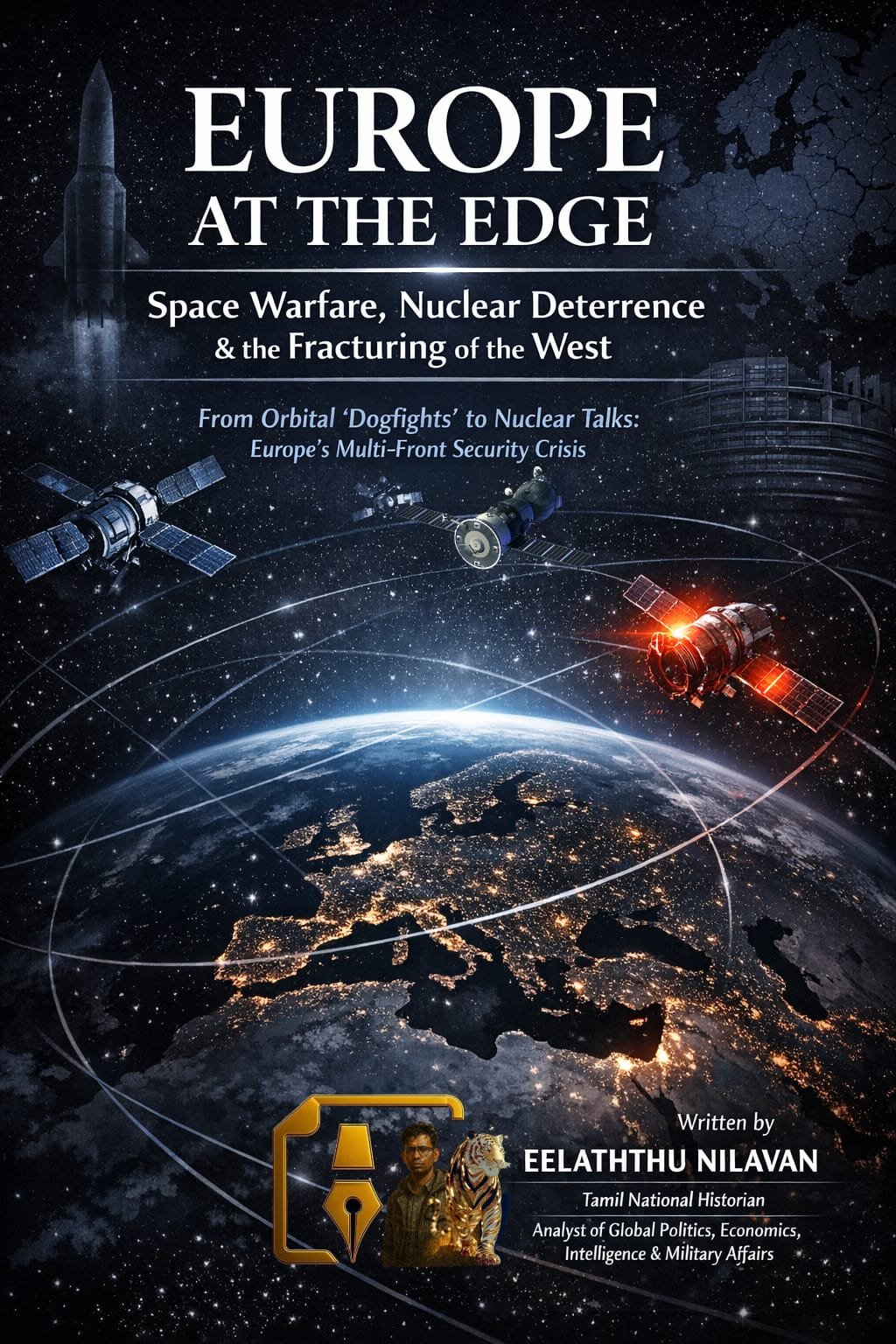
𝑭𝒓𝒐𝒎 𝑶𝒓𝒃𝒊𝒕𝒂𝒍 “𝑫𝒐𝒈𝒇𝒊𝒈𝒉𝒕𝒔” 𝒕𝒐 𝑵𝒖𝒄𝒍𝒆𝒂𝒓 𝑻𝒂𝒍𝒌𝒔: 𝑬𝒖𝒓𝒐𝒑𝒆’𝒔 𝑴𝒖𝒍𝒕𝒊-𝑭𝒓𝒐𝒏𝒕 𝑺𝒆𝒄𝒖𝒓𝒊𝒕𝒚 𝑪𝒓𝒊𝒔𝒊𝒔
✦ 𝑺𝑷𝑨𝑪𝑬: 𝑻𝑯𝑬 𝑵𝑬𝑾 𝑩𝑨𝑻𝑻𝑳𝑬𝑭𝑰𝑬𝑳𝑫

Europe’s security paradigm has entered a decisive and dangerous phase. Speaking at the European Space Conference in Brussels, German State Secretary for Defence Jens Plötner issued one of the starkest warnings heard in recent years: space has become an active war zone.
Describing current conditions as a “dogfight in orbit,” Plötner revealed that Chinese and Russian satellites are actively maneuvering near European space assets, testing counterspace capabilities designed to deny, degrade, disrupt, or even destroy satellites critical to Europe’s military, economic, and civilian infrastructure.
Unlike past concerns framed as future risks, these developments indicate that space warfare is already underway, quietly but relentlessly.
✦ 𝑪𝑯𝑰𝑵𝑨 & 𝑹𝑼𝑺𝑺𝑰𝑨: 𝑨𝑮𝑰𝑳𝑬 𝑺𝑨𝑻𝑬𝑳𝑳𝑰𝑻𝑬𝑺, 𝑨𝑮𝑮𝑹𝑬𝑺𝑺𝑰𝑽𝑬 𝑫𝑶𝑪𝑻𝑹𝑰𝑵𝑬𝑺
Plötner highlighted Chinese satellites executing complex, high-precision orbital maneuvers, a capability that goes far beyond passive observation. Such actions suggest readiness for close-proximity interference, inspection, or sabotage.
Even more alarming is Russia’s deployment of nuclear-capable anti-satellite weapons, a move that fundamentally alters deterrence calculations. The implication is clear: Europe’s eyes, ears, navigation systems, and encrypted communications are now exposed.
A successful attack on space infrastructure would not merely blind militaries—it could paralyze banking systems, power grids, aviation, emergency services, and digital governance across the continent.
✦ 𝑬𝑼’𝑺 𝑺𝑻𝑹𝑨𝑻𝑬𝑮𝑰𝑪 𝑹𝑬𝑺𝑷𝑶𝑵𝑺𝑬: 𝑹𝑬𝑨𝑹𝑴𝑨𝑴𝑬𝑵𝑻 𝑰𝑵 𝑻𝑯𝑬 𝑺𝑻𝑨𝑹𝑺
Facing this reality, the European Union is accelerating a historic rearmament drive:
• €500 billion rearmament plan, spearheaded by Germany
• €35 billion earmarked exclusively for space defense by 2030
• Expansion of space situational awareness systems
• Secure, encrypted satellite communications are now shared by all 27 EU member states
• A joint satellite monitoring network led by France, Finland, Sweden, and Spain
Plötner stressed that fragmentation is fatal. Without pooling resources and coordinating closely with NATO and the United States, Europe risks what he called “catastrophic vulnerability.”
✦ 𝑵𝑼𝑪𝑳𝑬𝑨𝑹 𝑺𝑯𝑨𝑫𝑶𝑾𝑺: 𝑬𝑼𝑹𝑶𝑷𝑬 𝑹𝑬𝑻𝑯𝑰𝑵𝑲𝑺 𝑫𝑬𝑻𝑬𝑹𝑹𝑬𝑵𝑪𝑬
Parallel to the space crisis, Europe is quietly revisiting its nuclear deterrence architecture.
German Chancellor Friedrich Merz confirmed early-stage discussions with France, the UK, and other European allies on strengthening a joint European nuclear shield. While Germany remains legally barred from possessing nuclear weapons under the 2+4 Treaty and the Non-Proliferation Treaty, Berlin is seeking collective deterrence mechanisms rather than national ownership.
These talks include:
• Joint nuclear and strategic planning
• Deeper military coordination
• Possible integration with advanced air and missile defense systems
Merz emphasized that this does not replace NATO or U.S. nuclear sharing, but rather hedges against uncertainty in long-term American commitment.
✦ 𝑯𝑼𝑵𝑮𝑨𝑹𝒀’𝑺 𝑹𝑬𝑩𝑬𝑳𝑳𝑰𝑶𝑵: “𝑾𝑨𝑹 𝑶𝑽𝑬𝑹 𝑷𝑬𝑨𝑪𝑬.”
As Brussels hardens its stance, Hungary has emerged as the EU’s most vocal dissenter.
Foreign Minister Péter Szijjártó accused EU leaders of openly admitting they are “not ready for peace”, warning that policies on Ukraine could drag Europe into World War III. Budapest rejects:
• €1.5 trillion financial plans for Ukraine
• Use of European Investment Bank funds for weapons
• Relocating EU military training onto Ukrainian soil
• Further sanctions on Russian energy
Hungary has also vowed to block Ukraine’s EU accession, calling fast-tracking by 2027 a “countdown to war.”
✦ 𝑮𝑬𝑹𝑴𝑨𝑵𝒀 𝑫𝑰𝑽𝑰𝑫𝑬𝑫: 𝑨𝑰𝑫, 𝑫𝑬𝑩𝑻 & 𝑪𝑶𝑹𝑹𝑼𝑷𝑻𝑰𝑶𝑵
Internal fractures are also widening within Germany. In the Bundestag, AfD MPs attacked debt-financed Ukraine aid, alleging:
• Massive corruption in Ukraine’s energy and defense sectors
• Disappearance of funds and weapons into black markets
• Lack of transparency over the Nord Stream sabotage
Mainstream parties countered that cutting aid punishes civilians, not elites, and accused the AfD of weaponizing corruption narratives for political gain.
✦ 𝑩𝑹𝑰𝑻𝑨𝑰𝑵: 𝑾𝑨𝑹 𝑹𝑯𝑬𝑻𝑶𝑹𝑰𝑪, 𝑷𝑼𝑩𝑳𝑰𝑪 𝑭𝑨𝑻𝑰𝑮𝑼𝑬
Adding to the picture of Western strain, a British volunteer fighter in Donbass warned that UK society lacks the will for war. According to him:
• Public resistance to conscription is rising
• Media-driven WWIII narratives lack popular consent
• Domestic crises overshadow foreign policy ambitions
This gap between elite strategy and public readiness raises serious questions about Europe’s long-term war sustainability.
✦ 𝑪𝑶𝑵𝑪𝑳𝑼𝑺𝑰𝑶𝑵: 𝑨 𝑪𝑶𝑵𝑻𝑰𝑵𝑬𝑵𝑻 𝑨𝑻 𝑨 𝑪𝑹𝑶𝑺𝑺𝑹𝑶𝑨𝑫𝑺
Europe today faces a multi-layered crisis—in orbit, on the battlefield, in energy markets, and within its own political unity. Space has become the silent front line, nuclear deterrence is being quietly re-engineered, and consensus inside the EU is visibly cracking.
Whether Europe emerges as a cohesive strategic actor or descends into fragmentation will depend on how it balances security, sovereignty, public consent, and geopolitical realism—before decisions made in silence become irreversible in reality.


Written by Eelaththu Nilavan
Tamil National Historian .
Analyst of Global Politics, Economics, Intelligence & Military Affairs
01/02/2026
