


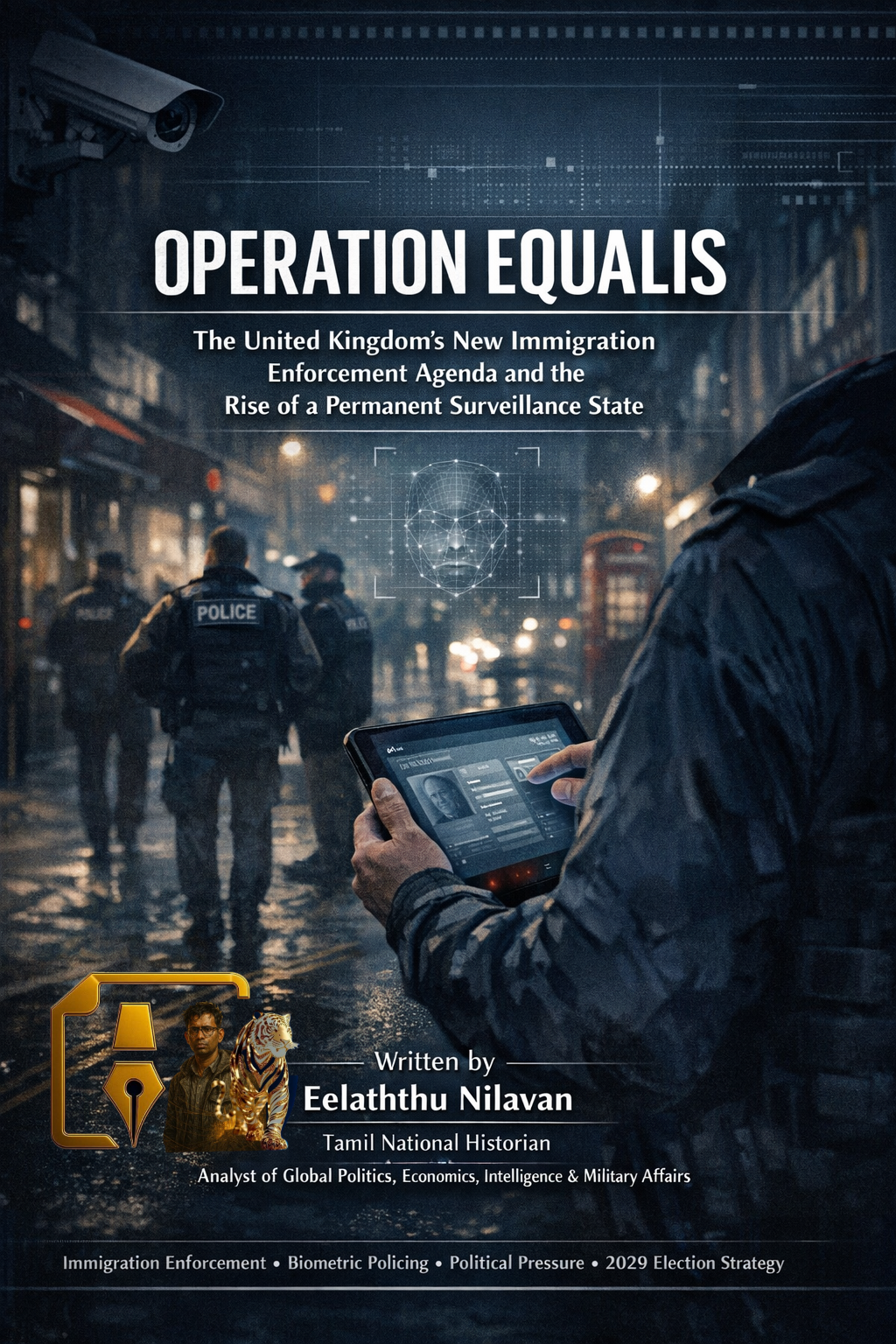
𝙄𝙉𝙏𝙍𝙊𝘿𝙐𝘾𝙏𝙄𝙊𝙉: 𝘼 𝙎𝙃𝙄𝙁𝙏 𝙁𝙍𝙊𝙈 𝙋𝙊𝙇𝙄𝘾𝙔 𝙏𝙊 𝙋𝙊𝙇𝙄𝘾𝙄𝙉𝙂

The United Kingdom has entered a new and decisive phase in its immigration enforcement strategy. Under a mission branded “Operation Equalis,” the UK Home Office has significantly intensified its crackdown on illegal migration, undocumented residence, and unauthorised employment.
What distinguishes this operation from previous enforcement drives is not merely the scale, but the methodology: real-time biometric checks, street-level interventions, and the normalisation of surveillance-based identity verification in everyday public spaces.
As the country moves closer to the 2029 General Election, immigration has once again been elevated from a policy debate to a core political weapon.
𝙉𝘼𝙏𝙄𝙊𝙉𝙒𝙄𝘿𝙀 𝙍𝘼𝙄𝘿𝙎 𝘼𝙉𝘿 𝙍𝘼𝙋𝙄𝘿 𝙍𝙀𝙈𝙊𝙑𝘼𝙇𝙎
Under Operation Equalis, Immigration Enforcement teams and police units are conducting coordinated raids across England, Scotland, and Wales.
• 171 arrests in just seven days
• 60 individuals already removed from the UK
• Enforcement actions span urban centres, market towns, and rural localities
These figures indicate a compressed enforcement-to-deportation cycle, where arrests are rapidly followed by removals, reducing the scope for prolonged legal resistance.
𝙎𝙏𝙍𝙀𝙀𝙏-𝙇𝙀𝙑𝙀𝙇 𝙄𝘿𝙀𝙉𝙏𝙄𝙏𝙔 𝘾𝙃𝙀𝘾𝙆𝙎: 𝙏𝙃𝙀 𝙀𝙉𝘿 𝙊𝙁 𝘼𝙉𝙊𝙉𝙔𝙈𝙄𝙏𝙔
One of the most controversial aspects of Operation Equalis is the on-the-spot identity verification regime.
Authorities are now:
• Stopping individuals in high streets, villages, and public areas
• Using fingerprint scanners
• Deploying Facial Recognition technology via mobile tablets (iPads)
This allows officers to instantly access immigration history, asylum status, and enforcement flags.
The practical implication is clear: public space itself has become an extension of the border.
For refugees and undocumented migrants, daily life now involves the constant risk of instantaneous identification and detention.
𝙏𝙀𝘾𝙃𝙉𝙊𝙇𝙊𝙂𝙔 𝘼𝙎 𝙀𝙉𝙁𝙊𝙍𝘾𝙀𝙈𝙀𝙉𝙏: 𝘼 𝙌𝙐𝙄𝙀𝙏 𝙋𝙊𝙇𝙄𝘾𝙔 𝙍𝙀𝙑𝙊𝙇𝙐𝙏𝙄𝙊𝙉
The integration of biometric and facial recognition tools represents a structural shift rather than a temporary tactic.
This approach:
• Reduces dependence on traditional document checks
• Bypasses language barriers and false documentation
• Enables predictive and preventive enforcement
While framed as efficiency, critics argue this creates a two-tier society, where appearance, accent, or perceived foreignness may trigger scrutiny.
𝙄𝙇𝙇𝙀𝙂𝘼𝙇 𝙒𝙊𝙍𝙆 𝙐𝙉𝘿𝙀𝙍 𝙎𝙄𝙀𝙂𝙀: 𝘿𝙀𝙇𝙄𝙑𝙀𝙍𝙔 𝙀𝘾𝙊𝙉𝙊𝙈𝙔 𝙄𝙉 𝙁𝙊𝘾𝙐𝙎
A major pillar of Operation Equalis is the disruption of unauthorised employment networks.
Border Security Minister Alex Norris has held high-level discussions with:
• Delivery platforms such as Deliveroo and Just Eat
• Other gig-economy stakeholders
The focus is on:
• Preventing account sharing
• Strengthening right-to-work verification
• Closing loopholes exploited by undocumented workers
This signals an attempt to choke the economic lifelines that allow undocumented migrants to survive—pushing enforcement beyond borders and into platforms.
𝙋𝙊𝙇𝙄𝙏𝙄𝘾𝘼𝙇 𝙋𝙍𝙀𝙎𝙎𝙐𝙍𝙀: 𝙍𝙀𝙁𝙊𝙍𝙈 𝙐𝙆 𝘼𝙉𝘿 𝙏𝙃𝙀 𝙃𝘼𝙍𝘿𝙀𝙉𝙄𝙉𝙂 𝙊𝙁 𝙍𝙀𝙏𝙊𝙍𝙄𝘾
The ruling Labour government is facing sustained pressure from Reform UK, led by Nigel Farage.
Reform UK is demanding:
• Complete abolition of Indefinite Leave to Remain (ILR) after five years
• State benefits are restricted exclusively to British citizens
Though not yet policy, these demands have shifted the political centre of gravity—forcing mainstream parties to outflank the far-right on enforcement optics.
Operation Equalis must be understood within this competitive landscape.
𝘿𝙀𝙋𝙊𝙍𝙏𝘼𝙏𝙄𝙊𝙉 𝙎𝙐𝙍𝙂𝙀: 𝙏𝙃𝙀 𝙉𝙐𝙈𝘽𝙀𝙍𝙎 𝘽𝙀𝙃𝙄𝙉𝘿 𝙏𝙃𝙀 𝙎𝙏𝙍𝘼𝙏𝙀𝙂𝙔
Since early 2024:
• Over 50,000 people have been deported
• Immigration-related arrests and seizures have risen by 33% over 12 months
These figures are being actively leveraged to project state control, deterrence, and political competence.
𝙏𝙃𝙀 𝙃𝙐𝙈𝘼𝙉 𝘾𝙊𝙎𝙏: 𝙍𝙀𝙁𝙐𝙂𝙀𝙀𝙎 𝘼𝙉𝘿 𝙐𝙉𝘿𝙊𝘾𝙐𝙈𝙀𝙉𝙏𝙀𝘿 𝙈𝙄𝙂𝙍𝘼𝙉𝙏𝙎
For refugees, asylum seekers, and undocumented migrants, the message is unambiguous:
• Movement is monitored
• Work is surveilled
• Presence itself is precarious
Operation Equalis represents not merely enforcement, but a psychological environment of constant exposure, where legality must be continuously proven.
𝘾𝙊𝙉𝘾𝙇𝙐𝙎𝙄𝙊𝙉: 𝙏𝙃𝙀 𝙍𝙊𝘼𝘿 𝙏𝙊 𝟮𝟬𝟮𝟵
As the UK advances toward the 2029 election, immigration policy is being reshaped into a high-visibility, high-impact security theatre.
Operation Equalis signals:
• The normalisation of biometric policing
• The merging of technology, politics, and border control
• A future where survival for migrants depends not on time served, but on constant verification
For those seeking refuge, the United Kingdom is becoming not just a destination—but a continuously contested space.

 Written by
Eelaththu Nilavan
Tamil National Historian | Analyst of Global Politics, Economics, Intelligence & Military Affairs
06/02/2026
