


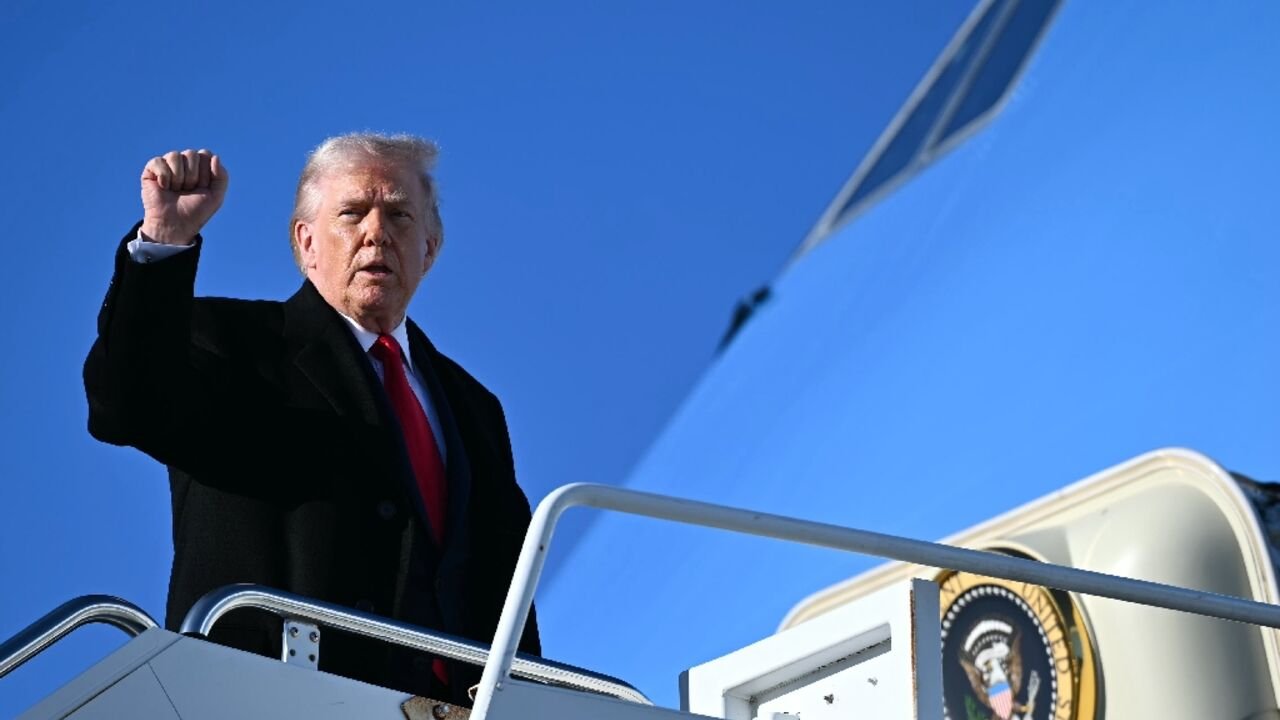
In one of his most direct comments to date on Iran’s political future, President Donald Trump said Friday that a change in power in Tehran “would be the best thing that could happen,” as the United States continues to expand its military presence in the Middle East amid escalating tensions.

Speaking to reporters after visiting troops at Fort Bragg, North Carolina, Trump confirmed that his administration is deploying a second U.S. aircraft carrier group to the region — the USS Gerald R. Ford, the world’s largest warship — in what officials describe as a strategic move to increase pressure on Iran’s clerical leadership.
When asked directly whether he was advocating for the ouster of Iran’s Islamic clerical establishment, Trump responded, “It seems like that would be the best thing that could happen. For 47 years, they’ve been talking and talking and talking.”
Military Build‑Up and Strategic Calculations
The deployment of the USS Gerald R. Ford comes as Washington weighs potential military action against Tehran. The carrier is being moved from the Caribbean Sea to join an already significant U.S. naval presence in the Middle East, including the USS Abraham Lincoln and other warships positioned to deter Iranian escalation.
Trump said the additional carrier would be necessary “in case we don’t make a deal,” signaling that diplomatic efforts remain uncertain. Planned talks with Iranian intermediaries did not materialize this week, as senior Iranian security officials instead traveled to Oman and Qatar for indirect exchanges.
Nuclear Program at the Center of Dispute
While the president has recently emphasized the need for Iran to scale back its nuclear activities, he suggested Friday that nuclear concessions are only one part of a broader set of U.S. demands. Israeli Prime Minister Benjamin Netanyahu, who met with Trump in Washington earlier this week, has urged the administration to insist on curbing Iran’s ballistic missile program and halting its support for proxy groups, including Hamas and Hezbollah.
Trump noted that targeting Iran’s nuclear infrastructure — which suffered setbacks during U.S. military strikes last year — would be “the least of the mission” if broader action were required. Iran maintains that its nuclear program is for peaceful purposes, though before last year’s conflict, it had enriched uranium up to 60 percent purity, a level close to weapons‑grade.
Regional and Political Reactions
Trump’s remarks mark one of his clearest public endorsements of a potential change in Iran’s leadership. Although he stopped short of naming who might replace Supreme Leader Ayatollah Ali Khamenei, he said “there are people,” suggesting that alternatives exist within or outside Iran’s political landscape.
The comments come amid ongoing fallout from Iran’s recent crackdown on nationwide protests, which rights groups say resulted in thousands of deaths. Exiled opposition figure Reza Pahlavi, son of Iran’s last shah, has renewed calls for international intervention to protect demonstrators and support the political transition.
U.S. officials, however, have cautioned that any shift in Iran’s leadership would be complex. Secretary of State Marco Rubio recently told lawmakers that Iran’s entrenched political system makes any transition “far more complex” than previous U.S. efforts to support leadership changes elsewhere.
Uncertain Path Ahead
Despite the heightened rhetoric, Trump has previously warned that abrupt regime change could lead to instability. His administration continues to balance military pressure with intermittent diplomatic outreach, though both sides remain far apart on key issues.
With the U.S. military presence in the region expanding and diplomatic channels faltering, analysts say the coming weeks may determine whether Washington and Tehran move toward negotiation or confrontation.
