


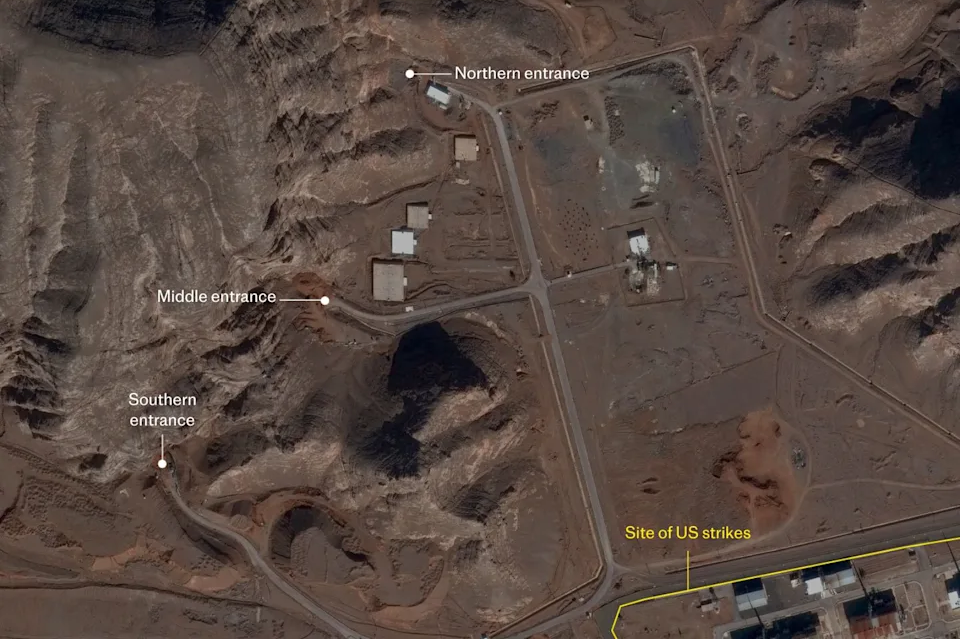

Iran has intensified construction and reinforcement efforts at an underground complex near one of its most sensitive nuclear facilities, according to newly analysed satellite imagery that has raised fresh questions among international security analysts. The developments come at a moment of heightened geopolitical friction, as diplomatic manoeuvring between Tehran and Washington continues and concerns over Iran’s nuclear ambitions persist.
Fresh Construction at Pickaxe Mountain
The underground complex—carved into Mount Kolang Gaz La, widely known as Pickaxe Mountain—lies roughly two kilometres south of the Natanz nuclear facility, a central hub of Iran’s uranium‑enrichment programme. Satellite images captured in early February show significant new construction activity at multiple tunnel entrances. Analysts from the Institute for Science and International Security (ISIS) report evidence of freshly poured concrete, a boom pump positioned at one entrance, and terrain reshaping where soil and rock have been pushed back and flattened.
A newly added concrete‑reinforced structure at another portal suggests efforts to harden the site against potential airstrikes or sabotage. The scale and depth of the tunnels, combined with the protective mass of the mountain, have prompted experts to question whether Iran intends to house more sensitive nuclear‑related operations within the fortified complex.
Context: Damage, Recovery, and Concealment
The renewed activity follows months of reconstruction across Iran’s nuclear infrastructure after Israeli airstrikes in 2025 damaged parts of the Natanz and Isfahan facilities. Satellite photos analysed by ISIS indicate that Iran erected a white‑panelled roof over a previously damaged section of the Natanz enrichment facility between December and January—an addition that appears designed to obscure recovery operations from aerial observation.
Analysts suggest the covering may be intended to conceal salvage efforts, including the retrieval of equipment or enriched uranium that may have survived the strikes. The presence of heavy machinery at both Natanz and Pickaxe Mountain indicates that neither site is yet fully operational.
Strategic Implications
The fortification efforts come as diplomatic talks between Iran and the United States remain fragile. Washington has warned of potential military action should Tehran refuse to negotiate a new nuclear agreement, while Iran maintains that its nuclear activities are peaceful and within its sovereign rights. The proximity of the reinforced tunnels to Natanz—struck during joint U.S.–Israeli operations in June 2025—has heightened concerns that Iran may be seeking to protect or expand its enrichment capabilities underground.
ISIS analysts note that while Iranian officials have previously linked construction at Pickaxe Mountain to rebuilding an advanced centrifuge assembly plant, the scale of the fortifications suggests the site could eventually support more critical nuclear functions.
Uncertain Future
Despite the visible progress, experts caution that the underground complex is unlikely to be operational in the near term. The continued presence of construction materials and machinery indicates that Iran is still in the process of shaping the facility’s long‑term purpose.
As regional tensions simmer and diplomatic channels remain strained, the latest satellite imagery underscores the strategic significance of Iran’s subterranean infrastructure—and the growing international scrutiny surrounding it.
