


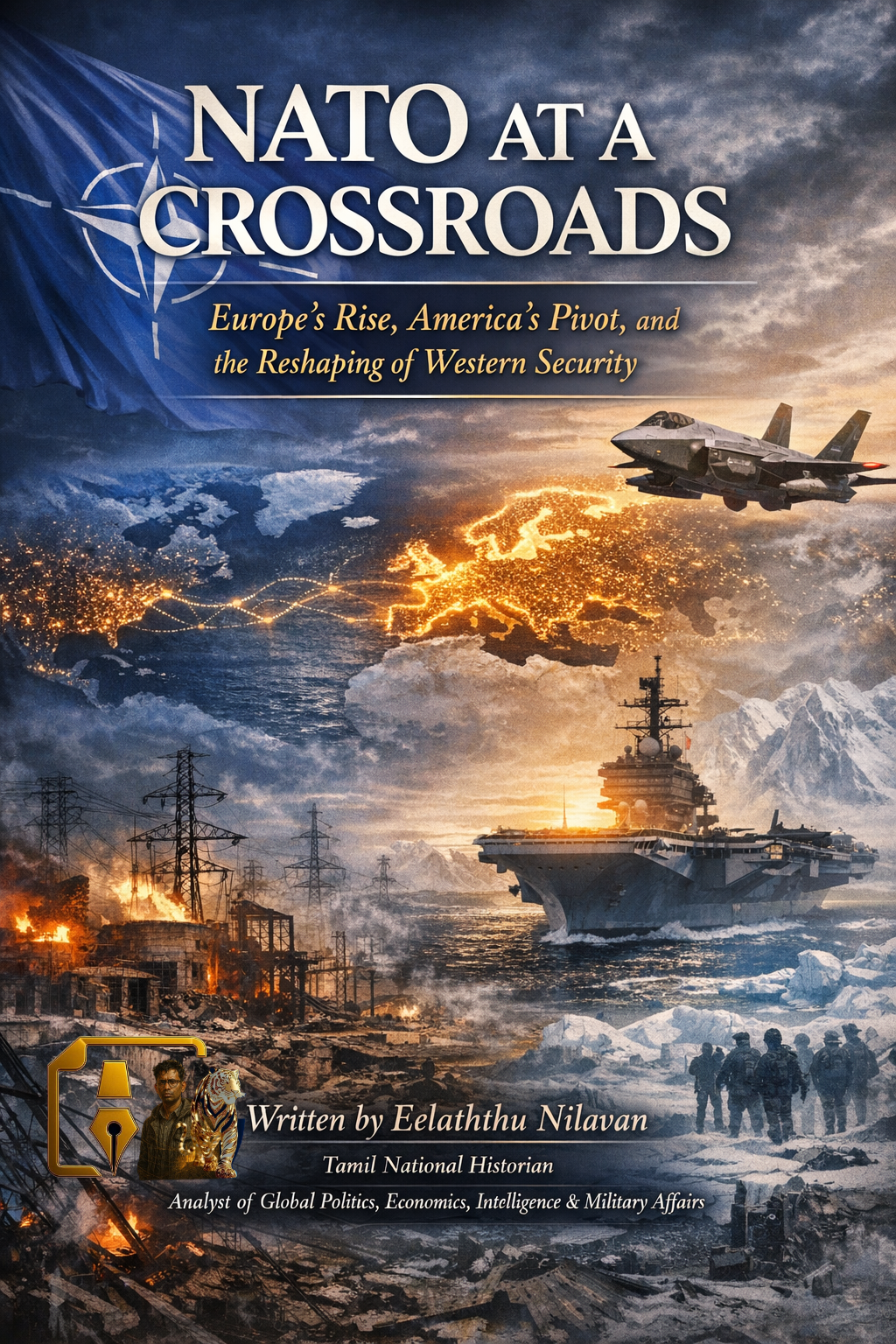
✦ A Structural Reset — Not a Collapse ✦
The 2026 Munich Security Conference did not merely produce speeches; it exposed a tectonic shift inside the Atlantic alliance.
What is unfolding within North Atlantic Treaty Organization is not a dramatic American withdrawal — it is a structural recalibration. Europe is no longer content with being a junior partner under the American security umbrella. The financial burden, operational tempo, and political expectations are shifting west-to-east across the Atlantic.
NATO is not fragmenting. It is transforming.
𝙀𝙐𝙍𝙊𝙋𝙀 𝙋𝘼𝙔𝙎 — 𝙀𝙐𝙍𝙊𝙋𝙀 𝘿𝙀𝙈𝘼𝙉𝘿𝙎 𝙄𝙉𝙁𝙇𝙐𝙀𝙉𝘾𝙀
✦ The Burden-Sharing Debate Enters a New Phase ✦
NATO Secretary General Mark Rutte and Polish Foreign Minister Radosław Sikorski openly acknowledged what was once whispered in diplomatic corridors:
European taxpayers are financing the bulk of Ukraine’s war effort.
Sikorski’s remark that “the US paid close to zero” in the last year — referring to net financial transfers compared to European disbursements — crystallized the new narrative. Weapons are increasingly being purchased by European states, often from American defense manufacturers, rather than gifted directly by Washington.
The implication is clear:
If Europe pays, Europe expects authority.
This is driving calls for:
• Greater European strategic autonomy
• A decisive role in ceasefire negotiations
• Long-term continental security guarantees independent of electoral cycles in Washington
𝟱% 𝘿𝙀𝙁𝙀𝙉𝙎𝙀 𝙎𝙋𝙀𝙉𝘿𝙄𝙉𝙂: 𝙏𝙃𝙀 𝙍𝙀𝘼𝙍𝙈𝘼𝙈𝙀𝙉𝙏 𝙀𝙍𝘼
✦ From 2% to 5% — A Radical Leap ✦
For years, NATO’s benchmark was 2% of GDP on defense. Now, serious discussions are pushing toward 5%.
Germany’s Defence Minister Boris Pistorius confirmed Berlin’s constitutional amendment allowing sustained military expansion, with a target of 3.5% by 2029 — a figure unimaginable a decade ago.
This is not symbolic spending. It signals:
• Permanent force expansion
• Strategic stockpiling
• Arctic naval deployments
• Submarine-hunting fleets
• Infrastructure defense (including undersea cables and pipelines)
Pistorius summarized the moment bluntly: American security provision was always an “exceptional arrangement.” Exceptional arrangements end.
𝘽𝙍𝙄𝙏𝘼𝙄𝙉’𝙎 𝘼𝙍𝘾𝙏𝙄𝘾 𝙈𝙊𝙑𝙀: 𝙃𝘼𝙍𝘿 𝙋𝙊𝙒𝙀𝙍 𝙍𝙀𝙏𝙐𝙍𝙉𝙎
✦ The High North Becomes the New Front ✦
British Prime Minister Keir Starmer announced deployment of the UK Carrier Strike Group led by HMS Prince of Wales to the North Atlantic and Arctic “High North.”
This deployment includes:
• F-35 fighter jets
• Submarine-hunting vessels
• Arctic-trained commandos
• Integrated US and Canadian participation
The Arctic is no longer peripheral. As melting ice opens new shipping lanes and exposes undersea infrastructure, it is emerging as a strategic corridor of rivalry between NATO and Russia.
France has signaled it will follow with its own carrier group next year — reinforcing what analysts now call the “Northern Reinforcement Doctrine.”
𝙍𝙐𝙎𝙎𝙄𝘼–𝙐𝙆𝙍𝘼𝙄𝙉𝙀: 𝙏𝙃𝙀 𝙒𝘼𝙍 𝙊𝙁 𝙄𝙉𝙁𝙍𝘼𝙎𝙏𝙍𝙐𝘾𝙏𝙐𝙍𝙀
✦ Power Plants, Drones, and Attrition ✦
At the Munich forum, Ukrainian President Volodymyr Zelenskyy declared that not a single Ukrainian power plant has escaped Russian attack.
The war has evolved:
• Long-range drone strikes
• Energy grid sabotage
• Railway fuel targeting
• Deep-strike operations into Russian territory
Russia’s Chief of General Staff Valery Gerasimov claims winter offensives captured 12 settlements and over 200 square kilometers in February alone — though these remain unverified.
The battlefield is no longer linear. It is infrastructural.
Electricity grids are strategic objectives.
𝙒𝘼𝙎𝙃𝙄𝙉𝙂𝙏𝙊𝙉’𝙎 𝙋𝙄𝙑𝙊𝙏: 𝙄𝙉𝘿𝙊-𝙋𝘼𝘾𝙄𝙁𝙄𝘾 𝙊𝙑𝙀𝙍 𝙀𝙐𝙍𝙊𝙋𝙀?
✦ The Strategic Rebalance ✦
The United States remains NATO’s backbone. The Supreme Allied Commander Europe is still an American position.
Yet under President Donald Trump, Washington’s strategic messaging signals priority toward the Indo-Pacific.
Secretary of State Marco Rubio reassured allies that America does not intend to dismantle the transatlantic alliance. However, Europe hears a subtext: self-reliance is no longer optional.
The Geneva trilateral talks (US–Ukraine–Russia) reflect this recalibration. While Washington offered a 15-year security guarantee, Kyiv seeks up to 50 years. The unresolved status of Donbas remains the central diplomatic fault line.
𝙀𝙐 𝙄𝙉𝙏𝙀𝙍𝙉𝘼𝙇 𝙁𝙍𝘼𝘾𝙏𝙐𝙍𝙀𝙎: 𝙏𝙃𝙀 𝙊𝙍𝘽𝘼́𝙉–𝙁𝙄𝘾𝙊 𝘾𝙃𝘼𝙇𝙇𝙀𝙉𝙂𝙀
✦ Brussels Under Fire ✦
Slovakia’s Prime Minister Robert Fico and Hungary’s Viktor Orbán launched unusually sharp criticism of the European Union.
They accuse Brussels of:
• Weak leadership
• Economic mismanagement
• War profiteering
• Double standards on sanctions
Orbán continues to veto Ukraine’s EU accession, complicating European unity under Commission President Ursula von der Leyen.
Thus, NATO’s transformation coincides with EU internal tension — a dual pressure shaping Europe’s future.
𝙏𝙃𝙀 𝙀𝙐𝙍𝙊𝙋𝙀𝘼𝙉𝙄𝙕𝘼𝙏𝙄𝙊𝙉 𝙊𝙁 𝙉𝘼𝙏𝙊
✦ Becoming More European to Stay Transatlantic ✦
Pistorius offered perhaps the most revealing phrase:
“NATO is becoming more European so that it can remain transatlantic.”
This is the paradox of the moment.
Europe must:
• Expand conventional forces
• Secure Arctic corridors
• Protect digital sovereignty
• Guarantee Ukrainian security
• Reduce dependency on volatile US political cycles
Yet NATO’s nuclear umbrella, intelligence backbone, and global projection capacity still depend heavily on American systems.
The alliance is not splitting.
It is redistributing weight.
𝙄𝙎 𝙉𝘼𝙏𝙊 𝙀𝙉𝙏𝙀𝙍𝙄𝙉𝙂 𝘼 𝙀𝙐𝙍𝙊𝙋𝙀𝘼𝙉-𝙇𝙀𝘿 𝙀𝙍𝘼?
The answer is nuanced.
• Operational burden → increasingly European
• Strategic nuclear authority → still American
• Financial contributions → shifting toward Europe
• Political negotiations → contested
What is emerging is a hybrid model:
A NATO where Europe carries the conventional shield,
while America provides strategic depth.
The 2026 Munich Security Conference may be remembered not for crisis — but for clarity.
The era of NATO complacency is over.
The era of NATO transformation has begun.

Written by  Eelaththu Nilavan
Tamil National Historian | Analyst of Global Politics, Economics, Intelligence & Military Affairs
16/02/2026
