


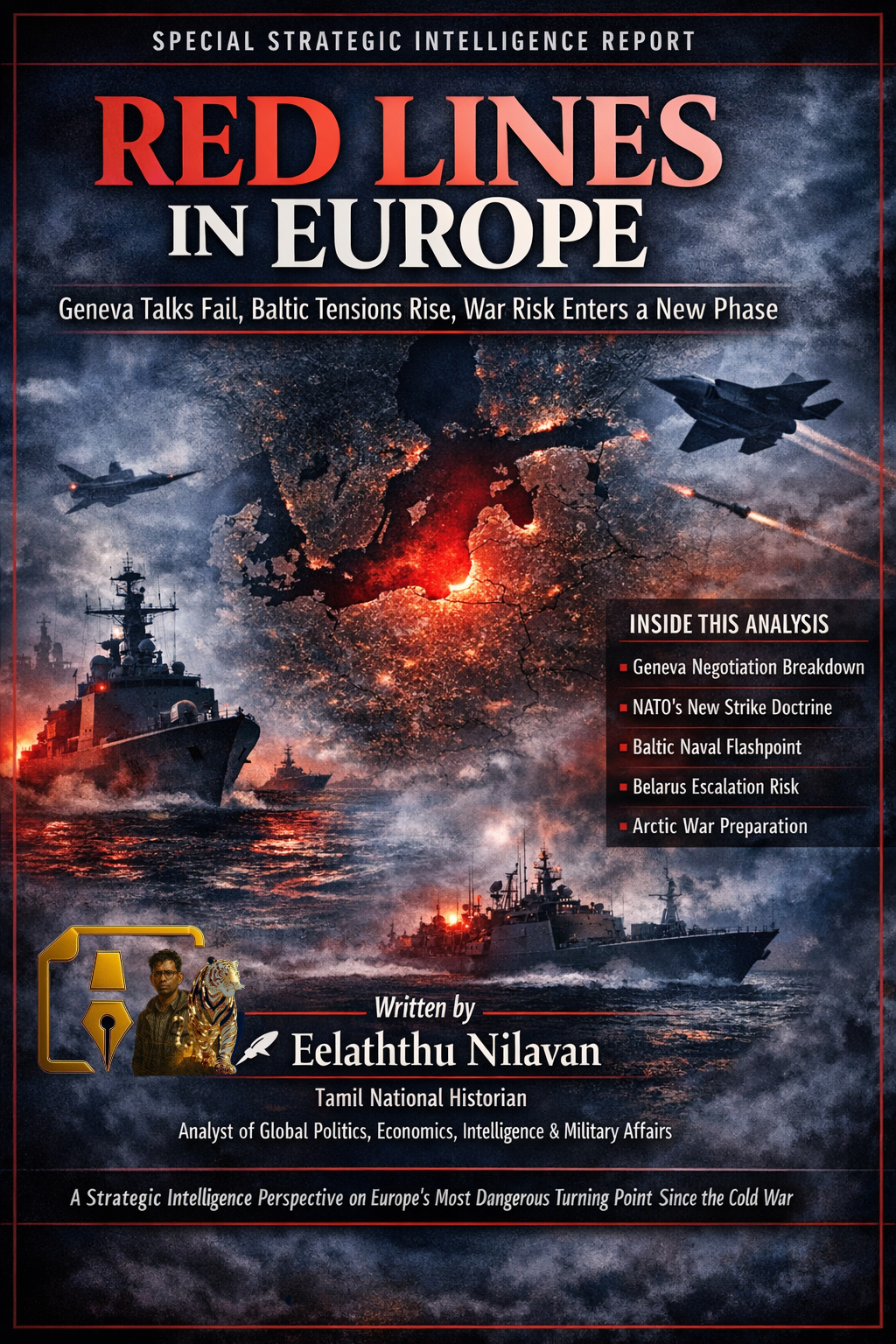
✦ 𝑮𝒆𝒏𝒆𝒗𝒂 𝑫𝒊𝒑𝒍𝒐𝒎𝒂𝒄𝒚 𝑺𝒕𝒂𝒍𝒍𝒔 𝒂𝒔 𝑻𝒓𝒖𝒔𝒕 𝑪𝒐𝒍𝒍𝒂𝒑𝒔𝒆𝒔
Negotiations mediated by the United States in Geneva between Ukraine and Russia ended without a breakthrough, underscoring how far apart the two sides remain nearly four years into full-scale war.
U.S. President Donald Trump has pressed for a rapid settlement, but Ukrainian President Volodymyr Zelensky accused Moscow of deliberately prolonging negotiations while simultaneously criticizing Washington’s public calls for Ukrainian concessions.
Russian representatives described the talks as “businesslike,” yet Foreign Ministry spokesperson Maria Zakharova dismissed ceasefire proposals as Western tactics designed to rearm Kyiv.
Financial markets reacted instantly: Ukrainian sovereign bonds fell nearly two cents, signaling investor concern that diplomacy is losing momentum.
✦ 𝑩𝒂𝒍𝒕𝒊𝒄 𝑺𝒆𝒂 𝑻𝒖𝒓𝒏𝒔 𝑰𝒏𝒕𝒐 𝑵𝒂𝒗𝒂𝒍 𝑭𝒓𝒐𝒏𝒕𝒊𝒆𝒓
The strategic waters of the Baltic Sea—once mainly a commercial corridor—are rapidly transforming into a potential conflict zone.
Senior Kremlin aide Nikolai Patrushev warned that Russia would use naval force if Western powers attempted to blockade the exclave of Kaliningrad. Moscow claims NATO states are preparing to seize Russian merchant ships and sabotage subsea infrastructure, calling such actions “economic warfare.”
Russia’s Baltic Fleet has already conducted live-fire exercises using coastal missile systems designed to destroy surface vessels, effectively rehearsing a scenario in which narrow sea lanes become lethal engagement zones.
✦ 𝑵𝑨𝑻𝑶’𝒔 𝑵𝒆𝒘 𝑭𝒐𝒓𝒘𝒂𝒓𝒅 𝑫𝒆𝒕𝒆𝒓𝒓𝒆𝒏𝒄𝒆 𝑫𝒐𝒄𝒕𝒓𝒊𝒏𝒆
The alliance NATO is shifting its strategy from reactive defense to pre-emptive deterrence along its eastern flank.
At the recent security summit, leaders from Estonia, Latvia, and Lithuania announced plans to dramatically increase defense spending—some targeting up to 6% of GDP. Officials emphasized they would not allow invading forces to establish positions before counterattacking, signaling readiness to strike deep into Russian territory if attacked.
This doctrinal shift reflects fears of a rapid-incursion scenario through strategic corridors such as the Suwałki Gap, long considered NATO’s most vulnerable land link.
✦ 𝑲𝒓𝒆𝒎𝒍𝒊𝒏 𝑺𝒆𝒆𝒔 𝑾𝒆𝒔𝒕𝒆𝒓𝒏 𝑨𝒄𝒕𝒊𝒐𝒏𝒔 𝒂𝒔 𝑬𝒄𝒐𝒏𝒐𝒎𝒊𝒄 𝑾𝒂𝒓
Russia’s leadership—including President Vladimir Putin—frames maritime enforcement actions by Western countries as piracy. Recent seizures of Russian-linked tankers near Iceland and increased inspections by France and the United Kingdom have intensified the dispute.
Moscow fears these actions could evolve into a de facto naval blockade restricting access to Atlantic trade routes. Russian doctrine treats such blockades as acts of war.
✦ 𝑺𝒆𝒄𝒓𝒆𝒕 𝑨𝒊𝒓 𝑾𝒂𝒓? 𝑹𝒆𝒑𝒐𝒓𝒕𝒔 𝒐𝒇 𝑭-16 𝑽𝒆𝒕𝒆𝒓𝒂𝒏 𝑷𝒊𝒍𝒐𝒕𝒔
Reports suggest Ukraine has assembled an international F-16 unit composed of Western veterans conducting night air patrols over Kyiv.
Although Ukrainian officials deny confirmation, analysts say even the perception of foreign pilots flying combat missions risks validating Russian claims that it is fighting not only Ukraine but Western powers indirectly.
If verified, such involvement would represent a major escalation threshold—blurring the line between military aid and direct participation.
✦ 𝑩𝒆𝒍𝒂𝒓𝒖𝒔 𝑬𝒏𝒕𝒆𝒓𝒔 𝒕𝒉𝒆 𝑭𝒓𝒂𝒎𝒆
Ukraine has imposed personal sanctions on Alexander Lukashenko, leader of Belarus, accusing him of enabling Russian strikes through drone relay stations and weapons production networks.
In response, Belarus launched surprise military readiness drills modeled on Russian battlefield tactics. Analysts warn this could transform Belarus from a logistical supporter into an active operational platform, potentially opening a northern front if tensions escalate.
✦ 𝑨𝒓𝒄𝒕𝒊𝒄 𝑭𝒓𝒐𝒏𝒕 𝑷𝒓𝒆𝒑𝒂𝒓𝒂𝒕𝒊𝒐𝒏𝒔
Western forces are simultaneously preparing for extreme-environment warfare. British troops recently conducted winter combat exercises in Norway more than 200 miles above the Arctic Circle, practicing reconnaissance, mobility, and survival operations in −30°C conditions.
Such drills highlight growing concern that future conflict zones may extend into the High North as melting ice opens new strategic routes.
✦ 𝑮𝒍𝒐𝒃𝒂𝒍 𝑨𝒔𝒔𝒆𝒔𝒔𝒎𝒆𝒏𝒕: 𝑨 𝑾𝒂𝒓 𝑬𝒏𝒕𝒆𝒓𝒊𝒏𝒈 𝒂 𝑵𝒆𝒘 𝑷𝒉𝒂𝒔𝒆
Current developments reveal a dangerous convergence of trends:
• diplomacy stagnating
• naval confrontation risks rising
• alliance doctrines hardening
• indirect participation increasing
• new theaters opening
The conflict is no longer confined to trenches and missiles—it is expanding into finance, shipping lanes, cyber domains, and geopolitical signaling.
✦ 𝑺𝒕𝒓𝒂𝒕𝒆𝒈𝒊𝒄 𝑶𝒖𝒕𝒍𝒐𝒐𝒌
Europe is entering its most unstable security phase since the Cold War. The absence of diplomatic progress, combined with military signaling on multiple fronts, suggests the war’s trajectory is shifting from stalemate toward systemic confrontation between power blocs.
Unless a credible negotiation framework emerges soon, analysts warn that localized incidents—especially at sea or along NATO’s eastern frontier—could trigger a rapid escalation spiral far beyond Ukraine’s borders.
✦ Final Insight:
The Geneva stalemate did not merely fail to end a war; it revealed how close the wider region may be to a new strategic era—one defined not by peace negotiations, but by preparation for a larger conflict.


Written by Eelaththu Nilavan
Tamil National Historian
Analyst of Global Politics, Economics, Intelligence & Military Affairs
18/02/2026
