


Overview
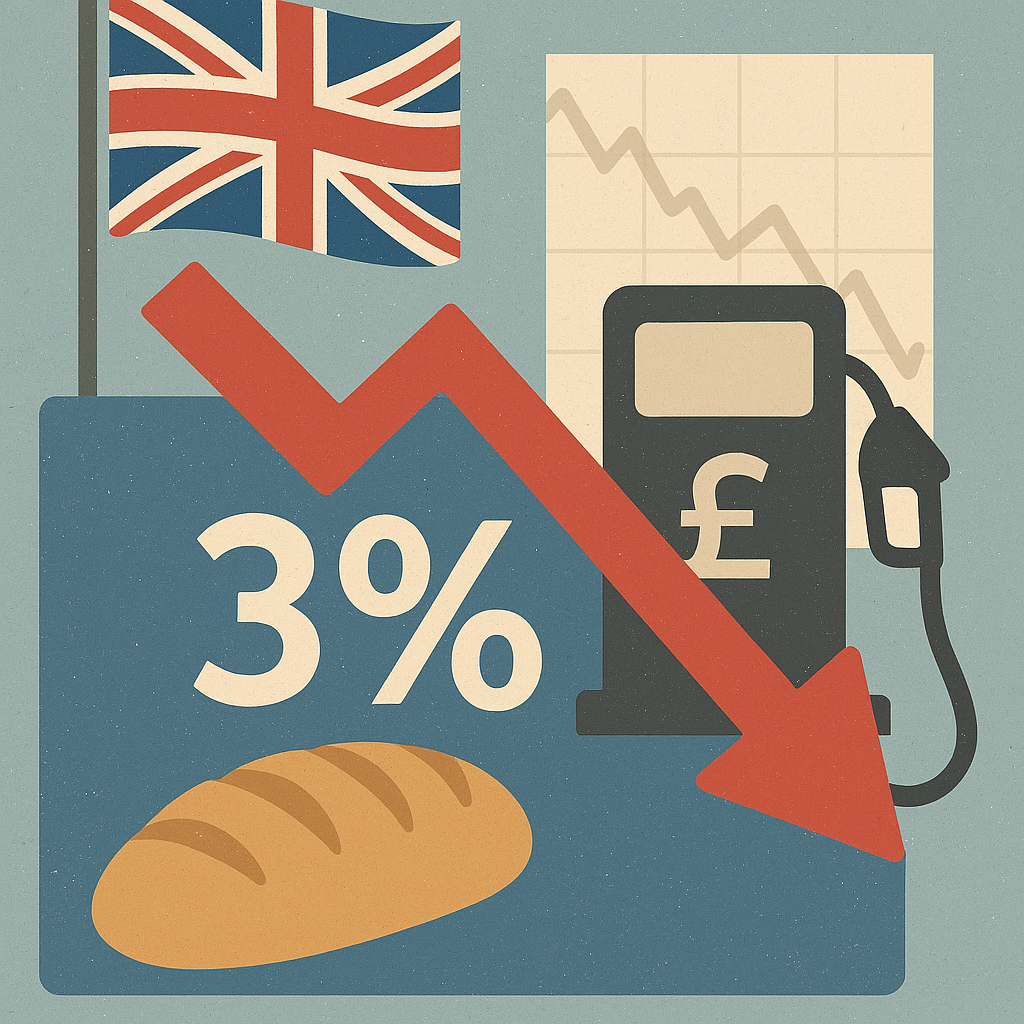
The United Kingdom’s inflation rate has fallen to 3%, marking its lowest level in nearly a year, driven primarily by declining petrol prices and easing costs of bread and other staple foods. The latest figures from the Office for National Statistics (ONS) have intensified expectations that the Bank of England may move toward an interest rate cut as early as next month.
Inflation Slows Sharply
According to the ONS, the Consumer Prices Index (CPI) rose by 3.0% in the year to January 2026, down from 3.4% in December 2025, returning inflation to a downward trajectory after a brief uptick the previous month. This marks the lowest annual rate since March 2025.
Economists note that the slowdown aligns with forecasts and reflects easing pressures across multiple categories, including food, fuel, and airfares. Food inflation fell to 3.6%, its lowest level since April of the previous year.
Petrol and Bread Prices Lead the Decline
A significant contributor to the fall was the drop in motor fuel prices. Petrol prices fell by 3.1p per litre between December 2025 and January 2026, averaging 133.2p per litre, down from 137.1p a year earlier. Diesel prices also declined by 3.2p per litre.
Lower food prices—particularly bread, cereals, and meat—further helped push inflation down, although these gains were partially offset by rising costs of hotel stays and takeaway food.
ONS Chief Economist Grant Fitzner said the January slowdown was “driven in part by a drop in petrol prices and airfares,” adding that easing food costs played a key role.
Economic Context: Labour Market Weakness and Policy Signals
The inflation drop comes amid signs of a weakening labour market. Unemployment has risen to 5.2%, the highest in five years, with youth joblessness also climbing.
Combined with sluggish GDP growth—just 0.1% in the final quarter of 2025—these indicators have strengthened expectations that the Bank of England will cut interest rates from 3.75% to 3.5% at its March meeting. Some analysts predict up to three rate cuts in 2026 if inflation continues to ease.
Economists widely agree that inflation is on track to reach the Bank’s 2% target by April, potentially setting the stage for further monetary easing in the summer.
Government Response
Chancellor Rachel Reeves welcomed the figures, reiterating that cutting the cost of living remains her top priority. She pointed to recent measures—including energy bill adjustments, a historic rail fare freeze, and frozen prescription fees—as part of the government’s strategy to ease household pressures.
Market Reaction
Financial markets responded modestly to the news. Sterling dipped slightly against the dollar, while yields on UK government bonds fell to their lowest level in a month, reflecting investor expectations of imminent rate cuts.
