
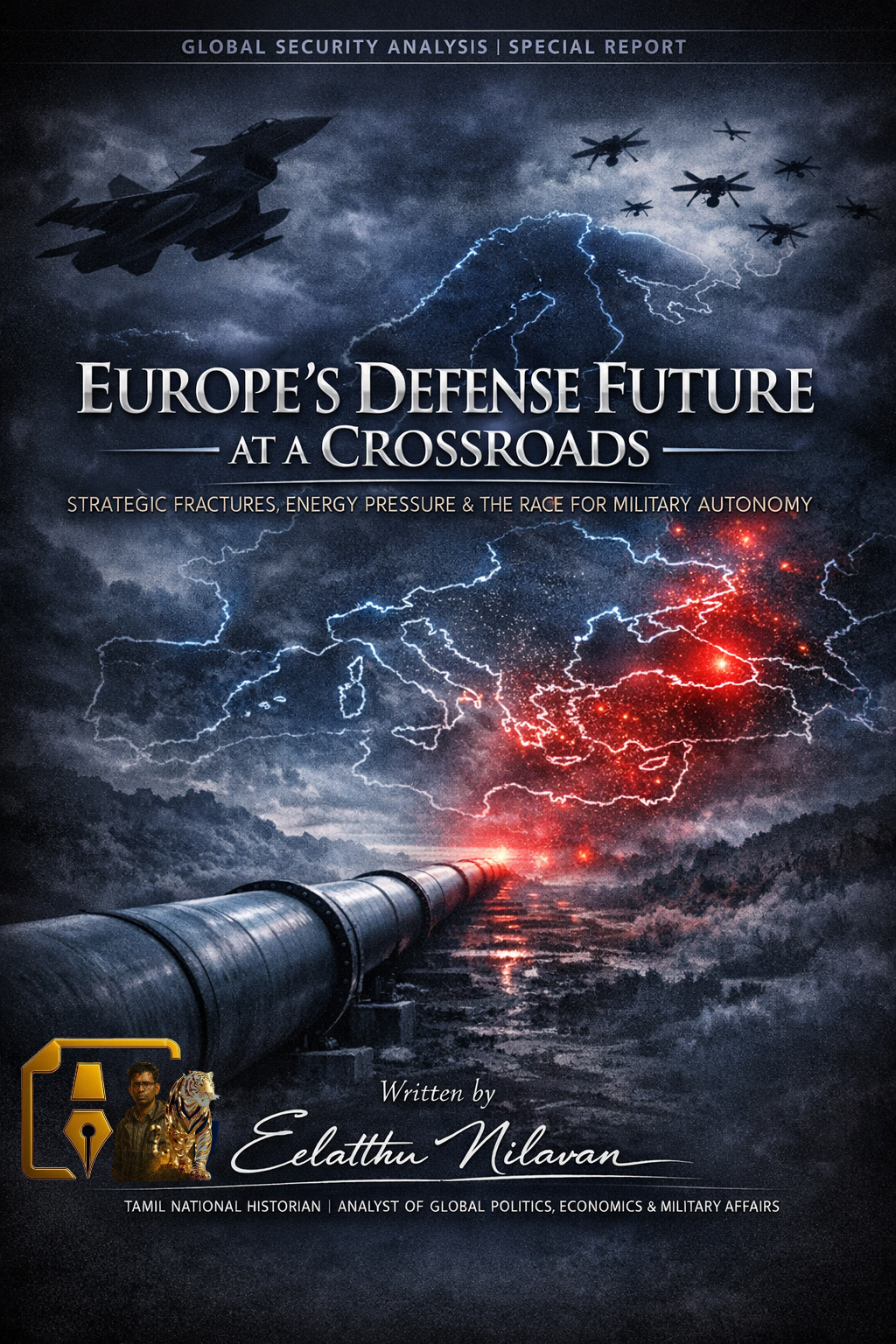
Strategic Fractures, Energy Pressure & The Race for Military Autonomy
𝑭𝑪𝑨𝑺: 𝑻𝒉𝒆 €100 𝑩𝒊𝒍𝒍𝒊𝒐𝒏 𝑭𝒊𝒈𝒉𝒕𝒆𝒓 𝑫𝒓𝒆𝒂𝒎 𝒊𝒏 𝑸𝒖𝒆𝒔𝒕𝒊𝒐𝒏

Europe’s most ambitious defense aviation project—the Future Combat Air System—is facing its most serious political and industrial turbulence yet. The dispute between Berlin and Paris is not merely technical; it reflects bigger philosophical differences about the future of warfare, sovereignty, and technological doctrine.
Emmanuel Macron has pushed strongly for European strategic autonomy through a standardized sixth-generation fighter able to conduct nuclear missions and operate from aircraft carriers. In contrast, Friedrich Merz has questioned whether investing vast sums in manned fighter jets is wise when autonomous systems, AI-enabled combat platforms, and drone swarms are transforming modern warfare.
German leadership is also signaling openness to expanding its fleet of American stealth fighters rather than relying solely on a European-built aircraft—an approach that could weaken the vision of a unified continental aerospace ecosystem.
𝑰𝒏𝒅𝒖𝒔𝒕𝒓𝒊𝒂𝒍 𝑹𝒊𝒗𝒂𝒍𝒓𝒚 𝑩𝒆𝒉𝒊𝒏𝒅 𝒕𝒉𝒆 𝑺𝒄𝒆𝒏𝒆𝒔
Beyond politics, corporate competition has slowed progress. Disagreements between major aerospace contractors—Dassault Aviation and Airbus—over intellectual property, engineering authority, and operational specifications have delayed key development phases.
Core disputes include:
• Control of mission software architecture
• Integration of nuclear strike capability
• Carrier landing design requirements
• Division of industrial workshare
These disagreements illustrate a longstanding European dilemma: multinational defense cooperation promises scale and efficiency, yet national industrial interests often override collective priorities.
𝑻𝒉𝒆 𝑾𝒊𝒅𝒆𝒓 𝑺𝒕𝒓𝒂𝒕𝒆𝒈𝒊𝒄 𝑫𝒊𝒗𝒊𝒅𝒆
The FCAS dispute reflects a deeper divergence in strategic philosophy. France prioritizes long-term military sovereignty and independent deterrence capability, whereas Germany emphasizes alliance integration and fiscal caution. Paris views a manned sixth-generation aircraft as essential to maintaining full-spectrum strategic power. Berlin, however, is increasingly open to hybrid solutions combining European programs with imported platforms and possibly unmanned systems.
This divergence is intensified by uncertainty about future transatlantic relations and shifting geopolitical alignments, particularly under a possible policy shift from Donald Trump-era strategic doctrines emphasizing burden-sharing among allies.
𝑬𝟓’𝒔 𝑳𝑬𝑨𝑷 𝑰𝒏𝒊𝒕𝒊𝒂𝒕𝒊𝒗𝒆: 𝑭𝒂𝒔𝒕-𝑻𝒓𝒂𝒄𝒌𝒊𝒏𝒈 𝑾𝒂𝒓𝒇𝒂𝒓𝒆 𝑰𝒏𝒏𝒐𝒗𝒂𝒕𝒊𝒐𝒏
While fighter jet cooperation stalls, Europe’s five largest defense spenders—the United Kingdom, France, Germany, Italy, and Poland—have simultaneously launched a new multinational program focused on rapid weapons development.
LEAP (Low-Cost Effectors & Autonomous Platforms) signals a doctrinal shift away from slow, billion-euro megaprojects toward:
• Affordable interceptor systems
• Lightweight missile defenses
• Autonomous aerial platforms
• Rapid production timelines
The first operational systems are expected by 2027—remarkably fast for multinational military procurement. This urgency reflects lessons learned from modern warfare, where speed, scale, and adaptability often outweigh technological perfection.
𝑻𝒉𝒆 𝑼𝒌’𝒔 𝑹𝒆𝒂𝒓𝒎𝒂𝒎𝒆𝒏𝒕 𝑺𝒊𝒈𝒏𝒂𝒍
The United Kingdom’s plan to raise defense spending to roughly 2.5–2.6% of GDP by 2027 marks one of Europe’s most significant rearmament signals. Immediate investments exceeding £400 million in long-range precision and hypersonic capabilities show a shift toward high-intensity conflict preparedness rather than counter-insurgency operations.
This reflects a continent preparing for sustained strategic competition rather than short-term crises.
𝑬𝒏𝒆𝒓𝒈𝒚 𝑭𝒓𝒂𝒄𝒕𝒖𝒓𝒆𝒔: 𝑻𝒉𝒆 𝑶𝒊𝒍 𝑷𝒊𝒑𝒆𝒍𝒊𝒏𝒆 𝑺𝒕𝒂𝒏𝒅𝒐𝒇𝒇
At the same time, Europe faces an energy confrontation centered on the disruption of oil flows through the Druzhba pipeline. Supplies to Central European states have been halted since early February, triggering a chain reaction of retaliatory measures:
• Slovakia declared an energy emergency
• Hungary halted diesel exports to Ukraine
• Strategic reserves were released
• Alternative oil routes via Croatia were activated
The dispute reportedly began after a pipeline incident near Brody. Although repairs were completed, transit delays have continued, fueling accusations that energy flows are being used as political leverage.
𝑬𝒏𝒆𝒓𝒈𝒚 𝒂𝒔 𝒂 𝑾𝒆𝒂𝒑𝒐𝒏: 𝑨 𝑹𝒆𝒕𝒖𝒓𝒏 𝒕𝒐 𝑮𝒆𝒐𝒑𝒐𝒍𝒊𝒕𝒊𝒄 𝑹𝒆𝒂𝒍𝒊𝒕𝒚
This standoff demonstrates that Europe’s vulnerabilities extend beyond military hardware. Energy transit routes have become instruments of geopolitical pressure. Governments are now openly using fuel access, electricity exports, and infrastructure permissions as bargaining tools.
Infrastructure originally built for economic integration is increasingly functioning as leverage in strategic competition.
𝑻𝒉𝒆 𝑩𝒊𝒈𝒈𝒆𝒓 𝑷𝒊𝒄𝒕𝒖𝒓𝒆: 𝑨 𝑪𝒐𝒏𝒕𝒊𝒏𝒆𝒏𝒕 𝒊𝒏 𝑻𝒓𝒂𝒏𝒔𝒊𝒕𝒊𝒐𝒏
Three simultaneous developments reveal Europe’s strategic trajectory:
• Fragmented defense industrial policy
• Accelerated militarization and rapid weapons development
• Intensifying energy security disputes
Together, these trends indicate a transitional era defined by rising military budgets, technological rivalry, resource competition, and evolving alliance structures.
𝑨𝒏𝒂𝒍𝒚𝒔𝒊𝒔: 𝑰𝒔 𝑬𝒖𝒓𝒐𝒑𝒆 𝑺𝒕𝒓𝒂𝒕𝒆𝒈𝒊𝒄𝒂𝒍𝒍𝒚 𝑼𝒏𝒊𝒇𝒊𝒆𝒅?
Despite strong rhetoric about unity, Europe’s trajectory reveals a paradox:
The continent is integrating militarily while fragmenting politically and industrially.
If its flagship fighter project falters, it would signal persistent structural limits to collective European defense ambition. Conversely, success in agile initiatives like LEAP could prove that smaller, faster cooperative models are more realistic than massive multinational megaprojects.
𝑪𝒐𝒏𝒄𝒍𝒖𝒔𝒊𝒐𝒏 — 𝑨 𝑻𝒆𝒔𝒕 𝒐𝒇 𝑬𝒖𝒓𝒐𝒑𝒆’𝒔 𝑭𝒖𝒕𝒖𝒓𝒆
Europe stands at a defining strategic crossroads. Decisions taken over the next few years will determine whether it emerges as a self-reliant military power or remains a coalition-dependent on external defense suppliers.
The fate of its fighter programs, missile initiatives, and energy disputes is not separate issues—they are interconnected indicators of Europe’s capacity to act as a unified geopolitical force.


Written by — Eelaththu Nilavan
Tamil National Historian | Analyst of Global Politics, Economics, Intelligence & Military Affairs
22/02/2026
