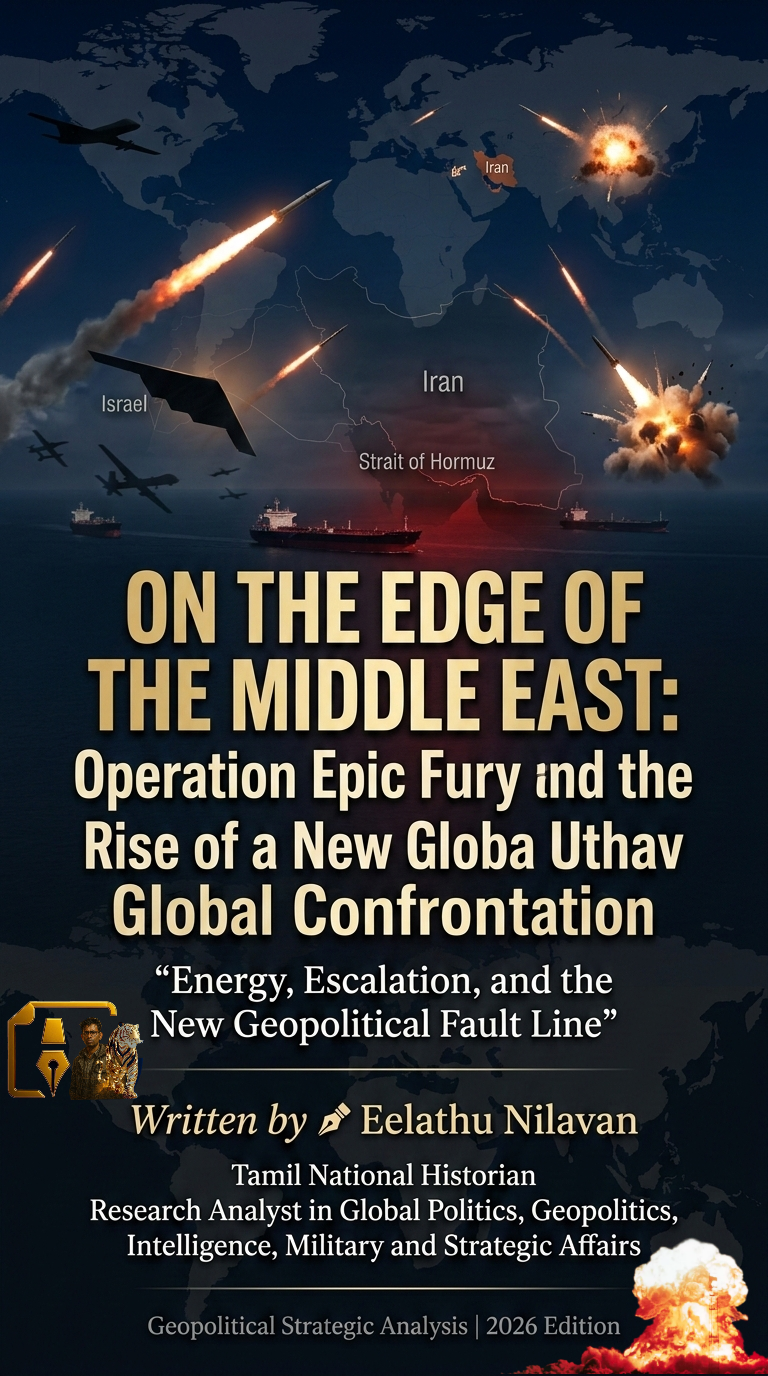

𝗔 𝗥𝗘𝗚𝗜𝗢𝗡 𝗜𝗚𝗡𝗜𝗧𝗘𝗗 𝗕𝗬 𝗦𝗧𝗥𝗔𝗧𝗘𝗚𝗜𝗖 𝗦𝗛𝗢𝗖𝗞𝗪𝗔𝗩𝗘𝗦
The Middle East has entered its most dangerous phase in decades. Following coordinated U.S.–Israeli airstrikes on Iran’s nuclear infrastructure and the reported killing of Iran’s Supreme Leader, Ali Khamenei, Tehran launched what it describes as Operation True Promise 4, Wave 11 — a sweeping retaliatory campaign involving more than 700 drones and hundreds of ballistic missiles within 48 hours.
Simultaneously, Washington’s parallel campaign, widely referred to as Operation Epic Fury, has expanded beyond pre-emptive nuclear containment into a sustained multi-domain confrontation. What began as targeted strikes now risks transforming into a prolonged regional war with global consequences.

𝗧𝗛𝗘 𝗦𝗧𝗥𝗜𝗞𝗘 𝗢𝗡 𝗜𝗥𝗔𝗡’𝗦 𝗡𝗨𝗖𝗟𝗘𝗔𝗥 𝗖𝗢𝗥𝗘

In a dramatic escalation, U.S. B-2 bombers struck three of Iran’s most fortified nuclear sites:
• Fordow
• Natanz
• Isfahan
President Donald Trump declared the facilities “totally obliterated,” confirming the operational deployment of 30,000-pound bunker-buster munitions — marking the first known battlefield use of such weapons.
Israeli Prime Minister Benjamin Netanyahu praised the strikes as a historic turning point, reinforcing the long-standing doctrine of “peace through strength.”
However, the collapse of diplomatic talks in Muscat and Geneva has removed the last visible guardrails of negotiation.
𝗜𝗥𝗔𝗡’𝗦 𝗠𝗔𝗦𝗦𝗜𝗩𝗘 𝗥𝗘𝗧𝗔𝗟𝗜𝗔𝗧𝗜𝗢𝗡 𝗔𝗡𝗗 𝗠𝗜𝗦𝗦𝗜𝗟𝗘 𝗕𝗔𝗥𝗥𝗔𝗚𝗘
Iran’s response was unprecedented in scale. The Islamic Revolutionary Guard Corps (IRGC) claimed:
• 60 strategic targets struck
• 500 U.S. and Israeli military-linked points hit
• Missile impacts across Tel Aviv, Jerusalem, and the Galilee
• Coordinated drone and missile launches targeting U.S. intelligence and logistics hubs in the Gulf
The United States confirmed the deaths of six military personnel. Iranian officials framed the offensive as lawful self-defense under Article 51 of the UN Charter, accusing Washington and Tel Aviv of launching “unprovoked aggression” against civilian infrastructure.
Many of Tehran’s claims — including extensive civilian casualties — remain independently unverified, but the scale of missile exchanges marks a clear shift from shadow confrontation to overt interstate conflict.
𝗧𝗛𝗘 𝗦𝗧𝗥𝗔𝗜𝗧 𝗢𝗙 𝗛𝗢𝗥𝗠𝗨𝗭: 𝗘𝗡𝗘𝗥𝗚𝗬 𝗪𝗔𝗥𝗙𝗔𝗥𝗘 𝗔𝗧 𝗧𝗛𝗘 𝗚𝗟𝗢𝗕𝗔𝗟 𝗖𝗛𝗢𝗞𝗘𝗣𝗢𝗜𝗡𝗧
Iran escalated further by declaring the Strait of Hormuz closed, warning that any vessel attempting passage could face direct attack.
This narrow maritime corridor carries nearly 20% of global daily oil consumption. Even temporary disruption could:
• Push crude oil prices toward extreme volatility
• Trigger shipping insurance spikes
• Disrupt Asian and European energy imports
• Force naval confrontation under “freedom of navigation” operations
Washington maintains that the strait remains open. Yet the mere threat of closure introduces systemic risk into global markets.
𝗧𝗛𝗘 𝗚𝗨𝗟𝗙 𝗙𝗥𝗢𝗡𝗧 𝗘𝗫𝗣𝗔𝗡𝗗𝗦
The conflict has widened beyond Iran and Israel.
• Drone strikes hit the U.S. Embassy compound in Riyadh.
• Iranian UAVs struck Al-Minhad Air Base in the UAE.
• A UK military installation in Cyprus faced drone threats.
• Western surveillance platforms, including MQ-9 Reapers and Israeli Heron systems, were reportedly intercepted over Iranian airspace.
Air defense battles involving Iran’s Bavar-373 systems now threaten coalition ISR capabilities near the Gulf and Hormuz corridor.
This phase represents a transition from targeted retaliation to a grinding endurance contest.
𝗥𝗨𝗦𝗦𝗜𝗔’𝗦 𝗡𝗨𝗖𝗟𝗘𝗔𝗥 𝗪𝗔𝗥𝗡𝗜𝗡𝗚 𝗔𝗡𝗗 𝗚𝗘𝗢𝗣𝗢𝗟𝗜𝗧𝗜𝗖𝗔𝗟 𝗙𝗥𝗔𝗖𝗧𝗨𝗥𝗘
Russia has issued stark warnings. Security Council Deputy Chairman Dmitry Medvedev warned that current U.S. actions risk triggering a global catastrophe, invoking comparisons to the nuclear devastation of 1945.
Foreign Minister Sergey Lavrov accused Washington of destabilizing sovereign states and accelerating a new nuclear arms race. He reiterated Moscow’s call for a summit among permanent UN Security Council members to prevent systemic collapse.
Russia argues that military coercion may push Iran closer to nuclear weaponization rather than deter it.
𝗡𝗔𝗧𝗢 𝗗𝗜𝗩𝗜𝗦𝗜𝗢𝗡𝗦 𝗖𝗢𝗠𝗘 𝗜𝗡𝗧𝗢 𝗙𝗢𝗖𝗨𝗦
The Western alliance is showing visible strain.
UK Prime Minister Keir Starmer declined participation in the initial strike wave, citing legality and national interest, though allowing limited base access.
Spain condemned the operations as violations of international law and denied the use of its military facilities.
At the United Nations, tensions escalated during a Security Council session chaired by Melania Trump, where Russian envoy Vassily Nebenzia accused Western states of political manipulation in conflict narratives.
This divergence signals that NATO unity is no longer guaranteed in high-risk escalation scenarios.
𝗪𝗔𝗦𝗛𝗜𝗡𝗚𝗧𝗢𝗡’𝗦 𝗜𝗡𝗧𝗘𝗥𝗡𝗔𝗟 𝗗𝗘𝗕𝗔𝗧𝗘
In the United States, Congress is preparing to vote on a War Powers resolution testing presidential authority.
Critics warn of:
• Missile stockpile depletion
• Escalation beyond air and naval domains
• Long-term entanglement without congressional authorization
• Political backlash amid public fatigue
President Trump has stated that operations could last “four to five weeks, possibly far longer,” leaving the timeline uncertain.
𝗧𝗛𝗘 𝗡𝗨𝗖𝗟𝗘𝗔𝗥 𝗣𝗥𝗢𝗟𝗜𝗙𝗘𝗥𝗔𝗧𝗜𝗢𝗡 𝗣𝗔𝗥𝗔𝗗𝗢𝗫
The core strategic irony remains profound.
Strikes intended to prevent Iranian nuclear capability may strengthen Tehran’s resolve to pursue deterrent options. Russian officials have invoked the so-called “Gaddafi lesson” — suggesting regimes without nuclear deterrence remain vulnerable to intervention.
Should Iran shift decisively toward weaponization, regional rivals may follow, transforming the Middle East into a multipolar nuclear environment.
𝗚𝗟𝗢𝗕𝗔𝗟 𝗘𝗖𝗢𝗡𝗢𝗠𝗜𝗖 𝗥𝗘𝗣𝗘𝗥𝗖𝗨𝗦𝗦𝗜𝗢𝗡𝗦
Markets are bracing for sustained turbulence:
• Oil price volatility
• Maritime insurance spikes
• Airspace closures
• Stock market instability
• Capital flight from emerging economies
Energy-import dependent nations in Asia and Europe face immediate exposure.
𝗖𝗢𝗡𝗖𝗟𝗨𝗦𝗜𝗢𝗡: 𝗔 𝗛𝗜𝗦𝗧𝗢𝗥𝗜𝗖 𝗜𝗡𝗙𝗟𝗘𝗖𝗧𝗜𝗢𝗡 𝗣𝗢𝗜𝗡𝗧
The confrontation between Washington, Tehran, and Tel Aviv has crossed a critical threshold.
With nuclear facilities struck, oil chokepoints threatened, NATO divided, Russia issuing nuclear warnings, and Gulf infrastructure under attack, the crisis now resembles a systemic geopolitical rupture rather than a contained regional clash.
Whether this moment evolves into a broader global war or becomes a catalyst for renewed diplomacy depends on strategic restraint — or its absence — in the weeks ahead.
History may record this as the moment the international order either fractured under pressure or was forcibly reshaped by it.
The world watches — tense, divided, and uncertain.

Written by Eelaththu Nilavan
Tamil National Historian | Analyst of Global Politics, Economics, Intelligence & Military Affairs
04/03/2026