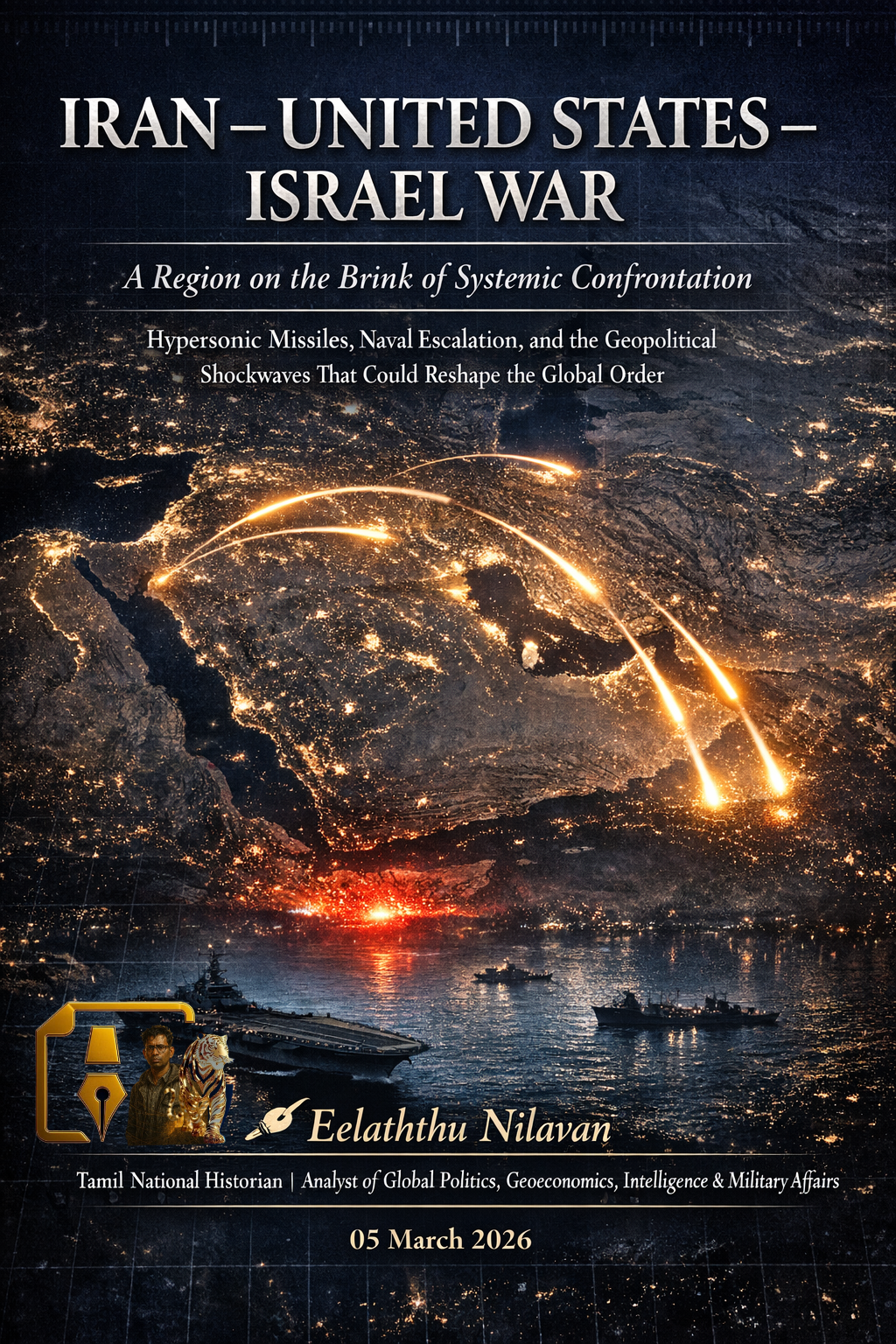

𝘛𝘩𝘦 𝘔𝘪𝘥𝘥𝘭𝘦 𝘌𝘢𝘴𝘵 𝘦𝘯𝘵𝘦𝘳𝘴 𝘢 𝘯𝘦𝘸 𝘱𝘩𝘢𝘴𝘦: 𝘏𝘺𝘱𝘦𝘳𝘴𝘰𝘯𝘪𝘤 𝘸𝘦𝘢𝘱𝘰𝘯𝘴, 𝘯𝘢𝘷𝘢𝘭 𝘤𝘰𝘯𝘧𝘳𝘰𝘯𝘵𝘢𝘵𝘪𝘰𝘯, 𝘢𝘯𝘥 𝘵𝘩𝘦 𝘨𝘦𝘰𝘱𝘰𝘭𝘪𝘵𝘪𝘤𝘢𝘭 𝘴𝘩𝘰𝘤𝘬𝘸𝘢𝘷𝘦𝘴 𝘵𝘩𝘢𝘵 𝘤𝘰𝘶𝘭𝘥 𝘳𝘦𝘥𝘦𝘧𝘪𝘯𝘦 𝘨𝘭𝘰𝘣𝘢𝘭 𝘰𝘳𝘥𝘦𝘳.
𝙏𝙃𝙀 𝙈𝙄𝙎𝙎𝙄𝙇𝙀 𝘽𝘼𝙍𝙍𝘼𝙂𝙀: 𝙄𝙍𝘼𝙉’𝙎 𝙈𝙊𝙎𝙏 𝘿𝙀𝘾𝙄𝙎𝙄𝙑𝙀 𝙎𝙏𝙍𝙄𝙆𝙀 𝙔𝙀𝙏
In what is being described as the largest Iranian missile offensive to date, Tehran reportedly launched coordinated ballistic and hypersonic strikes targeting Tel Aviv and Bnei Brak simultaneously.
The operational logic appears deliberate:
• Tel Aviv – Israel’s economic, financial, and media nerve center.
• Bnei Brak – A densely populated civilian district, amplifying psychological shock.
At the center of the strike package is the Fattah-2 hypersonic glide vehicle, a maneuverable system capable of altering trajectory during descent. Unlike traditional ballistic missiles that follow predictable arcs, hypersonic glide vehicles compress interception windows and challenge radar tracking.
Israeli layered defenses — Iron Dome, David’s Sling, and Arrow systems — were reportedly stressed by saturation tactics combining:
• Medium-range ballistic missiles
• Cruise missiles
• One-way attack drones
If confirmed, this marks a doctrinal shift: overwhelming layered missile defense through volume and maneuverability rather than isolated precision strikes.
𝙏𝙃𝙀 𝙀𝙓𝙋𝘼𝙉𝘿𝙄𝙉𝙂 𝘽𝘼𝙏𝙏𝙇𝙀𝙎𝙋𝘼𝘾𝙀: 𝙁𝙍𝙊𝙈 𝙄𝙎𝙍𝘼𝙀𝙇 𝙏𝙊 𝙏𝙃𝙀 𝙂𝙐𝙇𝙁
The war rapidly moved beyond Israeli territory.
Iran launched ballistic missiles toward Al Udeid Air Base, the forward headquarters of United States Central Command (CENTCOM). One missile was intercepted; another reportedly struck the base perimeter without casualties.
Al Udeid is not symbolic — it is the operational brain of U.S. airpower across the Middle East. Targeting it signals:
• Willingness to confront the U.S. directly
• Escalation from proxy war to state-on-state engagement
Simultaneously, Iran declared the Strait of Hormuz a “war zone.” This narrow maritime corridor carries over 20% of global oil supply. Even temporary disruption sends shockwaves through global energy markets.
𝙉𝘼𝙑𝘼𝙇 𝙀𝙎𝘾𝘼𝙇𝘼𝙏𝙄𝙊𝙉: 𝙏𝙃𝙀 𝙄𝙉𝘿𝙄𝘼𝙉 𝙊𝘾𝙀𝘼𝙉 𝙎𝙏𝙍𝙄𝙆𝙀𝙎
The conflict reportedly expanded into open waters. Iran’s Islamic Revolutionary Guard Corps (IRGC) claimed it struck a U.S. destroyer in the Indian Ocean using Ghadr-380 ballistic missiles and Talaieh cruise missiles.
Tehran also alleged that the aircraft carrier USS Abraham Lincoln was hit — a claim denied by CENTCOM.
Whether verified or not, the messaging is strategic:
• Iran seeks to demonstrate long-range strike credibility beyond the Gulf.
• The U.S. aims to project naval dominance and deterrence stability.
This maritime phase introduces extreme risk. Naval engagements can escalate faster than land conflicts due to compressed reaction times and miscalculation.
𝙊𝙋𝙀𝙍𝘼𝙏𝙄𝙊𝙉 “𝙀𝙋𝙄𝘾 𝙁𝙐𝙍𝙔”: 𝙒𝘼𝙎𝙃𝙄𝙉𝙂𝙏𝙊𝙉’𝙎 𝙈𝘼𝙎𝙎𝙄𝙑𝙀 𝙍𝙀𝙎𝙋𝙊𝙉𝙎𝙀
Under the banner of “Operation Epic Fury,” U.S. forces reportedly deployed:
• Over 50,000 troops
• 200 fighter aircraft
• Two carrier strike groups
Within 100 hours, U.S. and Israeli strikes allegedly targeted nearly 2,000 sites inside Iran — including missile launchers, air defense batteries, and command centers.
The scale represents the largest U.S. military buildup in the region in decades.
The reported killing of Iranian Supreme Leader Ayatollah Ali Khamenei — if verified — would constitute a transformative geopolitical event, fundamentally altering Iran’s command structure and potentially hardening Tehran’s strategic posture rather than weakening it.
𝙒𝘼𝙏𝙀𝙍, 𝙋𝙊𝙒𝙀𝙍 & 𝙋𝙎𝙔𝘾𝙃𝙊𝙇𝙊𝙂𝙄𝘾𝘼𝙇 𝙒𝘼𝙍𝙁𝘼𝙍𝙀
Beyond military installations, reported strikes on desalination plants — particularly near Ashkelon — signal infrastructure warfare.
Israel derives a majority of its potable water from desalination. Targeting such facilities shifts war into:
• Civilian resilience
• Economic continuity
• Psychological endurance
Similarly, reported impacts near high-tech corridors in Petah Tikva and Herzliya Pituach aim at Israel’s strategic technological backbone.
Modern war is no longer about territory alone — it is about systemic pressure.
𝙍𝙐𝙎𝙎𝙄𝘼’𝙎 𝙒𝘼𝙍𝙉𝙄𝙉𝙂: 𝙉𝙐𝘾𝙇𝙀𝘼𝙍 𝙍𝙄𝙎𝙆 𝘼𝙉𝘿 𝙂𝙇𝙊𝘽𝘼𝙇 𝙊𝙍𝘿𝙀𝙍
Moscow issued strong condemnation, warning of “serious radiological risks” from strikes near Iranian nuclear facilities.
President Vladimir Putin has reportedly engaged Gulf leaders diplomatically while avoiding direct dialogue with U.S. President Donald Trump.
Russia’s position reflects strategic calculation:
• Energy price spikes benefit Moscow financially.
• A broader NATO-involved war would destabilize Eurasian security.
The Kremlin is simultaneously condemning Western actions while ensuring its own diplomatic assets in Tehran remain protected.
𝙂𝙀𝙊𝙀𝘾𝙊𝙉𝙊𝙈𝙄𝘾 𝙎𝙃𝙊𝘾𝙆𝙒𝘼𝙑𝙀𝙎
The potential closure of the Strait of Hormuz remains the most dangerous economic lever.
Consequences include:
• Immediate oil price spikes
• Inflationary pressure in Western economies
• Severe strain on Asian energy importers
• Political fallout in Washington
Rising fuel costs in the United States could reshape domestic political narratives as much as battlefield outcomes.
𝙎𝙏𝙍𝘼𝙏𝙀𝙂𝙄𝘾 𝙏𝙍𝘼𝙋 𝙊𝙍 𝙉𝙀𝙒 𝙀𝙍𝘼?
The central question now is not who struck whom — but whether escalation control mechanisms still exist.
Backchannel diplomacy reportedly involves Oman, Qatar, and Turkey. Yet every missile launch narrows diplomatic space.
Three potential trajectories emerge:
• Managed Escalation – Limited strikes followed by negotiated ceasefire.
• Naval Conflagration – Direct U.S.–Iran maritime warfare in Hormuz and the Indian Ocean.
• Regional Expansion – Multi-front war involving Iraq, Bahrain, Kuwait, and potentially Lebanon.
• Ground military operation against Iran: The United States is currently waiting to launch a ground military operation against Iran through the Iran-Iraq border, using pro-US Kurdish armed groups currently on the border of Syria and Iraq.
𝘾𝙊𝙉𝘾𝙇𝙐𝙎𝙄𝙊𝙉: 𝘼 𝙋𝙍𝙀𝘾𝘼𝙍𝙄𝙊𝙐𝙎 𝙈𝙊𝙈𝙀𝙉𝙏 𝙄𝙉 𝙂𝙇𝙊𝘽𝘼𝙇 𝙃𝙄𝙎𝙏𝙊𝙍𝙔
The current confrontation represents more than retaliation cycles.
It is a stress test of:
• Hypersonic-era missile defense
• Maritime chokepoint security
• U.S. deterrence credibility
• Regional alliance cohesion
If even a fraction of these reported developments are accurate, the Middle East is witnessing the most dangerous direct state confrontation in decades.
The coming days will determine whether this becomes:
• A contained regional war
or
• The opening chapter of a broader international realignment.

Written by Eelaththu Nilavan
Tamil National Historian | Analyst of Global Politics, Economics, Intelligence & Military Affairs
05/03/2026