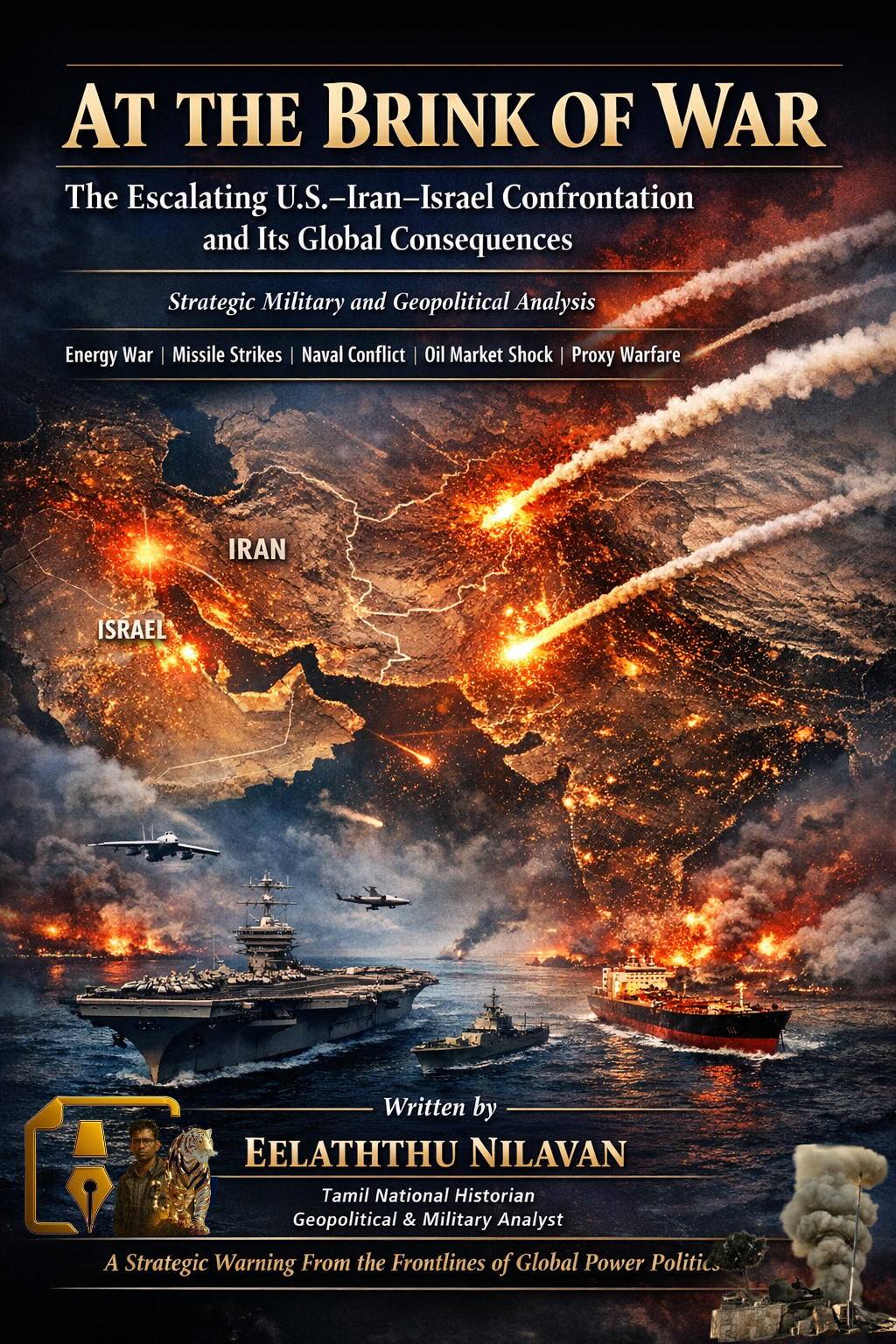

Table of Contents
An in-depth geopolitical and military analysis of the rapidly expanding confrontation across the Middle East
A Region Moving Toward a Major War
The Middle East is entering one of the most dangerous geopolitical phases since the early 21st century. The confrontation involving Iran, Israel, and the United States has escalated dramatically over the past several days, with missile strikes, naval attacks, sabotage operations, and energy infrastructure assaults occurring across multiple countries.
What initially began as a limited military exchange has rapidly evolved into a multi-front regional conflict, stretching from the Persian Gulf and Arabian Sea to Lebanon, Iraq, and Israel. The situation is now affecting global oil markets, international shipping routes, and the strategic balance of power in the Middle East.
Iranian Claims of Strike on the USS Abraham Lincoln

One of the most significant developments came when Iranian state media reported a strike against the American aircraft carrier USS Abraham Lincoln (CVN-72).
According to statements attributed to the naval wing of the Islamic Revolutionary Guard Corps (IRGC), Iranian drones targeted the carrier while it was operating in the Arabian Sea alongside several guided-missile destroyers.
The carrier group had reportedly been deployed in the region since January to reinforce U.S. naval presence and deter Iranian maritime operations.
If confirmed, the strike would represent one of the most serious direct confrontations between Iran and a U.S. aircraft carrier in modern history.
Aircraft carriers are the centerpiece of American global power projection, and any successful attack on such a vessel could significantly alter strategic calculations in Washington.
The Sinking of the Iranian Warship IRIS Dena
The escalation intensified after a reported attack by a U.S. submarine that allegedly sank the Iranian frigate IRIS Dena in the Indian Ocean.
The strike reportedly occurred approximately 2,000 miles from Iranian territory, making it one of the rare modern instances of a submarine torpedo attack on a surface warship.
Such engagements have been extremely uncommon since the era of the Second World War.
Iranian officials condemned the attack as an “atrocity at sea” and warned that the United States would “bitterly regret” establishing such a precedent in international waters.
Missile Attacks on Israel and Ben Gurion Airport
Simultaneously, Iran expanded its military campaign against Israel by launching heavy ballistic missiles.
Iran’s IRGC announced the deployment of Khorramshahr-4 ballistic missiles toward strategic Israeli targets, including:
• Ben Gurion Airport
• Israeli Air Force installations near Tel Aviv
These missiles are believed to have:
• A range of approximately 2,000 kilometres
• A warhead capacity of over one tonne of high explosives
• Penetration capabilities designed to defeat layered air defence systems.
Explosions were reportedly heard across parts of Israel, including areas near Jerusalem, as the Israel Defense Forces activated multiple air defence systems.
The missile barrage formed part of Iran’s campaign known as “Operation True Promise 4.”
The Dimona Nuclear Facility Warning
In a particularly alarming development, Iranian military officials warned that Israel’s nuclear complex could become a future target.
The facility in question is the highly secretive Shimon Peres Negev Nuclear Research Center near Dimona.
Although Israel maintains a policy of strategic ambiguity regarding nuclear weapons, many analysts believe the site plays a central role in Israel’s nuclear deterrent.
Experts estimate that Israel may possess between 80 and 400 nuclear warheads.
Any successful attack on Dimona could trigger catastrophic consequences including:
• radioactive contamination across neighbouring countries
• environmental disasters
• potential nuclear escalation.
For Israel, an attack on its nuclear infrastructure would likely be considered an existential threat.
Energy Infrastructure Under Fire
The conflict is increasingly targeting energy facilities across the Gulf.
Iranian missiles reportedly struck the Sitra refinery, operated by Bahrain Petroleum Company.
The refinery represents the only major refining facility in Bahrain and is responsible for a significant portion of the country’s government revenue.
Damage to such infrastructure could disrupt fuel supply chains across the Gulf region.
Iran has also been accused of targeting the Ras Tanura oil refinery in Saudi Arabia — one of the largest oil export terminals in the world.
These attacks indicate a strategic shift toward economic warfare targeting global energy networks.
Maritime Warfare and the Strait of Hormuz Crisis
The maritime dimension of the conflict has become increasingly dangerous.
An explosion recently struck a commercial oil tanker near Kuwait, causing a hull breach and an oil leak.
Meanwhile Iran announced that it would allow only Chinese vessels to pass safely through the Strait of Hormuz.
This narrow waterway is one of the most critical energy chokepoints on Earth.
Nearly 20% of global oil shipments pass through the strait every day.
Iran’s declaration effectively transforms Hormuz into a potential battlefield between global naval forces.
The United States has indicated that the U.S. Navy may begin escorting oil tankers to ensure uninterrupted energy flows.
Such convoys could dramatically increase the risk of naval clashes.
Expanding Frontlines: Lebanon, Iraq, and the Gulf
The conflict is spreading across multiple theatres.
The Lebanese armed movement Hezbollah launched rocket attacks targeting Israeli defence infrastructure including facilities associated with Rafael Advanced Defense Systems.
Simultaneously, Iranian-aligned militias in Iraq launched drone and missile attacks against U.S. military bases in Erbil and other locations.
One report claimed the downing of a U.S. surveillance drone, the MQ-9 Reaper.
These developments indicate that the confrontation is evolving into a coordinated multi-proxy conflict across the region.
Global Oil Markets in Shock
The war has already begun to affect global energy markets.
Oil prices have surged by more than 14 percent, reflecting fears of prolonged supply disruptions.
Approximately 200 commercial vessels are currently stranded in Gulf waters due to the growing risk of missile or drone attacks.
Major shipping companies, including COSCO, have reportedly suspended bookings for several Gulf ports due to soaring insurance costs and security concerns.
If the Strait of Hormuz were fully blocked, the world could face one of the largest energy shocks in modern economic history.
Strategic Uncertainty and the Risk of Wider War
Despite the rapid escalation, analysts believe the ultimate strategic objectives of the conflict remain unclear.
Statements by American officials suggest that military operations could continue for an extended period.
At the same time, regional observers warn that Gulf states could become frontline participants in a broader war between Iran and the United States.
The ideological and institutional strength of the Islamic Revolutionary Guard Corps means that even heavy military losses may not fundamentally weaken Iran’s long-term strategic posture.
A Dangerous Moment for Global Stability
The current confrontation represents more than a regional crisis.
It is increasingly becoming a global geopolitical shockwave with implications for:
• global energy security
• maritime trade routes
• nuclear deterrence dynamics
• great-power competition.
If the conflict continues to expand — particularly if nuclear facilities or major naval assets are destroyed — the Middle East could move toward a far larger war involving multiple global powers.
The coming days will likely determine whether the crisis stabilizes through diplomacy or escalates into one of the most consequential wars of the modern era.

Written by Eelaththu Nilavan
Tamil National Historian | Analyst of Global Politics, Economics, Intelligence & Military Affairs
06/03/2026
The views expressed in this article are the author’s own and do not necessarily reflect Al Jazeera’s editorial stance.