

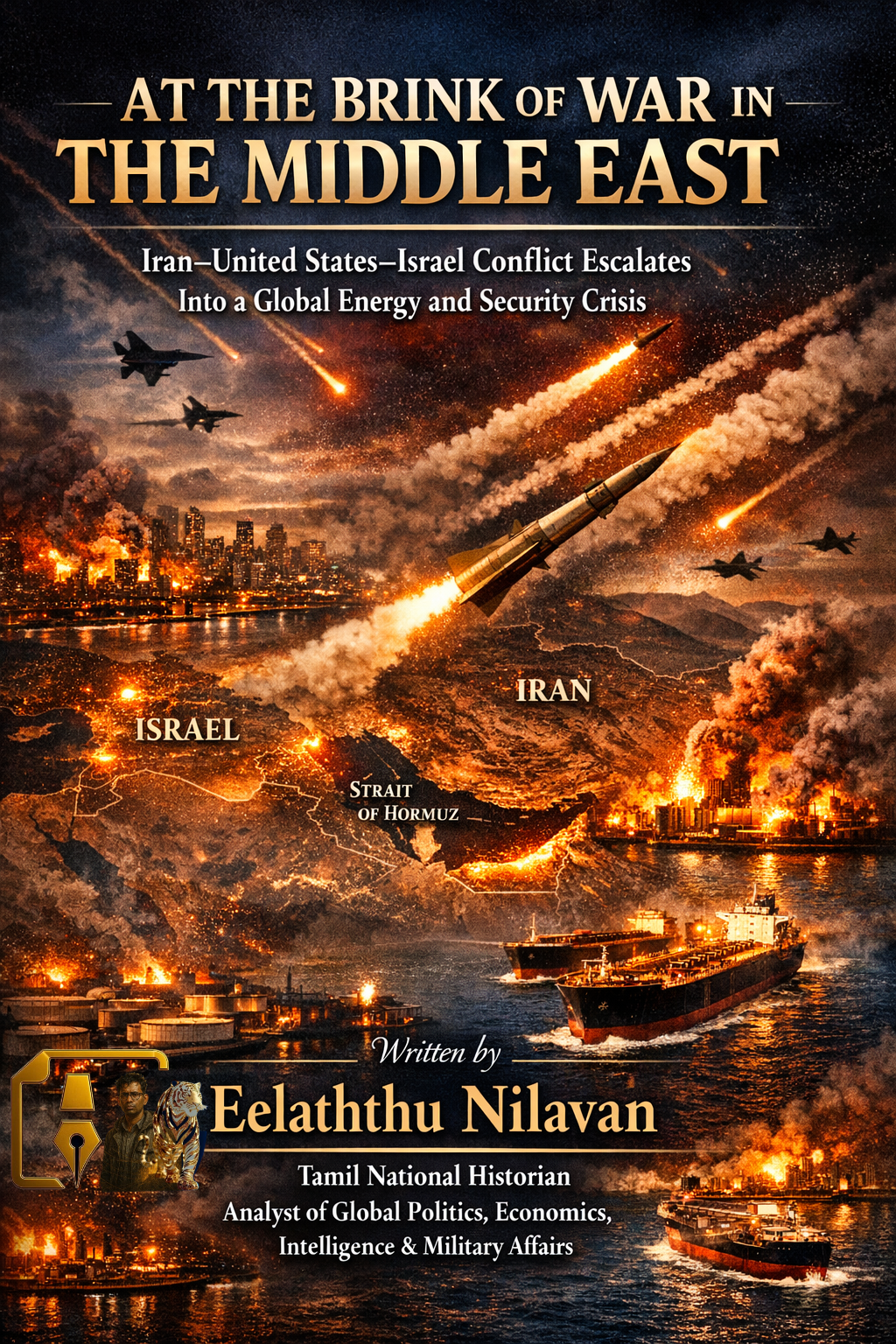
✦ 𝑻𝒉𝒆 𝑵𝒆𝒘 𝑷𝒉𝒂𝒔𝒆 𝒐𝒇 𝑾𝒂𝒓 𝒊𝒏 𝒕𝒉𝒆 𝑴𝒊𝒅𝒅𝒍𝒆 𝑬𝒂𝒔𝒕
The Middle East has entered one of the most dangerous phases of geopolitical confrontation in decades as the conflict between Iran, Israel, and the United States intensifies into an open military confrontation.
Iran’s Islamic Revolutionary Guard Corps (IRGC) announced that it had launched the 42nd, 43rd, and 44th waves of missile and drone attacks under what Tehran calls “Operation True Promise 4.”
The strikes reportedly targeted major Israeli population and strategic centers, including Tel Aviv, Haifa, and Kiryat Shmona, while also threatening American military infrastructure connected to the United States Fifth Fleet.
Air-raid sirens echoed across Israeli cities as explosions were reported around Tel Aviv, demonstrating the increasing scale and sophistication of Iran’s retaliatory strikes.
The escalating exchange signals that the confrontation is evolving beyond isolated incidents into a large-scale regional war with global consequences.
✦ 𝑶𝒑𝒆𝒓𝒂𝒕𝒊𝒐𝒏 “𝑻𝒓𝒖𝒆 𝑷𝒓𝒐𝒎𝒊𝒔𝒆 4”: 𝑰𝒓𝒂𝒏’𝒔 𝑴𝒂𝒔𝒔𝒊𝒗𝒆 𝑴𝒊𝒔𝒔𝒊𝒍𝒆 𝑩𝒂𝒓𝒓𝒂𝒈𝒆
Iran claims its retaliatory campaign includes an array of advanced ballistic missiles and unmanned aerial systems designed to overwhelm Israel’s multi-layered air defense network.
Among the weapons reportedly deployed are:
• Fattah hypersonic missiles
• Khorramshahr heavy ballistic missiles
• Kheibar Shekan precision missiles
• Emad and Qadr long-range missiles
• Coordinated suicide drones
These systems are designed to strike both military bases and strategic infrastructure while simultaneously saturating air defense systems such as Iron Dome, David’s Sling, and Arrow interceptors.
Iranian military commanders claim that the strikes are “limited to aggressor forces” and aimed at U.S. and Israeli military assets.
However, the scale of the barrage demonstrates Iran’s capability to conduct long-range coordinated missile warfare, a capability that has significantly expanded over the past decade.
✦ 𝑻𝒉𝒆 𝑻𝒓𝒊𝒈𝒈𝒆𝒓: 𝑻𝒉𝒆 𝑨𝒔𝒔𝒂𝒔𝒔𝒊𝒏𝒂𝒕𝒊𝒐𝒏 𝒐𝒇 𝑨𝒍𝒊 𝑲𝒉𝒂𝒎𝒆𝒏𝒆𝒊
The conflict dramatically escalated following reports that Iran’s Supreme Leader Ali Khamenei was killed during a joint American-Israeli strike.
Tehran described the attack as a “terrorist assassination” and vowed revenge against both Washington and Tel Aviv.
Following his death, his son Mojtaba Khamenei assumed the role of Supreme Leader and issued a fiery warning that Iran would pursue retaliation for the deaths of its leaders and civilians.
The new leader’s first speech included a direct ultimatum to 15 regional countries, demanding the closure of U.S. military bases operating on their soil.
He warned that any country hosting American forces could become a legitimate military target.
✦ 𝑻𝒉𝒆 𝑮𝒍𝒐𝒃𝒂𝒍 𝑬𝒏𝒆𝒓𝒈𝒚 𝑺𝒉𝒐𝒄𝒌: 𝑺𝒕𝒓𝒂𝒊𝒕 𝒐𝒇 𝑯𝒐𝒓𝒎𝒖𝒛 𝑼𝒏𝒅𝒆𝒓 𝑻𝒉𝒓𝒆𝒂𝒕
Perhaps the most dangerous aspect of the crisis lies in the strategic importance of the Strait of Hormuz.
Nearly 20 percent of the world’s oil supply flows through this narrow maritime corridor connecting the Persian Gulf to global markets.
Iran has hinted that it may block the strait or disrupt shipping routes, a move that could trigger a global economic shock.
Markets reacted immediately.
Global crude prices surged above $100 per barrel, raising fears of another worldwide energy crisis.
Missile and drone attacks targeting cargo vessels have already disrupted shipping routes, while insurers are reconsidering coverage for ships entering the region.
If Hormuz were fully closed, analysts warn that:
• Global oil prices could exceed $150–$200 per barrel
• Energy shortages could hit Europe and Asia
• Shipping costs would skyrocket
• Inflation worldwide would surge
✦ 𝑻𝒉𝒆 𝑴𝒊𝒏𝒂𝒃 𝑺𝒄𝒉𝒐𝒐𝒍 𝑺𝒕𝒓𝒊𝒌𝒆: 𝑨 𝑾𝒂𝒓 𝑪𝒓𝒊𝒎𝒆 𝑨𝒍𝒍𝒆𝒈𝒂𝒕𝒊𝒐𝒏
International outrage intensified after a devastating missile strike near a girls’ elementary school in Minab in southern Iran.
The attack killed nearly 170 civilians, many of them children.
Investigators examining video evidence believe the weapon used may have been a Tomahawk cruise missile, a weapon widely associated with U.S. military operations.
The incident triggered strong condemnation from world leaders including Giorgia Meloni, Prime Minister of Italy, who described the strike as a “massacre of school girls.”
Iran has blamed the United States and Israel for the attack, while Washington denied responsibility and called for an investigation.
The tragedy has further inflamed public anger across Iran and strengthened calls for retaliation.
✦ 𝑴𝒊𝒍𝒊𝒕𝒂𝒓𝒚 𝑬𝒔𝒄𝒂𝒍𝒂𝒕𝒊𝒐𝒏: 𝑼𝑺 𝑶𝒑𝒆𝒓𝒂𝒕𝒊𝒐𝒏𝒔 𝑨𝒏𝒅 𝑨𝒊𝒓 𝑰𝒏𝒄𝒊𝒅𝒆𝒏𝒕𝒔
The United States continues to conduct extensive air operations under Operation Epic Fury, targeting Iranian military infrastructure.
According to United States Central Command, more than:
• 5,500 targets inside Iran
• 60 Iranian naval vessels
have been struck in an effort to weaken Tehran’s military capabilities.
However, the conflict also witnessed a dramatic aviation incident when a Boeing KC-135 Stratotanker crashed in western Iraq.
While the U.S. described the event as an accident, Iran claimed its air defenses shot down the aircraft, killing six crew members.
If confirmed, such an event would represent a major escalation demonstrating Iran’s ability to challenge American air superiority in the region.
✦ 𝑫𝒊𝒑𝒍𝒐𝒎𝒂𝒕𝒊𝒄 𝑩𝒂𝒕𝒕𝒍𝒆 𝒂𝒕 𝒕𝒉𝒆 𝑼𝑵
The crisis has spilled into the halls of the United Nations Security Council, where global powers are sharply divided.
Iran accused the United States and Israel of launching an illegal war and committing war crimes.
Meanwhile:
• Vasily Nebenzia of Russia accused Washington of escalating tensions
• Fu Cong of China warned that continued attacks violate international law
• Western countries argued that Iran’s missile program and nuclear activities remain major threats
The debate exposed deep geopolitical divisions between Western powers and the Russia-China bloc.
✦ 𝑻𝒉𝒆 𝑹𝒊𝒔𝒌 𝒐𝒇 𝑨 𝑭𝒖𝒍𝒍 𝑹𝒆𝒈𝒊𝒐𝒏𝒂𝒍 𝑾𝒂𝒓
The unfolding conflict now carries several extremely dangerous escalation scenarios:
• Closure of the Strait of Hormuz
• Direct war between Iran and Israel
• Large-scale U.S. military intervention
• Attacks on Gulf energy infrastructure
• Expansion of war into Lebanon, Syria, and Iraq
Any of these developments could trigger a region-wide war stretching from the Mediterranean to the Persian Gulf.
✦ 𝑪𝒐𝒏𝒄𝒍𝒖𝒔𝒊𝒐𝒏: 𝑨 𝑾𝒐𝒓𝒍𝒅 𝑶𝒏 𝑬𝒅𝒈𝒆
The confrontation between Iran, the United States, and Israel is no longer a limited strategic rivalry.
It has evolved into a global geopolitical crisis with massive economic and military consequences.
The fate of the Middle East now hinges on whether diplomacy can prevent the conflict from expanding into a full-scale regional war.
If escalation continues, the consequences may reshape global energy markets, international alliances, and the balance of power in the 21st century.

Written by Eelaththu Nilavan
Tamil National Historian | Analyst of Global Politics, Economics, Intelligence & Military Affairs
13/03/2026
