

✦ 𝗔 𝗡𝗘𝗪 𝗙𝗟𝗔𝗦𝗛𝗣𝗢𝗜𝗡𝗧 𝗜𝗡 𝗧𝗛𝗘 𝗘𝗨𝗥𝗢𝗣𝗘𝗔𝗡 𝗪𝗔𝗥
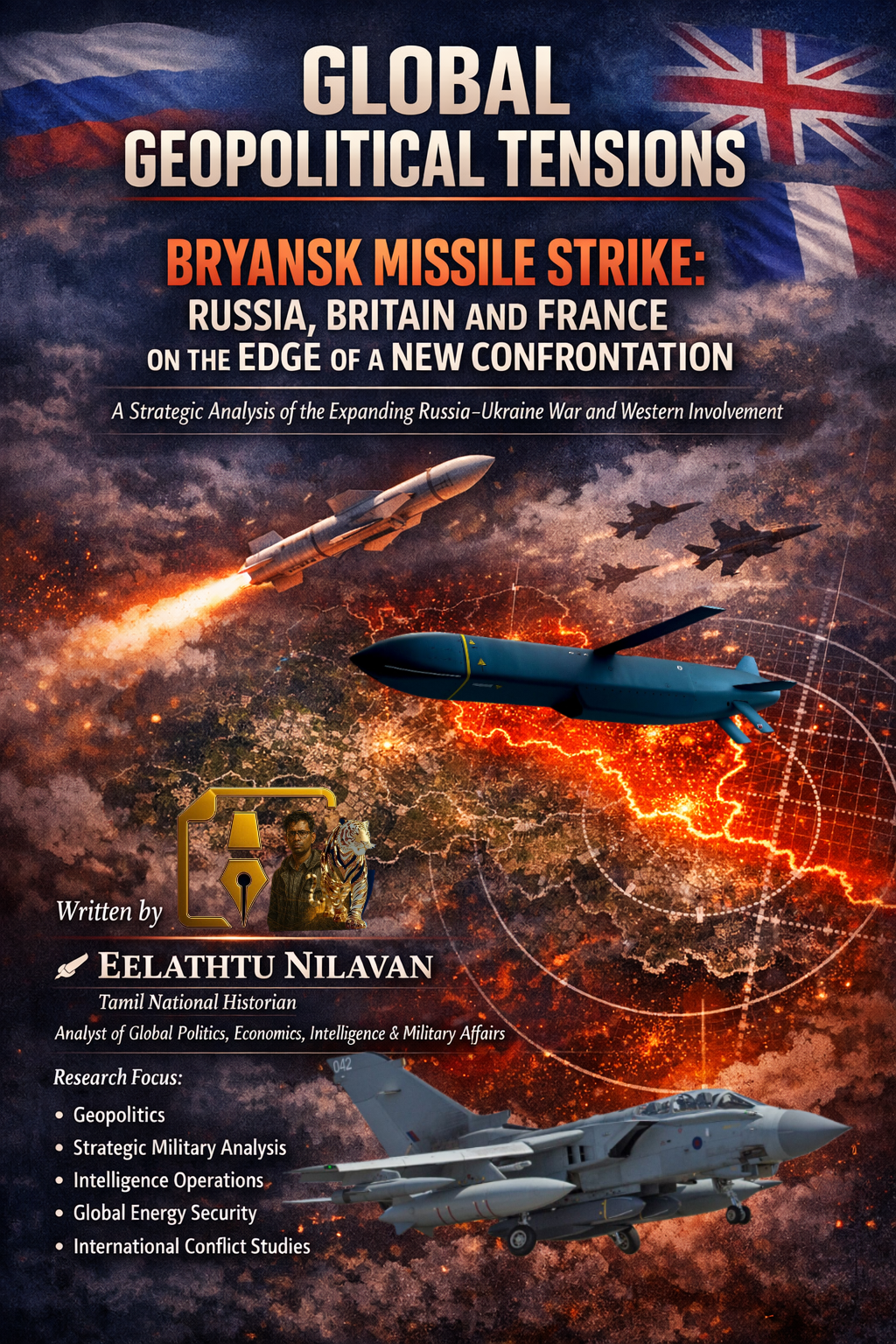
The Russia-Ukraine war has entered a dangerous new phase following a missile strike on the Russian border city of Bryansk on March 10, 2026. The attack has triggered a severe diplomatic confrontation between Russia, the United Kingdom, and France, raising concerns that NATO members may be moving closer to direct involvement in the conflict.
Moscow claims the attack was carried out using British-supplied Storm Shadow cruise missiles launched by Ukrainian forces. Russia further alleges that the strike could not have occurred without the technical participation of Western military specialists, an accusation that dramatically increases the geopolitical stakes of the war.
In response, Russia’s Foreign Ministry summoned the British and French ambassadors in Moscow on March 13, issuing a formal protest and warning that London and Paris would bear responsibility for any further escalation.
This confrontation highlights a growing reality: the war in Ukraine is increasingly evolving from a regional conflict into a global geopolitical confrontation between Russia and the NATO alliance.
More from the Author
✦ 𝗧𝗛𝗘 𝗕𝗥𝗬𝗔𝗡𝗦𝗞 𝗦𝗧𝗥𝗜𝗞𝗘: 𝗪𝗛𝗔𝗧 𝗛𝗔𝗣𝗣𝗘𝗡𝗘𝗗?
According to Russian authorities, at least seven cruise missiles struck the Bryansk region, causing significant damage.
Casualties and Damage
• 7 people killed
• 42 civilians injured
• Multiple buildings damaged in what Russia describes as a civilian district
Regional governor Alexander Bogomaz reported that many of the injured were hospitalized locally, while others were transferred to specialized medical centers in Moscow.
However, Ukraine disputes Russia’s description of the target.
Ukraine’s Version
Ukrainian officials confirmed the operation and stated that the strike targeted the Kremniy El microelectronics plant, one of Russia’s largest producers of electronic components used in missile guidance systems and military hardware.
If accurate, the strike represents a strategic attempt to weaken Russia’s military-industrial supply chain, rather than a purely symbolic attack.
✦ 𝗦𝗧𝗢𝗥𝗠 𝗦𝗛𝗔𝗗𝗢𝗪 𝗠𝗜𝗦𝗦𝗜𝗟𝗘𝗦: 𝗧𝗛𝗘 𝗪𝗘𝗦𝗧’𝗦 𝗟𝗢𝗡𝗚-𝗥𝗔𝗡𝗚𝗘 𝗪𝗘𝗔𝗣𝗢𝗡
The alleged use of Storm Shadow long-range cruise missiles is central to the controversy.
These missiles are among the most sophisticated weapons provided to Ukraine by Western countries.
Key Characteristics
• Range of approximately 250–300 km
• Low-altitude stealth flight profile designed to evade radar
• Advanced terrain-following guidance systems
• High-precision penetration warhead capable of destroying hardened targets
Storm Shadow missiles are typically launched from fighter aircraft, and Ukraine has modified its Su-24M strike fighters to deploy them.
Russia argues that operating such advanced systems requires Western technical support, including satellite targeting data and mission planning.
✦ 𝗥𝗨𝗦𝗦𝗜𝗔’𝗦 𝗔𝗖𝗖𝗨𝗦𝗔𝗧𝗜𝗢𝗡𝗦 𝗢𝗙 𝗪𝗘𝗦𝗧𝗘𝗥𝗡 𝗜𝗡𝗩𝗢𝗟𝗩𝗘𝗠𝗘𝗡𝗧
At the United Nations Security Council, Russia’s ambassador Vassily Nebenzia described the attack as a “barbaric crime.”
Moscow claims that the operation required:
• Western intelligence data
• Satellite navigation support
• Technical assistance from NATO specialists
Russia argues that without this support, Ukraine could not have conducted such a precision deep-strike mission inside Russian territory.
These claims gained credibility in geopolitical debates after German Chancellor Olaf Scholz previously confirmed in 2024 that British military specialists were present in Ukraine to assist with Storm Shadow operations.
Although Western governments maintain that their personnel are not directly involved in combat, Russia considers such support de facto participation in the war.
✦ 𝗥𝗨𝗦𝗦𝗜𝗔𝗡 𝗠𝗜𝗟𝗜𝗧𝗔𝗥𝗬 𝗢𝗣𝗘𝗥𝗔𝗧𝗜𝗢𝗡𝗦 𝗔𝗡𝗗 𝗧𝗘𝗥𝗥𝗜𝗧𝗢𝗥𝗜𝗔𝗟 𝗚𝗔𝗜𝗡𝗦
While the diplomatic crisis unfolded, Russia claims significant progress on the battlefield.
Donetsk Front
Russian forces announced the capture of the village of Kranos Zena in the Donetsk region, describing it as a key tactical point controlling supply routes.
According to Russia’s Ministry of Defense:
• 2,480 Ukrainian soldiers were killed or incapacitated in one week
• 45 armored vehicles destroyed
• Multiple Ukrainian artillery systems neutralized
Although these figures cannot be independently verified, they illustrate the intensity of current fighting across the eastern front.
✦ 𝗘𝗡𝗘𝗥𝗚𝗬 𝗪𝗔𝗥𝗙𝗔𝗥𝗘: 𝗢𝗜𝗟, 𝗦𝗔𝗡𝗖𝗧𝗜𝗢𝗡𝗦, 𝗔𝗡𝗗 𝗚𝗟𝗢𝗕𝗔𝗟 𝗠𝗔𝗥𝗞𝗘𝗧𝗦
The conflict is not only military—it is also economic and energy-driven.
In a surprising move, the United States Treasury’s Office of Foreign Assets Control (OFAC) issued General License 134, allowing Russian oil shipments already loaded before March 12, 2026 to be delivered despite sanctions.
Key Conditions
• Oil shipments already at sea can be delivered
• Authorization valid until April 11, 2026
• Shipping, insurance, and port services permitted
This decision reflects a harsh reality:
Despite years of sanctions, Russian energy remains deeply embedded in global markets.
✦ 𝗚𝗟𝗢𝗕𝗔𝗟 𝗘𝗡𝗘𝗥𝗚𝗬 𝗖𝗥𝗜𝗦𝗜𝗦 𝗔𝗡𝗗 𝗠𝗔𝗥𝗞𝗘𝗧 𝗣𝗥𝗘𝗦𝗦𝗨𝗥𝗘
Energy markets are under intense pressure due to multiple factors:
• Ongoing disruptions in Middle Eastern supply routes
• Rising global oil demand
• Shipping and logistics bottlenecks
Analysts warn that blocking Russian oil deliveries could trigger global shortages and severe price spikes, which explains Washington’s temporary relaxation of sanctions.
Russian President Vladimir Putin responded by stating that Russia will continue supplying energy to “reliable partners,” particularly in:
• Asia-Pacific markets
• Eastern European states such as Slovakia and Hungary
✦ 𝗨𝗞𝗥𝗔𝗜𝗡𝗘’𝗦 𝗘𝗡𝗘𝗥𝗚𝗬 𝗖𝗥𝗜𝗦𝗜𝗦
While Russia exports energy, Ukraine is facing a severe fuel shortage.
Ukrainian President Volodymyr Zelenskyy recently warned that Ukraine “simply needs diesel” to maintain both military operations and civilian infrastructure.
Reasons for the Shortage
• Suspension of diesel exports from Hungary and Slovakia
• Disputes over disruptions to the Druzhba oil pipeline
• Russian strikes targeting Ukrainian fuel storage facilities
As a result, Kyiv has requested emergency assistance from Romania, including fuel supplies and expanded energy cooperation.
✦ 𝗔𝗜𝗥 𝗗𝗘𝗙𝗘𝗡𝗦𝗘 𝗔𝗡𝗗 𝗧𝗛𝗘 𝗠𝗜𝗦𝗦𝗜𝗟𝗘 𝗦𝗛𝗢𝗥𝗧𝗔𝗚𝗘
Ukraine’s ability to defend its airspace remains a major concern.
Zelensky highlighted that even major Western manufacturers produce only 60–65 Patriot missiles per month, making advanced air defense systems extremely scarce.
He warned that some battle zones use more missiles in 36 hours than Ukraine has received in years.
Ukraine is therefore prioritizing:
• Integration of air defense systems
• Countermeasures against Iranian-designed Shahed drones used by Russia
• Expansion of regional defense cooperation with NATO allies
✦ 𝗧𝗛𝗘 𝗗𝗔𝗡𝗚𝗘𝗥 𝗢𝗙 𝗗𝗜𝗥𝗘𝗖𝗧 𝗡𝗔𝗧𝗢-𝗥𝗨𝗦𝗦𝗜𝗔 𝗖𝗢𝗡𝗙𝗟𝗜𝗖𝗧
The Bryansk strike highlights a critical question now dominating global security discussions:
Is NATO already indirectly fighting Russia?
From Moscow’s perspective, the supply of advanced weapons, targeting intelligence, and technical support effectively makes NATO a co-belligerent in the war.
Western governments reject this interpretation, arguing that they are merely supporting Ukraine’s right to defend itself.
However, each new escalation — especially long-range missile strikes inside Russian territory — increases the risk of direct confrontation between nuclear-armed powers.
✦ 𝗖𝗢𝗡𝗖𝗟𝗨𝗦𝗜𝗢𝗡: 𝗔 𝗪𝗔𝗥 𝗘𝗡𝗧𝗘𝗥𝗜𝗡𝗚 𝗔 𝗠𝗢𝗥𝗘 𝗗𝗔𝗡𝗚𝗘𝗥𝗢𝗨𝗦 𝗣𝗛𝗔𝗦𝗘
The Bryansk missile strike represents more than a single military incident.
It reveals the deeper transformation of the Russia-Ukraine war into a global geopolitical confrontation involving intelligence networks, energy markets, advanced weapons systems, and economic warfare.
As battlefield pressures intensify and Western support expands, the risk of direct NATO-Russia confrontation continues to grow.
The coming months will likely determine whether the conflict moves toward negotiated de-escalation or enters an even more dangerous stage with wider international involvement.
In today’s geopolitical reality, the war in Ukraine is no longer just about territory — it is about the future balance of global power.

Written by Eelaththu Nilavan
Tamil National Historian | Analyst of Global Politics, Economics, Intelligence & Military Affairs
14/03/2026
