


WASHINGTON, United States — March 25, 2026 —
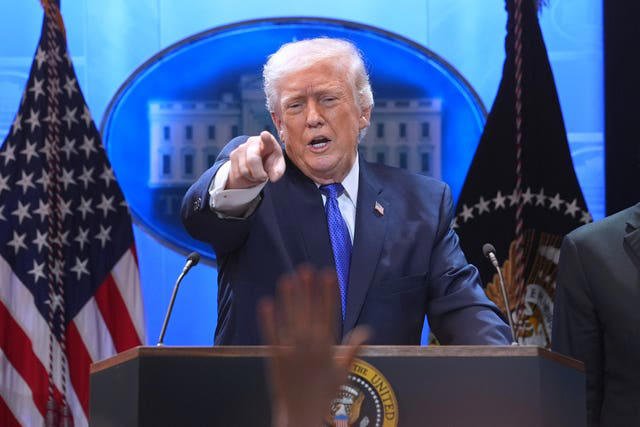
U.S. President Donald Trump said the United States is engaged in negotiations with Iran “right now,” describing what he called an active effort to bring an end to the ongoing conflict between the two countries. His remarks, delivered during an interview at the White House on Tuesday, mark one of the clearest public signals that Washington and Tehran may be exploring a diplomatic off‑ramp after months of escalating tensions.
Trump did not provide details about the format of the talks or identify the intermediaries involved. “We’re talking to them right now,” he said, adding that his administration is “working very hard to stop the war.” The White House has not released additional information, and officials familiar with the matter said discussions remain sensitive.
The conflict, which intensified following a series of military exchanges in the Gulf region and along key maritime routes, has drawn international concern. European governments, the United Nations, and regional partners have repeatedly urged both sides to pursue diplomacy, warning that further escalation could destabilize the broader Middle East.
Iranian officials have not publicly confirmed direct negotiations, though state‑aligned media in Tehran reported in recent days that “messages” had been exchanged through third‑party channels. Analysts note that both governments have historically relied on intermediaries — including Oman, Qatar, and Switzerland — during periods of heightened tension.
Foreign policy experts say the president’s comments suggest Washington may be testing whether Tehran is open to a ceasefire or confidence‑building measures. “When leaders start acknowledging talks publicly, it often means they want to signal seriousness to domestic and international audiences,” said a senior researcher at the International Crisis Group, speaking on background due to the sensitivity of the issue.
The conflict has strained global energy markets, disrupted shipping lanes, and prompted renewed debate in Congress over the scope of presidential war powers. Lawmakers from both parties have pressed the administration for briefings on the status of hostilities and any diplomatic outreach.
Regional governments reacted cautiously to Trump’s statement. A spokesperson for the European Union’s foreign policy office said Brussels “welcomes any credible step toward de‑escalation” but emphasized that “sustained dialogue” would be necessary to achieve a durable settlement.
It remains unclear whether the negotiations referenced by the president represent preliminary contacts or a more structured diplomatic process. U.S. officials have previously said that any long‑term agreement would require Iran to halt attacks on American forces and regional partners, while Tehran has insisted that sanctions relief must be part of any discussion.
For now, the administration appears intent on projecting optimism. “We want peace,” Trump said. “And we’re working on it.”
As the situation develops, international observers will be watching closely for signs that the two longtime adversaries are prepared to move from rhetoric to concrete steps toward ending the conflict.
