


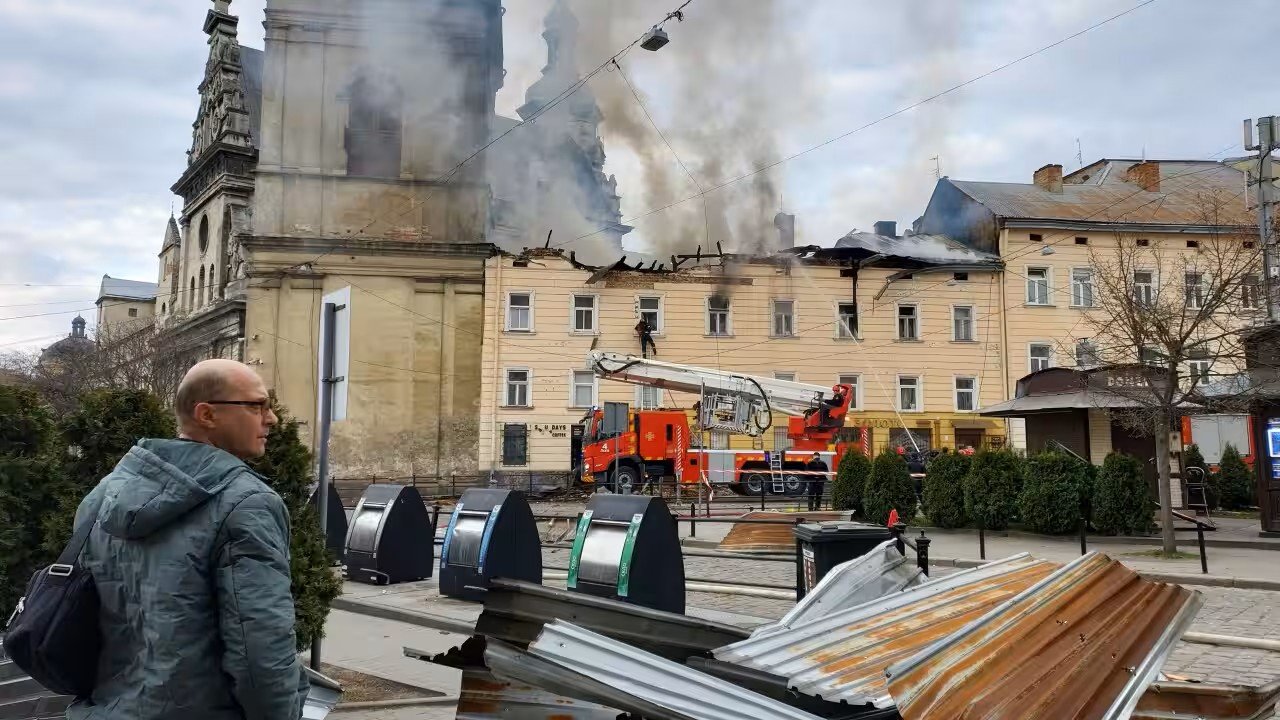
KYIV, Ukraine — March 25, 2026 — Ukrainian officials said the country faced one of the largest drone assaults of the war after Russia launched nearly 1,000 unmanned aircraft within a 24‑hour period, targeting multiple regions and straining air‑defense systems already under pressure from months of intensified attacks.
Ukraine’s Air Force reported that the barrage began late Sunday and continued into Monday, describing it as “one of the most extensive drone operations” since Russia’s full‑scale invasion in 2022. According to the military, the majority of the drones were Iranian‑designed Shahed models, which Russia has used repeatedly for long‑range strikes on infrastructure and urban centers.
Officials said Ukrainian air defenses intercepted a significant portion of the incoming drones, though exact figures were still being verified. “The scale of this attack was unprecedented in recent months,” Air Force spokesperson Yurii Ihnat said in a televised briefing, adding that the drones were launched from multiple directions to complicate defensive efforts.
Local authorities across several regions, including Kyiv, Odesa, and Kharkiv, reported damage to energy facilities, warehouses, and residential areas. Emergency crews worked through the morning to extinguish fires and restore power in affected districts. No nationwide casualty figures were immediately released, but regional officials confirmed several injuries.
The attack comes as Ukraine continues to appeal for additional air‑defense systems and ammunition from Western partners. President Volodymyr Zelensky said the scale of the assault underscored the urgency of those requests. “Russia is attempting to exhaust our defenses and break our resilience,” he said in a statement, urging allies to accelerate deliveries of promised equipment.
Russia did not immediately comment on the operation. In previous statements, the Kremlin has defended its strikes as targeting military or strategic infrastructure, while Ukrainian officials and international observers say many attacks have hit civilian areas.
Analysts note that Russia has increasingly relied on drones to supplement missile strikes, in part because they are cheaper to produce and can be deployed in large numbers to overwhelm defenses. The Institute for the Study of War, a U.S.-based think tank, said the latest barrage appeared designed to “probe Ukrainian air‑defense coverage and identify vulnerabilities.”
The United Nations has repeatedly warned that continued attacks on civilian infrastructure risk deepening the humanitarian crisis, particularly as Ukraine works to stabilize its energy grid ahead of the next winter season.
As cleanup efforts continued Monday, Ukrainian officials said they expected further strikes in the coming days. “This is not the last large‑scale attack,” Ihnat said. “We must prepare for more.”
