


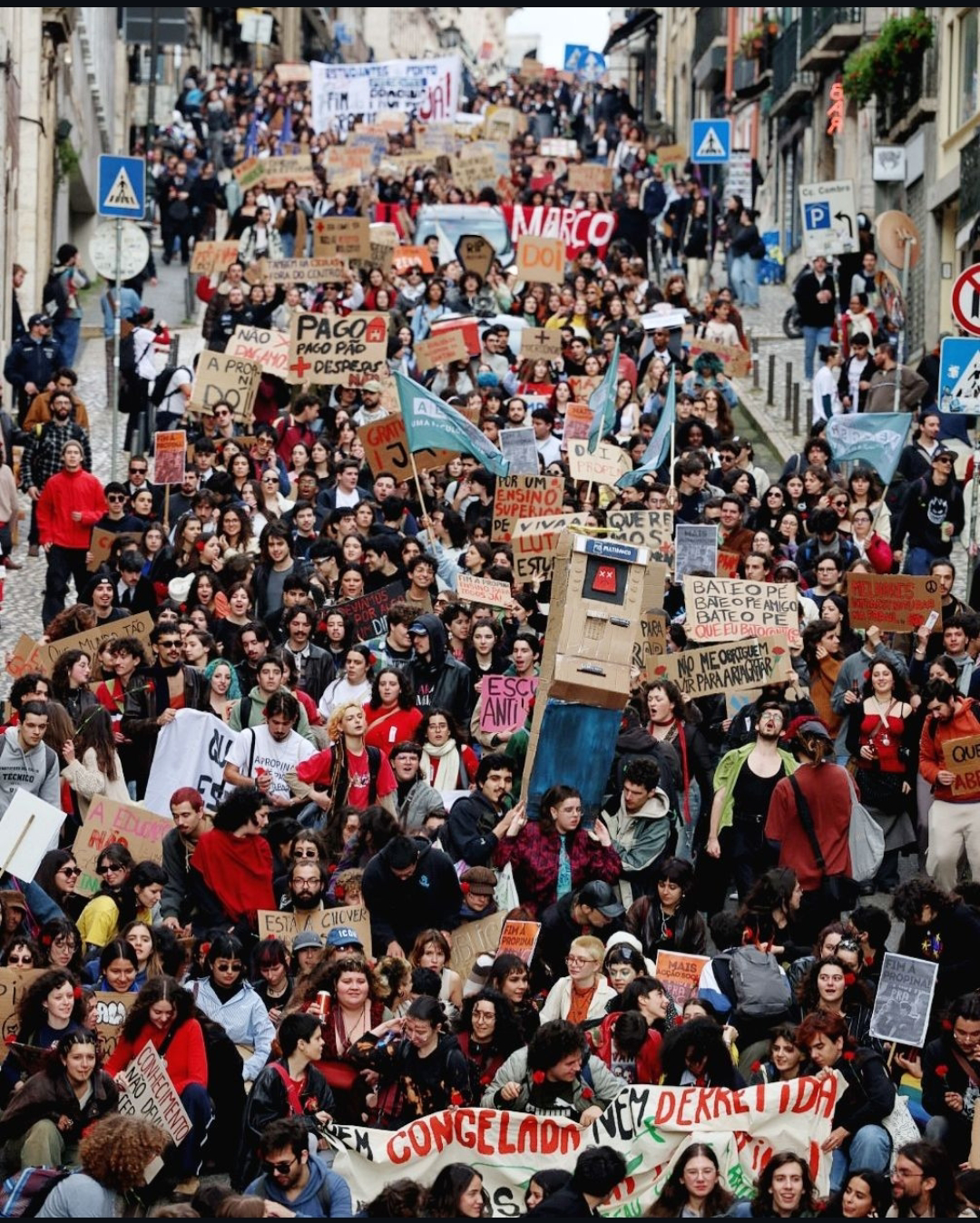
LISBON, Portugal — March 25, 2026 — Thousands of university students marched through major Portuguese cities on Tuesday, calling for improved campus conditions and renewed action against tuition fees they say are placing growing pressure on families.
Demonstrations took place in Lisbon, Porto, Coimbra, Braga, and Faro, according to student unions that coordinated the nationwide action. Organizers described the protests as a response to what they view as years of underinvestment in public higher education, citing overcrowded classrooms, deteriorating facilities, and rising living costs.
Student representatives from the National Federation of Student Associations (FNAE) said the movement reflects “widespread frustration” among undergraduates. “Students are being asked to pay more while receiving less,” FNAE spokesperson Catarina Lopes told local reporters. She added that many students struggle to afford accommodation in university cities, where rents have climbed sharply in recent years.
Portugal’s public universities charge annual tuition fees, though the government reduced the maximum rate in 2019. Students argue that even the lower fees remain burdensome, especially for those from low‑income households. Several protesters carried signs reading “Education is a right, not a privilege” and “We can’t study under these conditions.”
University administrators acknowledged infrastructure challenges but said funding decisions ultimately depend on the national government. A statement from the University of Lisbon noted that “maintenance needs have increased significantly” and that institutions “continue to work with the Ministry of Science, Technology and Higher Education to secure long‑term solutions.”
Government officials said they are reviewing budget allocations for higher education as part of broader negotiations over the next academic year. A ministry spokesperson told Portuguese media that the government “recognizes the concerns raised by students” and is assessing options to expand housing support and improve campus facilities.
The protests remained peaceful, with police reporting no major incidents. Student groups said they plan to continue organizing assemblies and discussions in the coming weeks, hoping to maintain pressure on policymakers.
For many participants, the demonstrations were about more than fees. “We want a system that allows everyone to study with dignity,” said Ana Ribeiro, a 20‑year‑old sociology student in Porto. “This is about the future of public education in Portugal.”
The movement has drawn support from several academic unions and youth organizations, though no political parties formally led the demonstrations. Analysts note that debates over tuition and access to education have resurfaced repeatedly in Portugal, especially during periods of economic strain.
As the academic year continues, students say they will keep pushing for concrete commitments. Whether the government responds with significant reforms remains to be seen, but Tuesday’s turnout suggests the issue is unlikely to fade quietly.
