


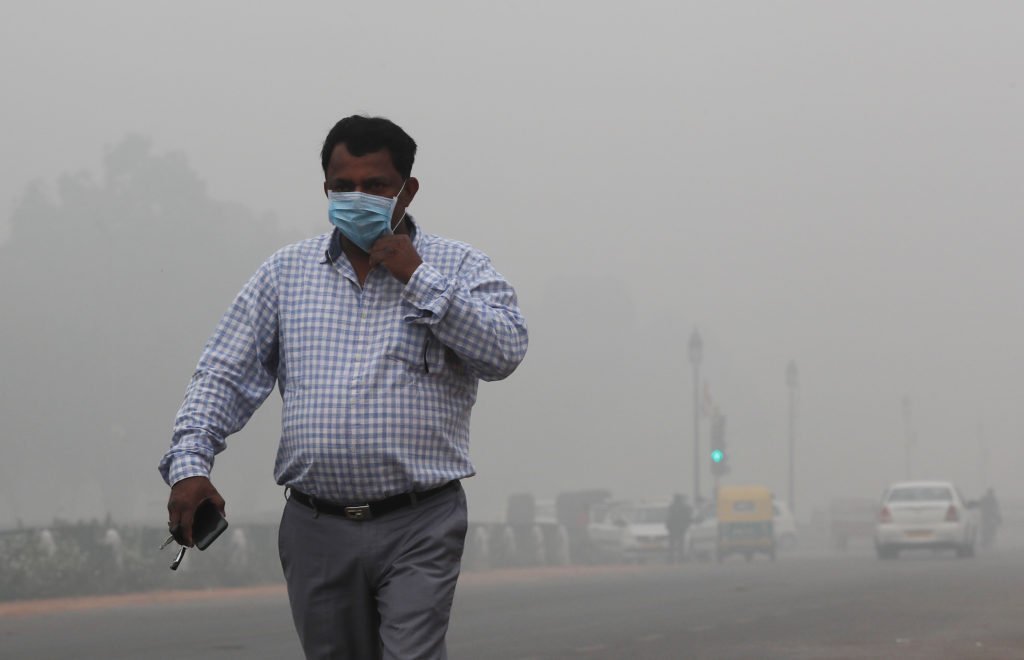
NEW DELHI, India — March 25, 2026 — India now hosts the world’s most polluted city, according to the newly released World Air Quality Report from Swiss‑based monitoring organization IQAir. The annual assessment, which analyzes fine particulate matter (PM2.5) levels across thousands of locations, places several Indian cities among the most polluted worldwide, underscoring a persistent and deepening public‑health challenge.
IQAir’s report draws on data from government agencies, independent monitors, and verified low‑cost sensors. While the organization did not attribute the pollution to a single cause, it noted that rapid urbanization, vehicle emissions, industrial activity, construction dust, and seasonal crop‑burning continue to drive dangerously high pollution levels across northern India.
A Worsening Pattern
The city topping this year’s list — identified by IQAir as the most polluted globally — recorded annual PM2.5 concentrations far exceeding both India’s national standards and the World Health Organization’s recommended limits. Several other Indian cities, including Delhi, Ghaziabad, and Faridabad, also ranked among the worst‑affected.
Environmental researchers say the findings reflect long‑standing structural issues. “Air quality in many Indian cities has been deteriorating for over a decade,” said an environmental policy analyst at the Centre for Science and Environment. “The data confirms what residents experience daily — prolonged exposure to hazardous air.”
Health and Economic Impacts
Medical experts warn that sustained PM2.5 exposure increases the risk of respiratory illnesses, cardiovascular disease, and reduced life expectancy. Hospitals in northern India routinely report spikes in asthma and pollution‑related complications during winter months, when stagnant air traps pollutants close to the ground.
Economists have also raised concerns about productivity losses linked to poor air quality. A 2023 study by the Energy Policy Institute at the University of Chicago estimated that air pollution could shorten life expectancy in parts of India by several years if current trends continue.
Government Response and Ongoing Challenges
India’s central and state governments have introduced a range of measures in recent years, including stricter emissions standards for vehicles, expanded air‑quality monitoring networks, and seasonal restrictions on construction and industrial activity. The National Clean Air Programme (NCAP), launched in 2019, aims to reduce particulate pollution in major cities by 20–30 percent.
Officials say progress has been uneven but point to localized improvements. “We are committed to long‑term solutions,” a senior official from India’s Ministry of Environment, Forest and Climate Change said in a statement responding to the report. “Air quality management requires coordinated action across sectors and states.”
A Global Issue With Local Consequences
While India dominates the top of the pollution rankings, IQAir’s report notes that air‑quality challenges are widespread across South Asia, with Pakistan, Bangladesh, and Nepal also recording high PM2.5 levels. The organization emphasized that air pollution remains a global public‑health threat, affecting countries at all income levels.
For residents of India’s most polluted city, however, the findings simply confirm a daily reality. Many rely on air purifiers at home, avoid outdoor exercise, or wear protective masks during peak pollution periods.
As the country continues to grow economically and urbanize rapidly, experts say the path forward will require sustained political will, technological investment, and regional cooperation. The latest data, they argue, is a reminder that clean air remains an urgent and unfinished priority.
