


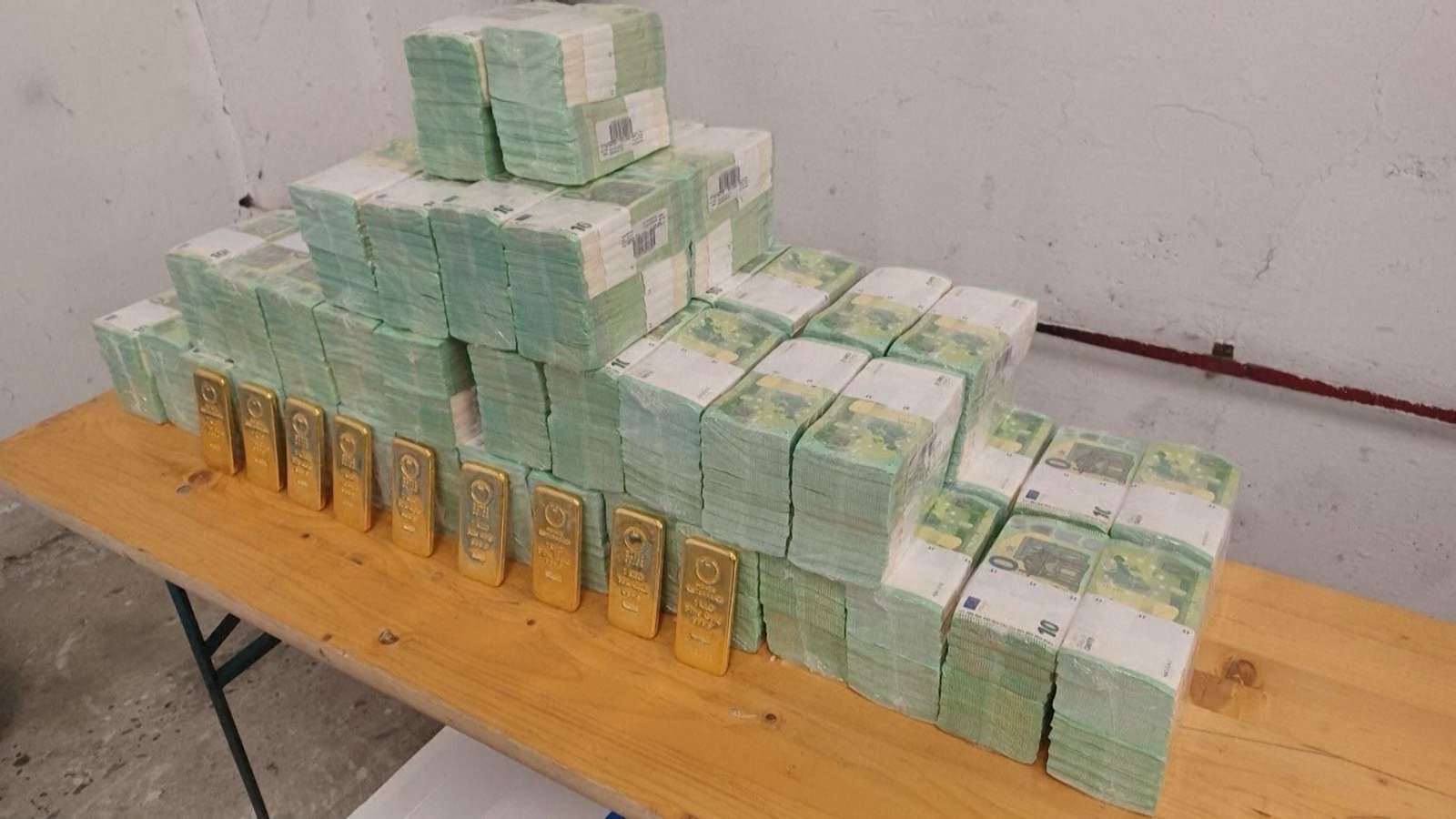
BUDAPEST, Hungary — March 25, 2026 — More than €70 billion in cash reserves and gold belonging to Ukraine’s state‑owned Oschadbank remain under Hungarian seizure, as newly surfaced accounts shed light on how a Ukrainian delegation was detained and questioned by Hungarian authorities in late 2025.
The assets — which Hungarian officials describe as “frozen pending legal clarification” — were originally transferred to Hungary for temporary safeguarding shortly after Russia’s full‑scale invasion of Ukraine in 2022, according to Ukrainian financial officials. Kyiv maintains that the funds were placed under a bilateral security arrangement and were never intended to be held indefinitely.
🇭🇺 Detention of Ukrainian Officials Emerges for the First Time
According to Ukrainian government sources who spoke on condition of anonymity because they were not authorised to comment publicly, a three‑member Oschadbank team travelled to Budapest in November 2025 to negotiate the return of the reserves. They were reportedly detained at Ferenc Liszt International Airport shortly after arrival.
Two members of the delegation were questioned for more than eight hours, the sources said, while the team’s lead representative was held overnight. Hungarian authorities did not file charges but confiscated electronic devices and documents before releasing the group the following day.
Hungary’s Ministry of Interior declined to comment on the specifics of the detentions, saying only that “standard border‑security procedures were followed.” The ministry did not address questions about why the delegation’s materials were seized.
A Dispute Rooted in Geopolitics and Legal Ambiguity
The frozen assets include a mix of foreign currency reserves, gold bullion, and liquidity buffers that Oschadbank says are essential for Ukraine’s wartime financial stability. Kyiv argues that Hungary’s continued seizure violates both the original agreement and international norms governing sovereign assets.
Hungarian officials, however, have suggested that the arrangement’s legal basis is unclear. A senior Hungarian government adviser, speaking to local media earlier this year, claimed that “documentation surrounding the transfer was incomplete,” though no evidence has been publicly presented to support that assertion.
Independent legal experts say the dispute sits in a grey zone.
- Dr. Ilona Varga, a Budapest‑based specialist in international financial law, told Népszava that the case “appears to hinge on whether the 2022 transfer constituted a custodial agreement or a conditional security arrangement.”
- Ukrainian officials insist the terms were explicit and documented, though they have not released the full agreement publicly due to wartime confidentiality.
🇺🇦 Kyiv Calls for International Mediation
Ukraine’s Ministry of Finance has formally requested EU mediation, arguing that the prolonged seizure undermines financial stability during an active conflict. Several EU diplomats, speaking to European media outlets, confirmed that informal discussions have begun but described the issue as “politically sensitive.”
Hungary, which has maintained a more cautious stance toward supporting Ukraine than most EU members, has not indicated whether it would participate in mediation.
What Happens Next
The dispute remains unresolved, and neither side has disclosed a timeline for further negotiations. Ukrainian officials say they are preparing additional diplomatic steps if the assets are not released, while Hungary maintains that the matter is “under legal review.”
For now, the €70 billion remains locked in Hungarian custody — a significant sum for a country fighting a war of survival, and a growing point of tension within the European Union.
