

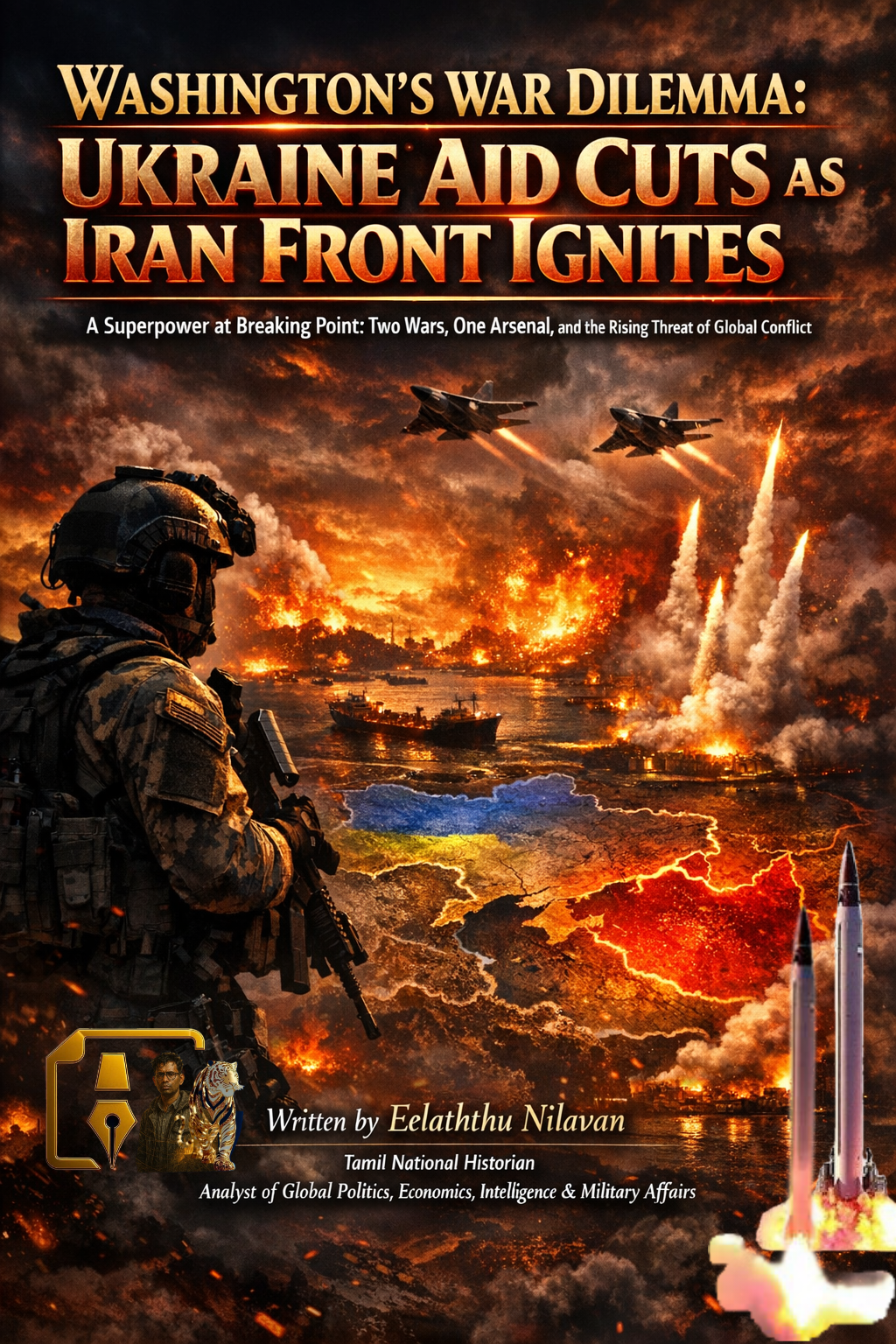
𝘈 𝘎𝘭𝘰𝘣𝘢𝘭 𝘚𝘶𝘱𝘦𝘳𝘱𝘰𝘸𝘦𝘳 𝘈𝘵 𝘵𝘩𝘦 𝘊𝘳𝘰𝘴𝘴𝘳𝘰𝘢𝘥𝘴: 𝘛𝘸𝘰 𝘞𝘢𝘳𝘴, 𝘖𝘯𝘦 𝘈𝘳𝘴𝘦𝘯𝘢𝘭, 𝘈𝘯𝘥 𝘈 𝘙𝘪𝘴𝘪𝘯𝘨 𝘙𝘪𝘴𝘬 𝘰𝘧 𝘎𝘭𝘰𝘣𝘢𝘭 𝘊𝘰𝘯𝘧𝘭𝘢𝘨𝘳𝘢𝘵𝘪𝘰𝘯
𝐓𝐇𝐄 𝐈𝐑𝐀𝐍 𝐎𝐏𝐄𝐑𝐀𝐓𝐈𝐎𝐍: 𝐀 𝐇𝐈𝐆𝐇-𝐑𝐈𝐒𝐊 𝐆𝐀𝐌𝐁𝐈𝐓
The United States is reportedly weighing one of the most dangerous military options in recent history: a direct ground operation inside Iran. Potential targets include strategically vital locations such as Kharg Island, Iran’s primary oil export hub, and critical nuclear facilities at Natanz, Fordow, Isfahan, and Arak.
Elite units like Delta Force and SEAL Team 6 are believed to be under consideration for such missions—operations that would aim for rapid, high-impact strikes on Iran’s nuclear and energy infrastructure.
However, analysts warn this is not a limited engagement scenario. Iran has clearly declared any U.S. ground incursion a “red line”, signaling immediate and potentially massive retaliation.
𝐈𝐑𝐀𝐍’𝐒 𝐑𝐄𝐓𝐀𝐋𝐈𝐀𝐓𝐈𝐎𝐍 𝐃𝐎𝐂𝐓𝐑𝐈𝐍𝐄: 𝐀𝐒𝐘𝐌𝐌𝐄𝐓𝐑𝐈𝐂 𝐀𝐍𝐃 𝐌𝐔𝐋𝐓𝐈-𝐅𝐑𝐎𝐍𝐓
Iran’s response strategy is built on asymmetric warfare, designed to offset U.S. technological superiority:
• Strait of Hormuz Disruption: Nearly 20% of global oil supply flows through this chokepoint. Even partial closure could send global markets into shock.
• Missile & Drone Saturation: Iran’s arsenal includes ballistic missiles, cruise missiles, and drones capable of targeting U.S. bases and allies across the region.
• Naval Hybrid Warfare: Deployment of systems like the Azhdar unmanned underwater vehicle (UUV) introduces stealth threats to both military and commercial shipping.
• Proxy Network Activation: Allied groups across the Middle East could open multiple fronts simultaneously.
This layered strategy ensures that any U.S. strike would trigger regional escalation, not containment.
𝐎𝐈𝐋, 𝐄𝐂𝐎𝐍𝐎𝐌𝐈𝐂𝐒 & 𝐆𝐋𝐎𝐁𝐀𝐋 𝐅𝐀𝐋𝐋𝐎𝐔𝐓
The economic consequences could be immediate and severe:
• Oil prices have already shown volatility, with potential spikes exceeding 30% or more.
• Supply chain disruptions would hit Europe and Asia hardest, given their reliance on Gulf energy flows.
• Insurance premiums for shipping in the Gulf could skyrocket, effectively slowing global trade.
A prolonged conflict could trigger a global energy crisis, reminiscent of—but potentially worse than—previous oil shocks.
𝐓𝐇𝐄 𝐀𝐑𝐒𝐄𝐍𝐀𝐋 𝐃𝐈𝐋𝐄𝐌𝐌𝐀: 𝐔.𝐒. 𝐒𝐓𝐑𝐄𝐓𝐂𝐇𝐄𝐃 𝐓𝐇𝐈𝐍
At the heart of Washington’s crisis lies a fundamental constraint: limited military stockpiles.
The Pentagon is now considering whether to redirect critical weapons originally intended for Ukraine to the Middle East.
Key Systems Under Pressure
• Patriot Air Defense Systems
• THAAD Interceptors
• Precision-guided munitions and long-range strike weapons
With U.S. forces reportedly striking over 9,000 targets in less than four weeks, munitions are being consumed at an unsustainable rate.
𝐔𝐊𝐑𝐀𝐈𝐍𝐄’𝐒 𝐏𝐑𝐄𝐂𝐀𝐑𝐈𝐎𝐔𝐒 𝐏𝐎𝐒𝐈𝐓𝐈𝐎𝐍
Ukraine remains heavily dependent on Western air defense to counter ongoing Russian strikes.
Any diversion of:
• Air defense interceptors
• Radar systems
• Missile batteries
…could significantly weaken Kyiv’s defensive shield.
While NATO leadership insists support continues, concerns are growing that:
• European funding may be used to replenish U.S. stockpiles
• Deliveries to Ukraine could slow or shrink
This introduces a dangerous possibility: one conflict indirectly weakening another front.
𝐓𝐑𝐔𝐌𝐏’𝐒 𝟏𝟎-𝐃𝐀𝐘 𝐆𝐀𝐌𝐁𝐈𝐓
U.S. President Donald Trump has extended a critical deadline for Iran to reopen the Strait of Hormuz.
Key Developments
• New deadline: April 6, 2026
• Temporary pause on strikes against Iranian energy infrastructure
• Claims that negotiations are “progressing well”
However, Iran’s Foreign Minister Abbas Araghchi has categorically denied any negotiations, exposing a stark contradiction.
Behind the scenes, intermediaries are reportedly exchanging proposals, suggesting a dual-track diplomacy:
• Public hostility
• Private negotiation
𝐀𝐈𝐑 𝐖𝐀𝐑 𝐔𝐍𝐃𝐄𝐑 𝐒𝐓𝐑𝐄𝐒𝐒
Iran claims significant success against U.S. air assets, including:
• F-35 Lightning II
• F-15E Strike Eagle
• F-16 Fighting Falcon
• F/A-18E/F Super Hornet
While these claims remain contested, analysts warn of a shrinking margin of air superiority, especially as:
• U.S. aircraft are forced into closer-range missions
• Iranian systems like the S-300 create layered defense zones
If accurate, this signals a historic shift in modern warfare dynamics.
𝐓𝐇𝐄 𝐀𝐙𝐇𝐃𝐀𝐑 𝐓𝐇𝐑𝐄𝐀𝐓: 𝐒𝐈𝐋𝐄𝐍𝐓 𝐖𝐀𝐑𝐅𝐀𝐑𝐄
Iran’s reported deployment of the Azhdar UUV highlights the rise of AI-assisted naval warfare:
• Can remain dormant for up to 96 hours
• Equipped with acoustic and magnetic sensors
• Carries a 200 kg explosive payload
Though some claims are exaggerated, the psychological and strategic impact is real:  Low-cost weapons threatening billion-dollar fleets
𝐄𝐔𝐑𝐎𝐏𝐄’𝐒 𝐖𝐀𝐑 𝐈𝐍𝐃𝐔𝐒𝐓𝐑𝐈𝐀𝐋 𝐏𝐈𝐕𝐎𝐓
In a striking development, Volkswagen is in talks with Rafael Advanced Defense Systems to convert its Osnabrück plant into a production site for Iron Dome components.
Implications
• Transition from civilian to military manufacturing
• Potentially saving 2,300 jobs
• Reflects Europe’s accelerating rearmament trend
Yet it raises profound ethical questions: Should industrial economies pivot toward war production again?
𝐀 𝐍𝐄𝐖 𝐆𝐄𝐎𝐏𝐎𝐋𝐈𝐓𝐈𝐂𝐀𝐋 𝐀𝐗𝐈𝐒
Iran has openly acknowledged support from Vladimir Putin, signaling a strengthening Tehran–Moscow alignment.
This evolving axis could:
• Counterbalance U.S. influence
• Expand the conflict’s geopolitical scope
• Increase risks of great-power confrontation
𝐂𝐎𝐍𝐂𝐋𝐔𝐒𝐈𝐎𝐍: 𝐀 𝐖𝐎𝐑𝐋𝐃 𝐎𝐍 𝐓𝐇𝐄 𝐁𝐑𝐈𝐍𝐊
The United States now faces a defining strategic dilemma:
• Escalate in Iran and risk global war
• Sustain Ukraine support and stretch military limits
• Or attempt a fragile balance between both
What makes this moment uniquely dangerous is the convergence of crises:
• Military overstretch
• Economic vulnerability
• Rising great-power alignment
The next decisions taken in Washington—and responses from Tehran, Moscow, and beyond—may not just shape a region, but redefine the global order for years to come.

Written by Eelaththu Nilavan
Tamil National Historian | Analyst of Global Politics, Economics, Intelligence & Military Affairs
27/03/2026
The views expressed in this article are the author’s own and do not necessarily reflect Amizhthu’s editorial stance.
