


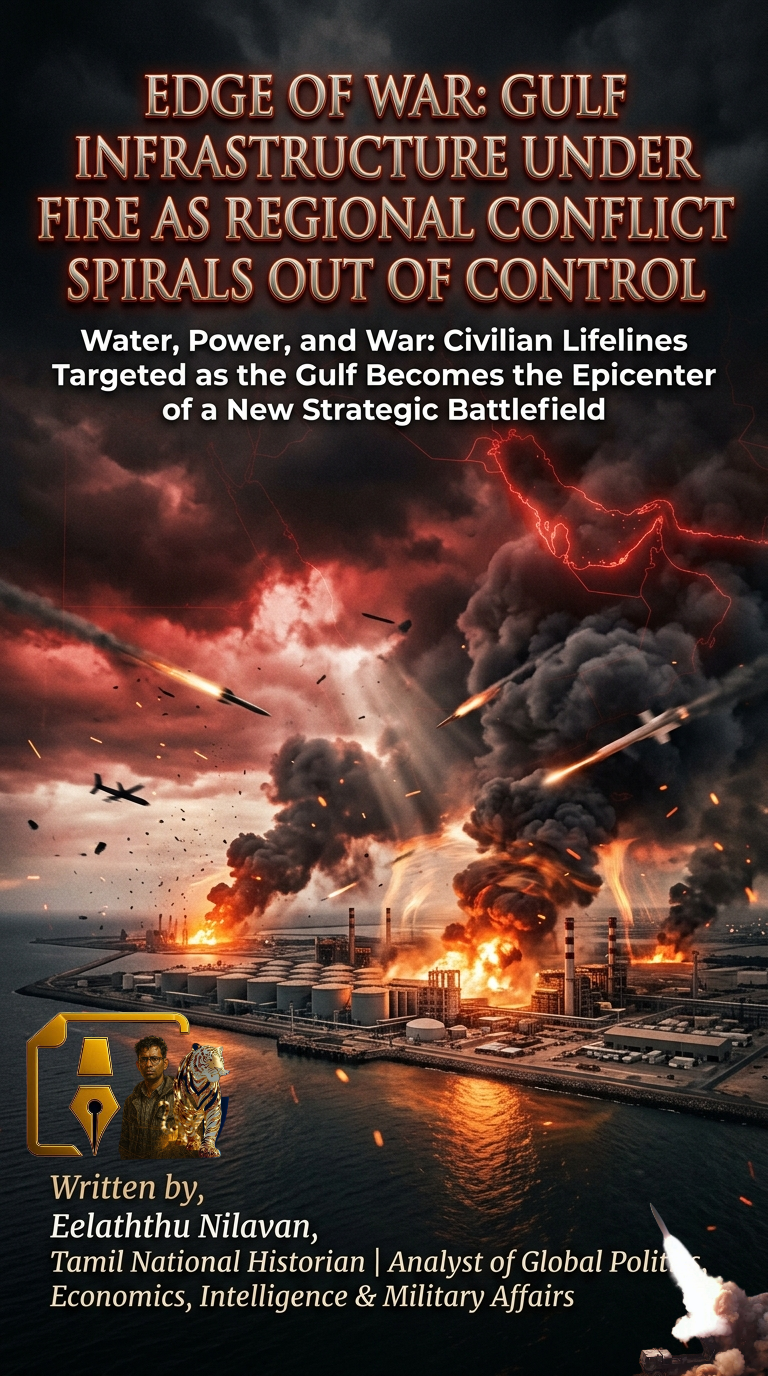
𝘼 𝘿𝘼𝙉𝙂𝙀𝙍𝙊𝙐𝙎 𝙏𝙐𝙍𝙉: 𝘾𝙄𝙑𝙄𝙇𝙄𝘼𝙉 𝙇𝙄𝙁𝙀𝙇𝙄𝙉𝙀𝙎 𝙄𝙉 𝙏𝙃𝙀 𝘾𝙍𝙊𝙎𝙎𝙃𝘼𝙄𝙍𝙎
After the US and Israel launched massive attacks on Iran’s internal infrastructure, Iran has responded by launching massive attacks on Israeli and US military bases and key military installations, airports, radar stations, fuel refineries, and Arab countries that have provided military bases to support the US in its war against Iran.
A devastating strike on a power and water desalination facility in Kuwait has marked a critical escalation in the widening regional conflict. The attack resulted in the death of an Indian worker and caused significant structural damage, disrupting a system essential to daily civilian survival.
Desalination plants are not ordinary infrastructure in the Gulf—they are the backbone of national water supply. Any disruption risks immediate humanitarian consequences, especially in countries where natural freshwater resources are extremely limited.
Authorities described the attack as a turning point, signaling a shift from conventional military engagements toward targeting systems that sustain civilian life. Emergency response teams were deployed swiftly, working to stabilize operations and prevent cascading failures across water and electricity networks.
This incident follows repeated missile and drone incursions into Kuwaiti airspace in recent days, including strikes on military facilities that injured multiple servicemen—demonstrating a pattern of sustained pressure rather than an isolated Event.
𝙎𝙏𝙍𝘼𝙏𝙀𝙂𝙄𝘾 𝙀𝙎𝘾𝘼𝙇𝘼𝙏𝙄𝙊𝙉: 𝙏𝙃𝙀 𝙒𝙀𝘼𝙋𝙊𝙉𝙄𝙕𝘼𝙏𝙄𝙊𝙉 𝙊𝙁 𝙄𝙉𝙁𝙍𝘼𝙎𝙏𝙍𝙐𝘾𝙏𝙐𝙍𝙀
The targeting of desalination and energy facilities reflects a broader transformation in warfare strategy. Instead of focusing solely on military bases, the conflict is increasingly aimed at critical infrastructure nodes—energy grids, water systems, industrial complexes, and logistics hubs.
Such a strategy carries profound implications:
• Immediate civilian impact through water and electricity shortages
• Long-term economic disruption by damaging industrial capacity
• Psychological pressure on governments and populations
The Gulf region produces nearly 40% of the world’s desalinated water, making these facilities globally significant. Their vulnerability introduces not just regional instability, but potential international humanitarian and economic ripple effects.
𝙍𝙀𝙂𝙄𝙊𝙉𝘼𝙇 𝙍𝙀𝘼𝘾𝙏𝙄𝙊𝙉: 𝘼𝙇𝙇𝙄𝘼𝙉𝘾𝙀𝙎 𝙎𝙏𝙍𝘼𝙄𝙉𝙀𝘿, 𝙏𝙀𝙉𝙎𝙄𝙊𝙉𝙎 𝙃𝙄𝙂𝙃
The strike has triggered strong reactions across the Middle East:
• Qatar condemned the attack as a violation of sovereignty and international law
• Gulf states are increasingly aligning with United States strategic objectives, coordinating responses to aerial threats
• Regional leadership is calling for collective defense measures to counter further escalation
At the same time, competing narratives have intensified. Accusations and denials surrounding responsibility highlight a growing information warfare dimension, where perception and messaging are as critical as battlefield outcomes.
𝙈𝙐𝙇𝙏𝙄-𝙁𝙍𝙊𝙉𝙏 𝘾𝙊𝙉𝙁𝙇𝙄𝘾𝙏: 𝘼 𝙉𝙀𝙏𝙒𝙊𝙍𝙆𝙀𝘿 𝙒𝘼𝙍
The situation in Kuwait is part of a broader, interconnected conflict spanning multiple regions:
• In northern Israel, a major fire erupted at the Bazan oil refinery in Haifa following missile strikes
• The Ramat Hovav industrial zone near Beersheba—home to critical chemical facilities—was hit, triggering hazmat alerts
• Maritime tensions have escalated in the Strait of Hormuz, one of the world’s most vital oil transit corridors
This expanding battlefield demonstrates how the conflict has evolved into a multi-domain confrontation, involving air, sea, cyber, and industrial targets simultaneously.
𝙃𝙄𝙂𝙃-𝙎𝙏𝘼𝙆𝙀𝙎 𝙈𝙄𝙇𝙄𝙏𝘼𝙍𝙔 𝘾𝘼𝙇𝘾𝙐𝙇𝙐𝙎
Amid escalating hostilities, reports indicate consideration of a high-risk operation to secure large quantities of enriched uranium from heavily fortified facilities. Such an operation would require:
• Ground force deployment into hostile territory
• Securing underground and hardened nuclear sites
• Transporting highly sensitive material under combat conditions
Experts warn that any attempt to carry out such a mission could trigger direct large-scale confrontation, dramatically widening the scope of the conflict.
Simultaneously, aerial confrontations are intensifying, including the reported downing of advanced surveillance drones near key maritime chokepoints—highlighting increasing risks in contested airspace.
𝘿𝙄𝙋𝙇𝙊𝙈𝘼𝘾𝙔 𝙐𝙉𝘿𝙀𝙍 𝙎𝙏𝙍𝘼𝙄𝙉: 𝘿𝙀𝙀𝙋𝙀𝙉𝙄𝙉𝙂 𝘿𝙄𝙎𝙏𝙍𝙐𝙎𝙏
At the diplomatic level, tensions remain deeply entrenched. Statements from senior officials, including Abbas Araghchi, reflect a hardened stance:
• Continued lack of trust in Western commitments
• Emphasis on past compliance with the Joint Comprehensive Plan of Action
• Warnings against renewed sanctions and external pressure
These dynamics underscore a critical reality:
diplomatic channels remain open but increasingly fragile, with political mistrust limiting meaningful progress.
𝙂𝙇𝙊𝘽𝘼𝙇 𝙍𝙄𝙋𝙋𝙇𝙀 𝙀𝙁𝙁𝙀𝘾𝙏𝙎: 𝙀𝙉𝙀𝙍𝙂𝙔, 𝙏𝙍𝘼𝘿𝙀 & 𝙎𝙀𝘾𝙐𝙍𝙄𝙏𝙔
The consequences of this escalation extend far beyond the region:
• Energy Markets: Disruptions in the Strait of Hormuz could send oil prices sharply higher
• Global Trade: Increased insecurity threatens key shipping routes connecting Asia, Europe, and Africa
• Alliance Dynamics: Diverging positions among Western and regional partners complicate coordinated responses
Decisions such as restricting military access to strategic bases in parts of Europe highlight the growing complexity of alliance politics in the face of escalating War.
𝘾𝙊𝙉𝘾𝙇𝙐𝙎𝙄𝙊𝙉: 𝘼 𝙉𝙀𝙒 𝙀𝙍𝘼 𝙊𝙁 𝘾𝙊𝙉𝙁𝙇𝙄𝘾𝙏
The strike on Kuwait’s desalination facility is more than an isolated incident—it is a clear indicator of a transforming battlefield:
• Civilian infrastructure is increasingly central to military strategy
• Regional conflicts are merging into a single interconnected system of confrontation
• Diplomatic solutions are struggling to keep pace with rapid escalation
If current trends continue, the world may be entering a phase where localized conflicts evolve into a broader systemic crisis, reshaping global security, economic stability, and the rules of modern warfare.

Written by Eelaththu Nilavan
Tamil National Historian | Analyst of Global Politics, Economics, Intelligence & Military Affairs
31/03/2026
The views expressed in this article are the author’s own and do not necessarily reflect Amizhthu’s editorial stance.
