


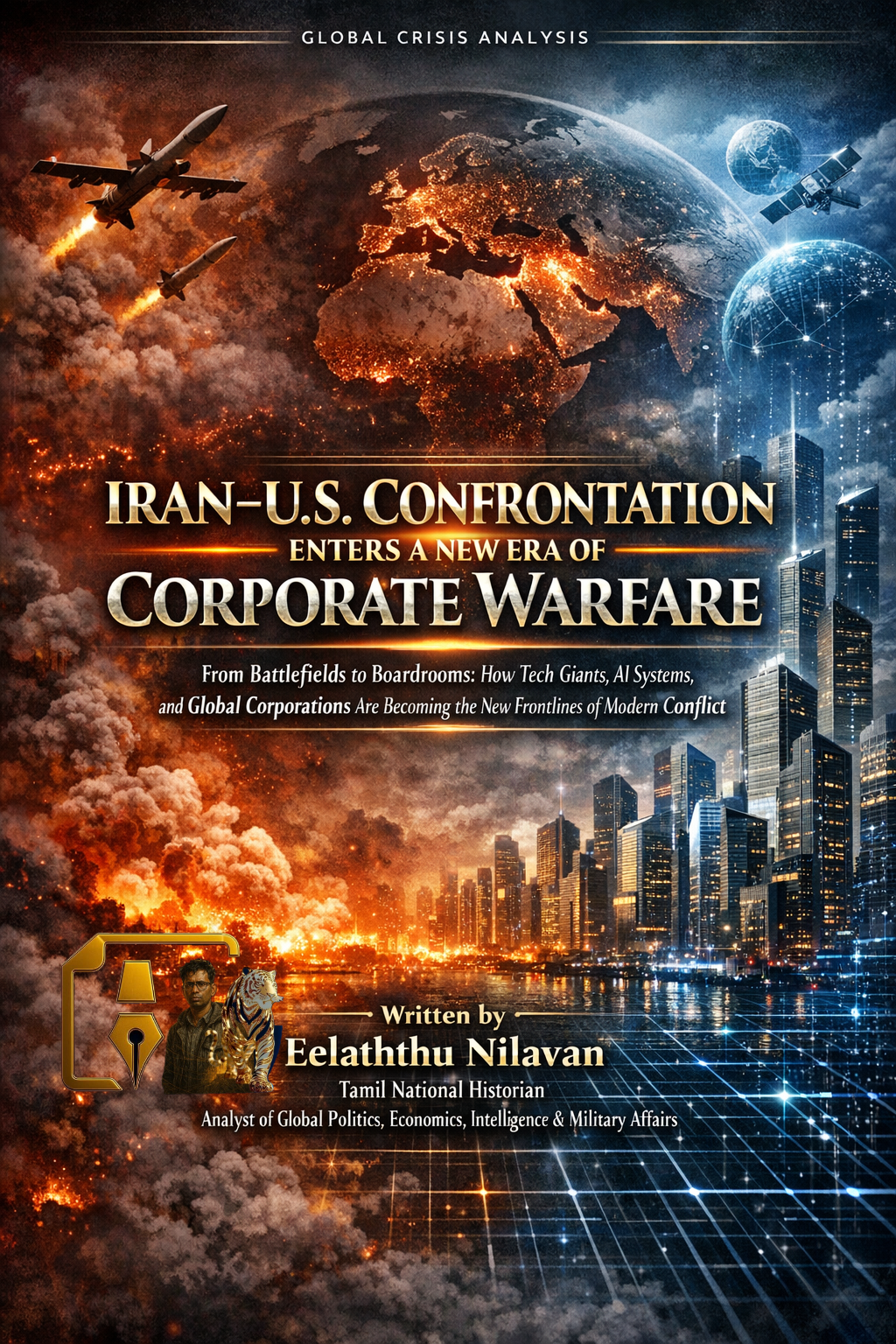
Hybrid Warfare Redefined: From Battlefields to Boardrooms
The ongoing confrontation between the Islamic Republic of Iran and the United States has entered a dangerous and unprecedented phase—one where corporations themselves are being reframed as combatants. The Islamic Revolutionary Guard Corps (IRGC) has issued a sweeping ultimatum, designating 18 major American-linked corporations as “terrorist entities” and potential military targets.
This declaration represents a fundamental shift in modern warfare: the transformation of global digital, financial, and industrial infrastructure into legitimate targets within a conflict zone.
IRGC Ultimatum: A Direct Threat to Global Corporate Power
At 8:00 PM Tehran time on April 1, the IRGC’s warning took effect—marking a moment that may redefine international conflict norms. The organization alleges that leading technology firms have enabled AI-assisted surveillance, targeting, and operational planning, contributing to the assassinations of senior Iranian leadership figures, including:
• Ali Khamenei
• Mohammad Pakpour
Employees of these companies were urged to immediately evacuate, while civilians within a 1-kilometer radius of related facilities were advised to relocate—signaling both a psychological and operational escalation.
Targeted Corporations: The Digital Backbone Under Fire
The list of accused entities spans critical sectors of the global economy:
Technology & Artificial Intelligence
• Apple
• Google
• Microsoft
• Meta
• NVIDIA
• Intel
• IBM
• Oracle
• Dell
• HP
• Cisco
• Palantir Technologies
Defense, Aviation & Industry
• Boeing
• General Electric
Finance, Mobility & Regional Actors
• JPMorgan Chase
• Tesla
• Spire Solutions
• G42
This cross-sector targeting underscores a chilling reality: modern war is no longer confined to soldiers—it now includes coders, analysts, financiers, and engineers.
The Logic Behind Escalation: AI, Intelligence & Assassination
Iranian officials argue that Information and Communications Technology (ICT) infrastructure—particularly AI platforms—has become central to modern military operations. According to Tehran, these tools enable:
• Real-time surveillance and tracking
• Precision targeting of individuals
• Data fusion for operational planning
By this logic, corporations providing such technologies are not neutral actors but integral components of hostile military ecosystems.
Internal Crackdown: Iran’s Expanding Definition of Espionage
As external tensions rise, Iran has intensified internal security measures:
• Over 1,000 arrests linked to alleged espionage
• Around 200 formal indictments
• Seizure of communications equipment, including satellite systems
The definition of espionage now includes digital behavior, such as sharing images or videos that could assist targeting. Authorities have also announced the detention of 54 alleged foreign-linked operatives, accused of coordinating intelligence flows.
This reflects a broader doctrinal shift: the battlefield now extends into cyberspace and civilian information networks.
War Profits or National Security? The Financial Controversy
A parallel controversy has emerged involving BlackRock, one of the world’s largest asset managers. Reports suggest a pre-conflict inquiry into a defense-related investment fund tied to figures connected to U.S. leadership.
While Washington denies the allegations, Iranian officials—including Foreign Minister Abbas Araghchi and Parliament Speaker Mohammad Bagher Ghalibaf—have seized on the narrative, framing the conflict as profit-driven rather than security-driven.
At the center of this debate lies a strategic chokepoint: the Strait of Hormuz, through which a significant portion of global oil flows. Market volatility and rising fuel costs have amplified scrutiny over who truly benefits from prolonged instability.
Global Ripple Effects: Diplomacy, Energy & Strategic Realignment
Europe & the UK
Under Prime Minister Keir Starmer, the UK appears to be recalibrating its stance—prioritizing energy security and maritime stability over direct confrontation.
Australia’s Energy Shock
Prime Minister Anthony Albanese has reportedly declared emergency measures amid fuel shortages, highlighting the conflict’s global economic reach.
Russia’s Strategic Opening
Russia has offered discounted energy supplies to Europe, contingent on sanctions relief—introducing a new layer of geopolitical bargaining.
Expanding Conflict Zone: Infrastructure Under Attack
Recent developments indicate a widening operational theater:
• Missile and drone strikes impacting urban and industrial infrastructure
• Damage reported at airports, refineries, and water facilities
• Concerns over structural integrity at sensitive nuclear-related sites
The targeting of infrastructure reinforces a key trend: war is increasingly aimed at systems, not just territories.
Conclusion: The Dawn of Corporate Warfare
The IRGC’s declaration marks a historic inflection point in global conflict dynamics. By targeting corporations as extensions of state power, Iran has effectively:
• Blurred the line between civilian and military domains
• Elevated cyber and AI infrastructure into strategic battlegrounds
• Introduced new risks for global supply chains and financial systems
If this trajectory continues, the world may be entering an era where economic networks, data systems, and corporate ecosystems become primary theaters of war—a reality with profound implications for governments, businesses, and civilians alike.

Written by: Eelaththu Nilavan
Tamil National Historian | Analyst of Global Politics, Economics, Intelligence & Military Affairs
01/04/2026
The views expressed in this article are the author’s own and do not necessarily reflect Amizhthu’s editorial stance.
