𝑰𝒅𝒆𝒐𝒍𝒐𝒈𝒊𝒄𝒂𝒍 𝑭𝒐𝒖𝒏𝒅𝒂𝒕𝒊𝒐𝒏𝒔 𝒂𝒏𝒅 𝑺𝒕𝒓𝒖𝒄𝒕𝒖𝒓𝒂𝒍 𝑻𝒓𝒂𝒏𝒔𝒇𝒐𝒓𝒎𝒂𝒕𝒊𝒐𝒏𝒔
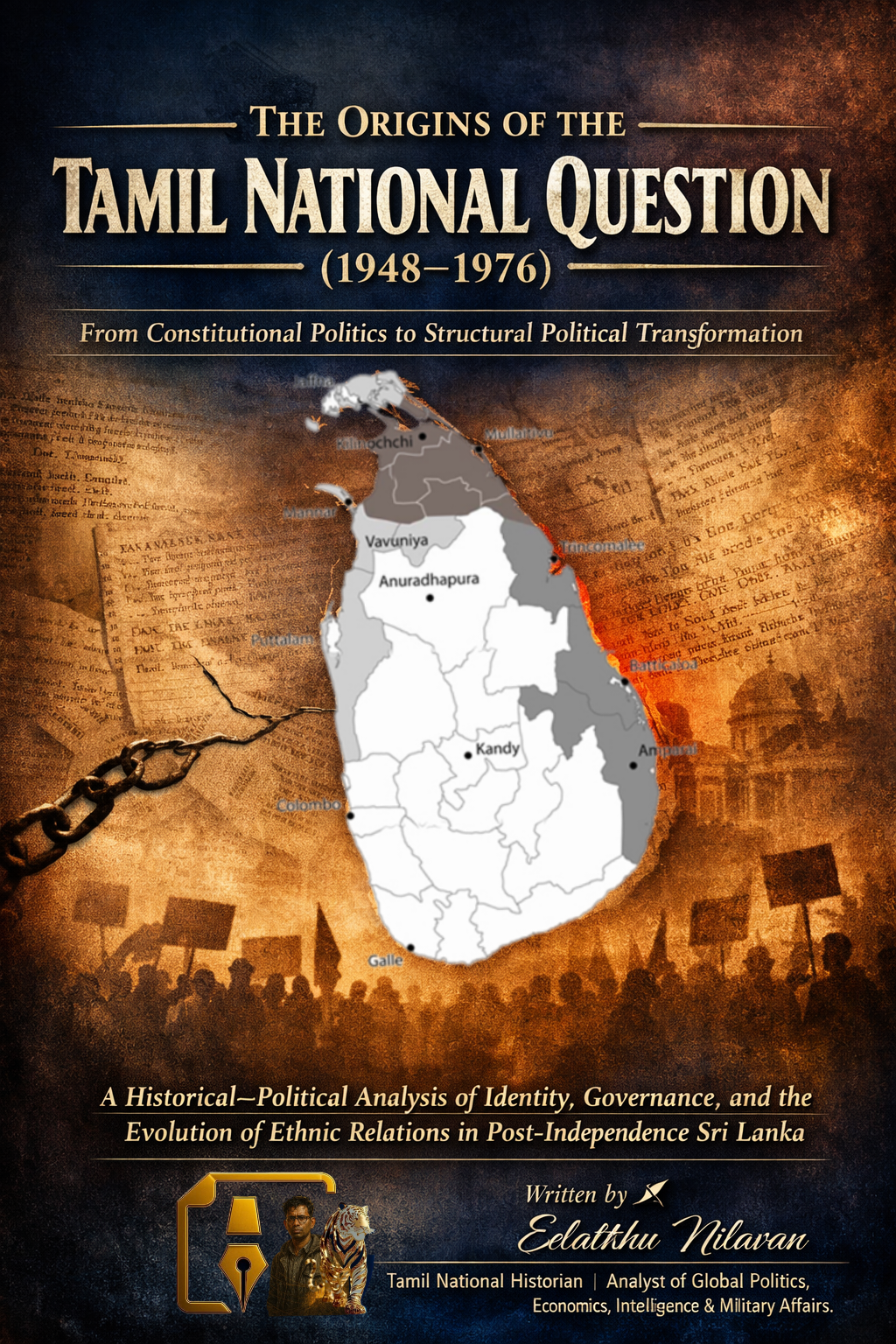
The emergence of the Tamil national question in Sri Lanka between 1948 and 1976 is widely interpreted as a complex interplay of constitutional change, identity politics, and evolving perceptions of political inclusion.
At its core, the period reflects a gradual shift from faith in parliamentary democracy toward identity-based political mobilization, shaped by competing interpretations of state formation after independence.
Rather than arising from a single moment, the transformation unfolded through a series of cumulative political crises that deeply affected inter-ethnic relations and trust in shared governance.
𝑭𝒓𝒐𝒎 𝑪𝒊𝒗𝒊𝒍 𝑷𝒓𝒐𝒕𝒆𝒔𝒕 𝒕𝒐 𝑷𝒐𝒍𝒊𝒕𝒊𝒄𝒂𝒍 𝑭𝒓𝒂𝒄𝒕𝒖𝒓𝒆
The early post-independence decades were marked by Tamil political engagement through constitutional means, led by figures such as S.J.V. Chelvanayakam, who advocated federalism and negotiated autonomy within a united state framework.
Peaceful protest movements, including the 1956 satyagraha against the Sinhala Only policy, symbolized the commitment to non-violent resistance. However, these events also became symbolic turning points in Tamil political memory, reinforcing the belief that constitutional dissent was increasingly constrained by majoritarian politics and episodes of violence during protests.
The Bandaranaike–Chelvanayakam Pact (1957) represented a critical attempt at political compromise, proposing regional autonomy arrangements. Its subsequent withdrawal under political pressure contributed to a deepening perception that negotiated agreements lacked durability, further weakening trust in institutional reconciliation mechanisms.
𝑬𝒅𝒖𝒄𝒂𝒕𝒊𝒐𝒏, 𝑴𝒐𝒃𝒊𝒍𝒊𝒔𝒂𝒕𝒊𝒐𝒏, 𝒂𝒏𝒅 𝒀𝒐𝒖𝒕𝒉 𝑷𝒐𝒍𝒊𝒕𝒊𝒄𝒔
By the early 1970s, educational policy became a major focal point of political contention.
The standardization measures introduced in university admissions were widely viewed by Tamil political leaders and segments of civil society as disproportionately affecting Tamil students, particularly in access to professional faculties such as medicine and engineering.
The resulting impact on youth aspirations contributed to a significant generational shift. Increasing numbers of educated Tamil youth began to feel politically alienated, leading to the emergence of smaller underground networks and radical ideological discussions.
This period marked a transition from elite-led constitutional politics toward youth-driven political activism, often operating outside formal institutional channels.
𝑻𝒉𝒆 𝑹𝒊𝒔𝒆 𝒐𝒇 𝑵𝒆𝒘 𝑷𝒐𝒍𝒊𝒕𝒊𝒄𝒂𝒍 𝑰𝒅𝒆𝒐𝒍𝒐𝒈𝒊𝒆𝒔
Within this evolving environment, militant and revolutionary ideologies began to emerge among segments of Tamil youth influenced by global decolonization movements and liberation struggles of the 20th century.
One of the most influential figures associated with this ideological shift was Velupillai Prabhakaran, who founded the Tamil New Tigers (TNT) in the early 1970s.
The organization reflected a broader transformation in political thinking, emphasizing:
• Organizational discipline and secrecy
• Self-determination as a political objective
• The concept of a separate national homeland rooted in historical interpretation
This phase marked the gradual replacement of purely constitutional strategies with more militant-oriented frameworks among certain groups.
𝟭𝟵𝟳𝟲: 𝑷𝒐𝒍𝒊𝒕𝒊𝒄𝒂𝒍 𝑪𝒐𝒏𝒔𝒐𝒍𝒊𝒅𝒂𝒕𝒊𝒐𝒏 𝒂𝒏𝒅 𝑵𝒂𝒕𝒊𝒐𝒏𝒂𝒍 𝑹𝒆𝒔𝒐𝒍𝒖𝒕𝒊𝒐𝒏𝒔
The year 1976 is widely recognized as a turning point in Tamil political history.
The Vaddukoddai Resolution articulated the position of Tamil political leadership that constitutional arrangements within a unitary state had failed to ensure equality and security. It formally advanced the idea of a separate political future based on the concept of Tamil nationhood and territorial identity.
Around the same period, the Tamil New Tigers underwent reorganization and rebranding into the Liberation Tigers of Tamil Eelam, reflecting a shift in structure and political objectives.
These developments signaled a consolidation of ideological positions that increasingly diverged from earlier federalist aspirations.
𝑻𝒆𝒓𝒓𝒊𝒕𝒐𝒓𝒊𝒂𝒍 𝑰𝒅𝒆𝒏𝒕𝒊𝒕𝒚 𝒂𝒏𝒅 𝑪𝒐𝒏𝒇𝒍𝒊𝒄𝒕𝒊𝒏𝒈 𝑯𝒊𝒔𝒕𝒐𝒓𝒊𝒄𝒂𝒍 𝑵𝒂𝒓𝒓𝒂𝒕𝒊𝒗𝒆𝒔
A central and contested dimension of this period was the question of territorial identity in the Northern and Eastern regions of the island.
Tamil political discourse often referenced historical legal traditions and pre-colonial governance systems, including interpretations of regional customary law such as Thesavalamai, as well as broader historical narratives of Tamil habitation in these areas.
At the same time, these interpretations existed within a wider national debate over demography, state policy, and post-colonial nation-building. Competing narratives regarding settlement patterns and regional identity became increasingly politicized, contributing to heightened tensions between communities.
𝑪𝒐𝒏𝒄𝒍𝒖𝒔𝒊𝒐𝒏: 𝑻𝒉𝒆 𝑳𝒐𝒐𝒎𝒊𝒏𝒈 𝑺𝒕𝒓𝒖𝒄𝒕𝒖𝒓𝒂𝒍 𝑪𝒓𝒊𝒔𝒊𝒔
By the mid-1970s, Sri Lanka’s ethnic relations had entered a phase of deep political polarization.
The convergence of constitutional disputes, educational reforms, identity-based mobilization, and competing nationalist narratives created a structural environment in which compromise became increasingly difficult.
Historians often identify this period as the foundation of later escalation, as political trust weakened and alternative visions of statehood and autonomy became more firmly entrenched on multiple sides.
END OF PART 1
Next: Part 2 will examine the post-1976 escalation and the transition toward armed conflict following 1983.

Written by 𝐄𝐞𝐥𝐚𝐭𝐡𝐭𝐡𝐮 𝐍𝐢𝐥𝐚𝐯𝐚𝐧
Tamil National Historian | Analyst of Global Politics, Economics, Intelligence & Military Affairs
11/04/2026
The views expressed in this article are the author’s own and do not necessarily reflect Amizhthu’s editorial stance.
