
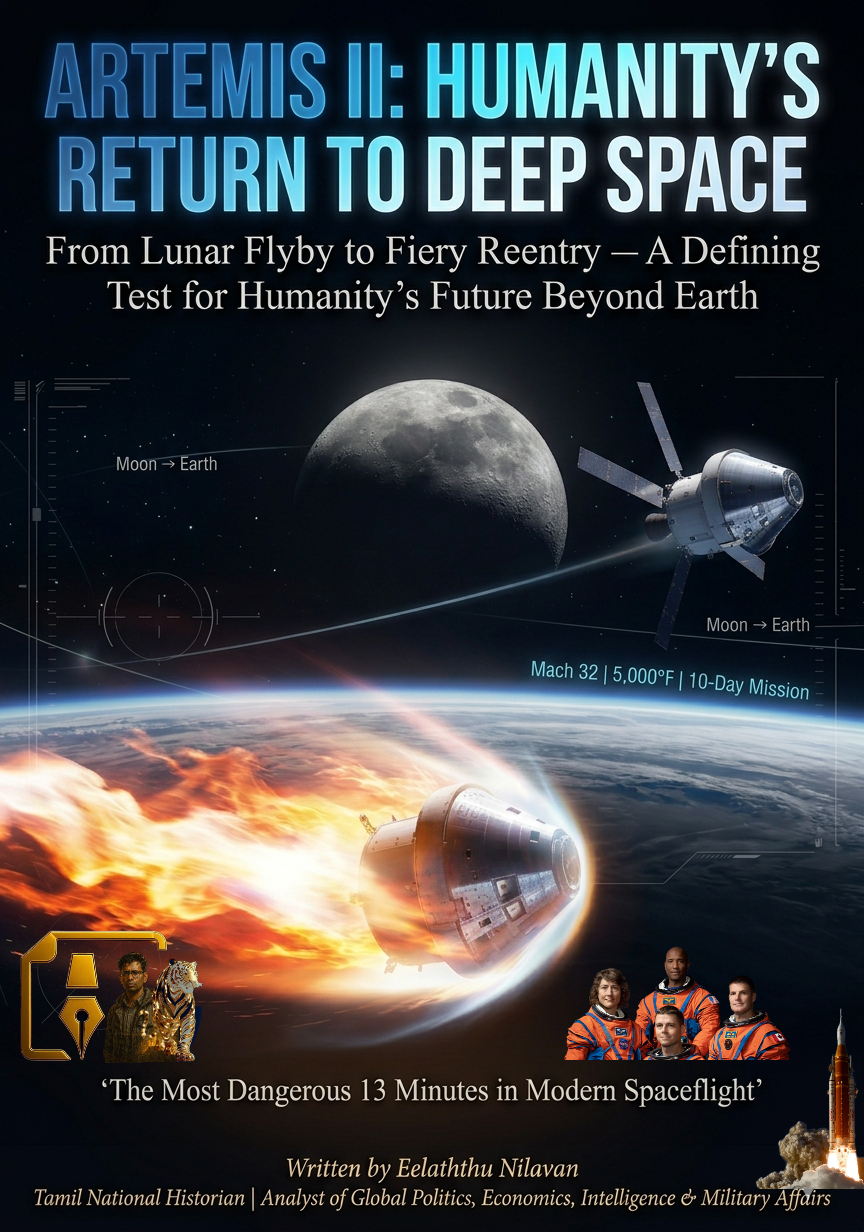
𝑭𝒓𝒐𝒎 𝑳𝒖𝒏𝒂𝒓 𝑭𝒍𝒚𝒃𝒚 𝒕𝒐 𝑭𝒊𝒆𝒓𝒚 𝑹𝒆𝒆𝒏𝒕𝒓𝒚 — 𝑨 𝑫𝒆𝒄𝒊𝒔𝒊𝒗𝒆 𝑻𝒆𝒔𝒕 𝑭𝒐𝒓 𝑯𝒖𝒎𝒂𝒏𝒊𝒕𝒚’𝒔 𝑭𝒖𝒕𝒖𝒓𝒆 𝑩𝒆𝒚𝒐𝒏𝒅 𝑬𝒂𝒓𝒕𝒉
𝑰𝑵𝑻𝑹𝑶𝑫𝑼𝑪𝑻𝑰𝑶𝑵: 𝑻𝑯𝑬 𝑹𝑬𝑻𝑼𝑹𝑵 𝑶𝑭 𝑫𝑬𝑬𝑷-𝑺𝑷𝑨𝑪𝑬 𝑯𝑼𝑴𝑨𝑵𝑰𝑻𝒀
More than fifty years after the legendary Apollo 17 Moon Landing, humanity is once again preparing to cross the boundary between Earth orbit and deep space. Under the strategic vision of NASA, the Artemis program is not simply a return to the Moon—it is the foundation of a long-term extraterrestrial presence.
Artemis II represents the first crewed step in this ambitious roadmap. It is a mission where engineering precision, human endurance, and strategic ambition converge—a full-system validation flight that will determine whether humanity is truly ready to expand beyond Earth once again.
𝑻𝑯𝑬 𝑨𝑹𝑻𝑬𝑴𝑰𝑺 𝑨𝑹𝑪𝑯𝑰𝑻𝑬𝑪𝑻𝑼𝑹𝑬: 𝑻𝑬𝑪𝑯𝑵𝑶𝑳𝑶𝑮𝒀 𝑻𝑯𝑨𝑻 𝑬𝑵𝑨𝑩𝑳𝑬𝑺 𝑫𝑬𝑬𝑷 𝑺𝑷𝑨𝑪𝑬
At the core of Artemis II lies a next-generation exploration system:
𝑻𝒉𝒆 𝑳𝒂𝒖𝒏𝒄 𝑷𝒐𝒘𝒆𝒓
• The Space Launch System generates unprecedented thrust
• Designed to carry heavy payloads beyond low Earth orbit
𝑻𝒉𝒆 𝑪𝒓𝒆𝒘 𝑽𝒆𝒉𝒊𝒄𝒍𝒆
• The Orion spacecraft supports long-duration human missions
• Equipped with advanced avionics, life-support, and radiation protection
𝑬𝒖𝒓𝒐𝒑𝒆𝒂𝒏 𝑺𝒆𝒓𝒗𝒊𝒄𝒆 𝑴𝒐𝒅𝒖𝒍𝒆
• Provides propulsion, power, and thermal control
• A symbol of international collaboration in deep-space exploration
Together, these systems represent a generational leap beyond Apollo-era capabilities.
𝑴𝑰𝑺𝑺𝑰𝑶𝑵 𝑷𝑹𝑶𝑭𝑰𝑳𝑬: 𝑨 10-𝑫𝑨𝒀 𝑱𝑶𝑼𝑹𝑵𝑬𝒀 𝑩𝑬𝒀𝑶𝑵𝑫 𝑬𝑨𝑹𝑻𝑯
Artemis II will send four astronauts on a carefully planned trajectory:
𝑷𝒉𝒂𝒔𝒆𝒔 𝒐𝒇 𝑻𝒉𝒆 𝑴𝒊𝒔𝒔𝒊𝒐𝒏
• Launch and Earth orbit insertion
• Translunar injection (departure toward the Moon)
• Lunar flyby and deep-space operations
• Return trajectory and Earth reentry
𝑫𝒊𝒔𝒕𝒂𝒏𝒄𝒆 & 𝑺𝒄𝒂𝒍𝒆
• Travels hundreds of thousands of kilometers
• Reaches distances far beyond any human mission since Apollo
𝑯𝒖𝒎𝒂𝒏 𝑭𝒂𝒄𝒕𝒐𝒓
• Psychological and physiological stress testing
• Validation of crew autonomy in deep space
𝑻𝑯𝑬 𝑹𝑬𝑬𝑵𝑻𝑹𝒀 𝑪𝑯𝑨𝑳𝑳𝑬𝑵𝑮𝑬: 𝑻𝑯𝑬 𝑴𝑶𝑺𝑻 𝑪𝑹𝑰𝑻𝑰𝑪𝑨𝑳 𝑷𝑯𝑨𝑺𝑬
While the journey to the Moon is complex, the return to Earth is the most dangerous phase.
𝑯𝒚𝒑𝒆𝒓𝒔𝒐𝒏𝒊𝒄 𝑽𝒆𝒍𝒐𝒄𝒊𝒕𝒚
• Entry speed: 25,000 mph (Mach 32)
• Generates immense kinetic energy
𝑻𝒉𝒆𝒓𝒎𝒂𝒍 𝑬𝒙𝒕𝒓𝒆𝒎𝒆𝒔
• Temperatures exceed 5,000°F
• Creates a plasma envelope around the spacecraft
𝑩𝒍𝒂𝒄𝒌𝒐𝒖𝒕 𝒁𝒐𝒏𝒆
• Complete communication loss
• Autonomous systems must function flawlessly
This phase compresses extreme physics into just minutes—where any failure would be catastrophic.
𝑻𝑯𝑬 𝑯𝑬𝑨𝑻 𝑺𝑯𝑰𝑬𝑳𝑫 𝑷𝑨𝑹𝑨𝑫𝑶𝑿
𝑨 𝑺𝒉𝒊𝒆𝒍𝒅 𝑻𝒉𝒂𝒕 𝑴𝒖𝒔𝒕 𝑩𝒖𝒓𝒏 𝒕𝒐 𝑺𝒖𝒓𝒗𝒊𝒗𝒆
The Orion capsule uses an ablative heat shield, meaning it sacrifices itself to protect the crew.
• Material: Avcoat
• Function: Absorb and carry heat away through controlled erosion
𝑨𝒓𝒕𝒆𝒎𝒊𝒔 𝑰 𝑨𝒏𝒐𝒎𝒂𝒍𝒚
• Unexpected spallation occurred
• Large fragments broke off during reentry
𝑷𝒉𝒚𝒔𝒊𝒄𝒔 𝑩𝒆𝒉𝒊𝒏𝒅 𝑻𝒉𝒆 𝑭𝒂𝒊𝒍𝒖𝒓𝒆
• Gas trapped inside material expanded rapidly
• Pressure caused explosive surface breakup
This revealed a critical truth: even proven materials behave differently under lunar-return conditions.
𝑬𝑵𝑮𝑰𝑵𝑬𝑬𝑹𝑰𝑵𝑮 𝑹𝑬𝑺𝑷𝑶𝑵𝑺𝑬: 𝑹𝑬𝑫𝑬𝑭𝑰𝑵𝑰𝑵𝑮 𝑹𝑬𝑬𝑵𝑻𝑹𝒀
Rather than redesigning the entire heat shield, NASA made a strategic decision:
𝑻𝒓𝒂𝒋𝒆𝒄𝒕𝒐𝒓𝒚 𝑶𝒑𝒕𝒊𝒎𝒊𝒛𝒂𝒕𝒊𝒐𝒏
• Shift from skip reentry to lofted reentry
𝑾𝒉𝒚 𝑳𝒐𝒇𝒕𝒆𝒅 𝑾𝒐𝒓𝒌𝒔
• Eliminates thermal cycling
• Maintains continuous heating
• Reduces internal gas pressure
𝑬𝒏𝒈𝒊𝒏𝒆𝒆𝒓𝒊𝒏𝒈 𝑷𝒉𝒊𝒍𝒐𝒔𝒐𝒑𝒉𝒚
This decision reflects a key principle:
Adapt the mission profile when hardware constraints cannot be changed.
𝑻𝑯𝑬 13-𝑴𝑰𝑵𝑼𝑻𝑬 𝑫𝑬𝑺𝑪𝑬𝑵𝑻: 𝑭𝑹𝑶𝑴 𝑭𝑰𝑹𝑬 𝑻𝑶 𝑾𝑨𝑻𝑬𝑹
The final phase unfolds in a tightly choreographed sequence:
• Module Separation → spacecraft prepares for entry
• Peak Heating → shield absorbs extreme temperatures
• Plasma Blackout → total communication silence
• G-Forces → up to 3.9 Gs on astronauts
• Drogue Deployment → stabilization phase
• Main Parachutes → controlled deceleration
• Splashdown → safe ocean landing
From hypersonic speeds to gentle descent—all within minutes.
𝑺𝑷𝑳𝑨𝑺𝑯𝑫𝑶𝑾𝑵 & 𝑹𝑬𝑪𝑶𝑽𝑬𝑹𝒀
The mission concludes in the Pacific Ocean:
• Recovery teams secure the capsule
• Astronauts are safely extracted
• Engineers begin detailed inspection
The heat shield becomes a data archive, revealing how theory matched reality.
𝑹𝑰𝑺𝑲𝑺, 𝑳𝑰𝑴𝑰𝑻𝑺 & 𝑯𝑼𝑴𝑨𝑵 𝑬𝑵𝑫𝑼𝑹𝑨𝑵𝑪𝑬
Artemis II operates at the edge of technological limits:
• Thermal protection uncertainties
• Deep-space radiation exposure
• Communication delays and isolation
• Physiological stress under G-forces
This mission tests not just machines—but human resilience itself.
𝑺𝑻𝑹𝑨𝑻𝑬𝑮𝑰𝑪 𝑺𝑰𝑮𝑵𝑰𝑭𝑰𝑪𝑨𝑵𝑪𝑬: 𝑩𝑬𝒀𝑶𝑵𝑫 𝑻𝑯𝑬 𝑴𝑶𝑶𝑵
Artemis II is a gateway mission:
• Enables Artemis III lunar landing
• Supports future lunar bases and infrastructure
• Advances technologies for Mars exploration
It marks a shift from exploration to expansion.
𝑪𝑳𝑶𝑺𝑰𝑵𝑮: 𝑻𝑯𝑬 𝑹𝑬𝑻𝑼𝑹𝑵 𝑶𝑭 𝑨 𝑺𝑷𝑨𝑪𝑬𝑭𝑨𝑹𝑰𝑵𝑮 𝑪𝑰𝑽𝑰𝑳𝑰𝒁𝑨𝑻𝑰𝑶𝑵
Artemis II is not just a mission—it is a civilizational turning point.
It reconnects humanity with its deepest instinct: to explore, to expand, and to transcend boundaries.
From the silence of deep space to the fire of atmospheric reentry, this journey proves one thing:
Humanity is no longer confined to Earth.
The Orion spacecraft’s return is not the end of exploration—
it is the beginning of a permanent human future beyond our home planet.

𝐖𝐫𝐢𝐭𝐭𝐞𝐧 𝐛𝐲 Eelaththu Nilavan
Tamil National Historian | Analyst of Global Politics, Economics, Intelligence & Military Affairs
11/04/2026
The views expressed in this article are the author’s own and do not necessarily reflect Amizhthu’s editorial stance.
