


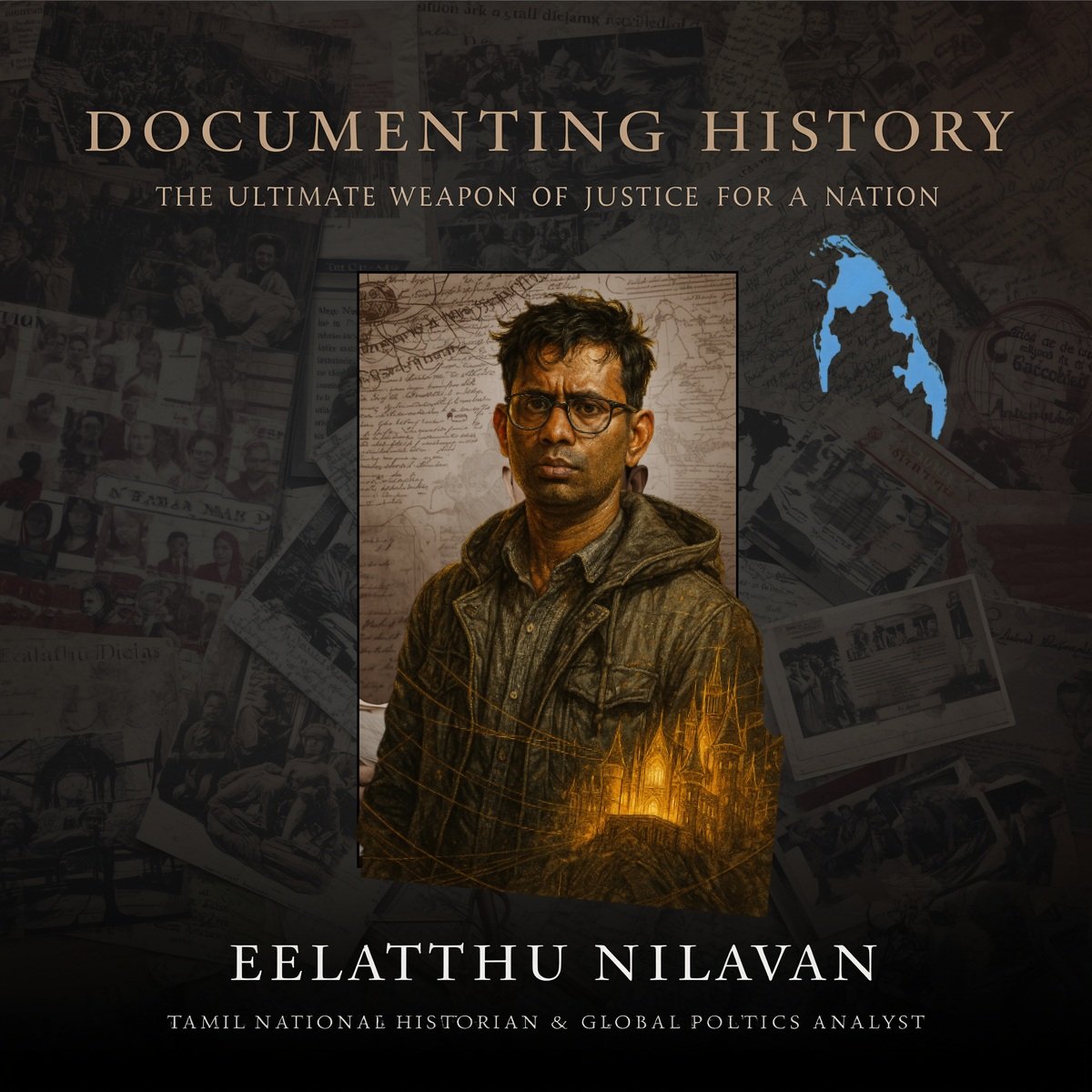
Introduction: The Irresistible Power of Historical Documentation
For any nation subjected to genocide, deep historical records and evidence are not merely attempts to recall memories. They extend toward the conscience of the world as an indestructible, powerful instrument.
Beyond the weapons of war or the debates on diplomatic tables, accurately documented accounts of genocide serve as a nation’s proof of existence and as a foundation for claiming justice.

These records become:
• Testimonies for the affected communities
• Lessons for future generations
• Evidence demanding justice from the international community
• A moral barrier against forces attempting to erase crimes
Global Philosophy of Documentation: Yad Vashem – A Model
The Yad Vashem Holocaust Memorial in Jerusalem, Israel stands as the highest example of how historical documentation transforms into a political, moral, and existential weapon for a nation.
The systematic killing of approximately 6 million Jews by Nazi Germany is not merely archived information; it serves as the foundation for Israel’s creation, protection, and legitimacy.
• Systematized Precision
• Names of perpetrators, orders, train routes, and maps of concentration camps
• Millions of victims’ personal identities and daily belongings
• Each piece of evidence is meticulously documented using scientific and technological methods
This is not merely a museum; it is the memory vault of a nation.
• Strategic Purpose for Justice
• These records uphold the Jewish declaration “Never Again” before the world
• They serve as a stronger instrument than military power, legally securing Israel’s right to exist in front of the world
The Moral Imperative of Documentation in Eelam Tamil History
The genocide against the Tamil nation was not a spontaneous act but a long-planned, state-backed historical conspiracy.
To say “forget the past” in such a context is equivalent to surrendering future rights.
Documenting the Tamil people’s suffering forms the foundation for:
• The necessity of armed struggle
• The legitimacy of the demand for a separate homeland
• The need for national self-defense
This documentation is both a historical responsibility and a national duty.
1. The Collapse of Peaceful Methods and the Justification for Armed Struggle
Before taking up arms, the Tamil people practiced nonviolence, democracy, and peaceful approaches for decades, as historical evidence shows.
• The Sathiyamkharam Struggle
• Led by S.J.V. Chelvanayagam (Thanthai Selva)
• Nonviolent protests in public streets were violently suppressed by Sinhalese mobs
• A 75-year-old leader was attacked in the streets, prevented from fasting, and peaceful resistance was crushed — demonstrating the state’s oppressive face
• Historical Justification for Armed Defense
• When all peaceful avenues were blocked, bearing arms was not terrorism but a legitimate act of self-defense
• This is a critical historical lesson for future generations
2. The Chain of Genocide: 1956 – 1983 – 2009
The violence against Tamils was systematic, state-backed, and continuous.
• 1956 Onwards – “Sinhala Only” Law
• Language, education, employment, and administration systematically downgraded Tamils to second-class citizens
• Subsequent years, 1958, 1977, 1981, 1983… saw mass violence targeting Tamil communities, homes, libraries, schools, women, and children
• 1983 – Black July
• Not a mere riot, but state-planned ethnic massacres
• Tamil prisoners were killed even in jails
• Government troops, police, and mobs acted as two sides of the same coin
• Documentation of these events is critical to establish historical legitimacy for a separate Tamil homeland
• 2009 – The Final Genocide (Mullivaikkal)
• No Fire Zones became death traps
• Hospitals, schools, and cemeteries were attacked
• Women and children were massacred
• Verified international reports: UN Panel, Darusman Report
• Estimated Tamil civilian deaths: 40,000–70,000
• This documentation is the final record of the planned genocide against Eelam Tamils
3. Documentation for Global and Regional Powers: India – IPKF
A historical archive is not just a tool against enemies, but a safeguard for future diplomatic and strategic relations.
• India – IPKF – Hidden History
• Indian Peace Keeping Force operations in Eelam
• Destroyed villages, massacred civilians, sexual violence
• Must be documented truthfully
• Failing to do so risks accepting subjugation while claiming friendship in future diplomacy
4. Legal Foundations
• UN Genocide Convention (1948)
• Rome Statute – International Criminal Court (ICC)
• Categorization: War Crimes | Crimes Against Humanity | Genocide
• Documentation provides legal grounds for a separate nation claim
5. Digital Archive Initiative (Future Action Plan)
• Creation of Tamil Digital Archive
• Types of records: videos, audios, photos, documents, artifacts, soil samples, bones
• Historical centers abroad for research and display
• Collaboration of scholars, journalists, and legal experts
6. Global Comparative Genocide Studies
• Jews, Palestinians, Rohingya, Armenians, Tamils
• Selective justice and global political silence
• Reasons why Tamil genocide remains marginalized internationally
Archival Records: The Final Battlefield for Justice
• Lack of historical knowledge among the younger generation = failure of the archival struggle
• Documentation = the ultimate future weapon
• Power to Shame the World
• The world witnessed Tamil genocide yet remained silent
• Our archives give the moral right to ask: “Where were you?”
• Not Begging — Claiming Rights
• Justice must be claimed with authority, not with pleas
• Evidence, photographs, videos, reports, cemeteries, and remains must be organized into structured archives
Mandatory Action Plan
• Collect evidence of Tamil genocide globally
• Establish historical centers abroad
• Create digital archives for future generations
• Unite scholars, journalists, and legal experts in a coordinated effort
If collective action is impossible, each individual must bear the responsibility personally.
Conclusion
The future of the Tamil nation will not be secured by battlefield victories or temporary political agreements.
It will be guaranteed through the power of documented justice, permanently etched in world history.
History that is not written will be forgotten. History that is not documented will be destroyed.
Therefore, documenting history is… the ultimate weapon of the Tamil nation.

╭────────────────────╮
Written by Eelaththu Nilavan
╰────────────────────╯
05/12/2025
