


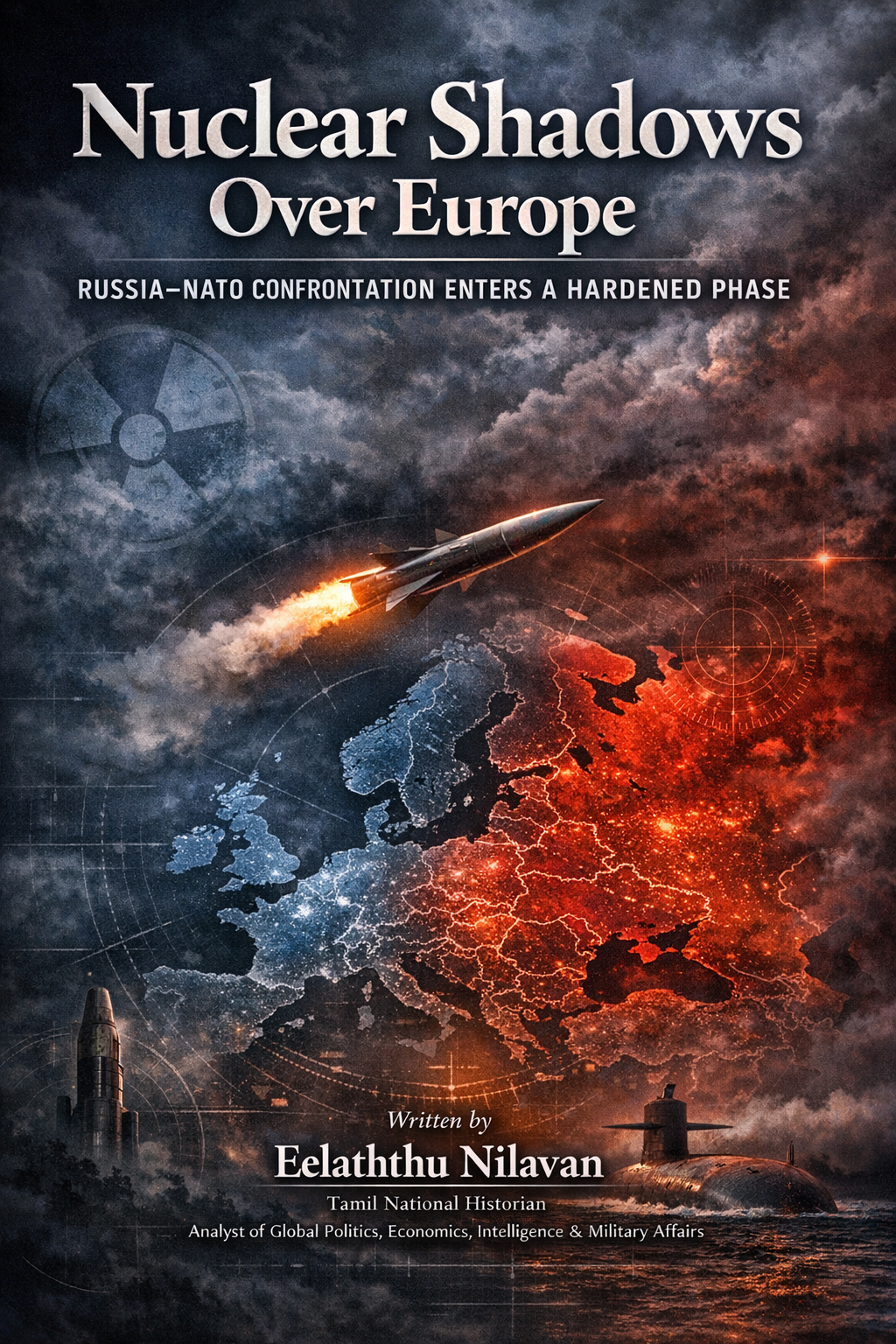
✦ 𝑰𝒏𝒕𝒓𝒐𝒅𝒖𝒄𝒕𝒊𝒐𝒏: 𝑭𝒓𝒐𝒎 𝑾𝒂𝒓 𝒕𝒐 𝑺𝒕𝒓𝒂𝒕𝒆𝒈𝒊𝒄 𝑪𝒐𝒏𝒇𝒓𝒐𝒏𝒕𝒂𝒕𝒊𝒐𝒏
Russian President Vladimir Putin’s December address to the expanded board of the Defence Ministry marks a decisive transition in the Ukraine war—from a regional military conflict into a long-duration strategic confrontation under nuclear cover. Delivered not as diplomatic signaling but as a command-style briefing, the speech frames Russia’s actions as part of an existential struggle against NATO’s military architecture operating through Kyiv.
Putin’s message is unambiguous: Russia is prepared for escalation, rejects any frozen conflict, and is reinforcing its strategic deterrence to secure long-term geopolitical outcomes. The announcement that the Oreshnik hypersonic missile system will be placed on full combat duty by year’s end underscores Moscow’s intention to lock the conflict into a new, more dangerous equilibrium.

✦ 𝑶𝒓𝒆𝒔𝒉𝒏𝒊𝒌, 𝑷𝒐𝒔𝒆𝒊𝒅𝒐𝒏 & 𝑩𝒖𝒓𝒆𝒗𝒆𝒔𝒕𝒏𝒊𝒌: 𝑹𝒖𝒔𝒔𝒊𝒂’𝒔 𝑵𝒆𝒘 𝑺𝒕𝒓𝒂𝒕𝒆𝒈𝒊𝒄 𝑻𝒓𝒊𝒂𝒅
At the core of Putin’s warning lies a trio of advanced strategic weapons designed to bypass or overwhelm Western defenses.
• Oreshnik Hypersonic Missile: A medium-range hypersonic system capable of evading NATO missile defenses. Putin confirmed its first combat use last November and warned that its deployment directly affects NATO bases and infrastructure across Europe.
• Burevestnik Nuclear-Powered Cruise Missile: Claimed to possess near-unlimited range, Burevestnik represents a weapon designed for prolonged strategic deterrence rather than battlefield use, reinforcing Russia’s second-strike capability.
• Poseidon Nuclear Underwater Drone: An unmanned, nuclear-capable underwater vehicle intended to threaten coastal cities, naval bases, and carrier groups, fundamentally altering maritime deterrence calculations.
Together, these systems signal Russia’s intent to maintain strategic parity—or superiority—well into the mid-21st century, regardless of sanctions or conventional battlefield dynamics.
✦ 𝑵𝒖𝒄𝒍𝒆𝒂𝒓 𝑫𝒆𝒕𝒆𝒓𝒓𝒆𝒏𝒄𝒆 𝒂𝒔 𝒕𝒉𝒆 ‘𝑼𝒍𝒕𝒊𝒎𝒂𝒕𝒆 𝑮𝒖𝒂𝒓𝒂𝒏𝒕𝒐𝒓.’
Putin emphasized that Russia’s strategic nuclear forces—now more than 90% modernized—remain the ultimate guarantor of sovereignty and global balance. This framing is deliberate. Moscow is signaling that any direct NATO intervention risks uncontrollable escalation.
By integrating hypersonic weapons, AI-driven command systems, and space-based assets into its deterrence posture, Russia is redefining what nuclear protection means in a 21st-century conflict environment.
✦ 𝑴𝒊𝒍𝒊𝒕𝒂𝒓𝒚 𝑴𝒐𝒅𝒆𝒓𝒏𝒊𝒛𝒂𝒕𝒊𝒐𝒏 & 𝒕𝒉𝒆 2027–2036 𝑨𝒓𝒎𝒂𝒎𝒆𝒏𝒕 𝑷𝒓𝒐𝒈𝒓𝒂𝒎
Beyond nuclear signaling, the speech outlines a sweeping modernization agenda:
• Expansion of high-precision conventional weapons • Mass deployment of drones and robotic systems • Emphasis on electronic warfare and counter-space capabilities • Development of AI-enabled combat complexes
This reflects lessons learned from Ukraine: modern wars are fought across information, space, cyber, and electromagnetic domains as much as on the ground.
✦ 𝑼𝒌𝒓𝒂𝒊𝒏𝒆: 𝑵𝒐 𝑭𝒓𝒐𝒛𝒆𝒏 𝑪𝒐𝒏𝒇𝒍𝒊𝒄𝒕, 𝑵𝒐 𝑹𝒆𝒕𝒓𝒆𝒂𝒕
Putin categorically ruled out a frozen conflict. According to Moscow, Russia’s objectives will be achieved “unconditionally”—either through diplomacy or by force. These objectives include:
• Permanent territorial control of claimed regions • Creation of an expanded buffer security zone • Neutralization of Ukraine as a NATO forward operating platform
The language of “liberating historical lands” signals that Moscow views this war as civilizational rather than transactional.
✦ 𝑵𝑨𝑻𝑶 𝒂𝒔 𝒂 𝑫𝒊𝒓𝒆𝒄𝒕 𝑷𝒂𝒓𝒕𝒊𝒄𝒊𝒑𝒂𝒏𝒕
A central theme of the address is the redefinition of NATO’s role. Putin explicitly framed Western intelligence sharing, advisors, mercenaries, and weapons deliveries as direct participation in the conflict.
By accusing NATO of militarizing space and preparing orbital strike capabilities, Russia lowers the psychological threshold between proxy war and direct confrontation—while simultaneously warning that escalation will be met with strategic-level responses.
✦ 𝑬𝒖𝒓𝒐𝒑𝒆 𝑼𝒏𝒅𝒆𝒓 𝑷𝒓𝒆𝒔𝒔𝒖𝒓𝒆: 𝑨𝒔𝒔𝒆𝒕 𝑺𝒆𝒊𝒛𝒖𝒓𝒆 & 𝑷𝒐𝒍𝒊𝒕𝒊𝒄𝒂𝒍 𝑭𝒓𝒂𝒄𝒕𝒖𝒓𝒆𝒔
Parallel to military escalation, Europe faces a financial and legal crisis over frozen Russian assets. Proposals to redirect over €200 billion toward Ukraine have triggered deep divisions within the EU.
Hungary, France’s nationalist bloc, and the Czech leadership accuse Brussels of treaty violations and centralized overreach. Belgium, holding the bulk of the assets via Euroclear, fears legal retaliation and financial destabilization.
The Abramovich–Chelsea funds dispute in the UK is now viewed as a test case for broader asset confiscation—raising fundamental questions about property rights, rule of law, and Europe’s financial credibility.
✦ 𝑰𝒏𝒇𝒐𝒓𝒎𝒂𝒕𝒊𝒐𝒏 𝑾𝒂𝒓𝒇𝒂𝒓𝒆 & 𝑻𝒉𝒆 𝑲𝒖𝒑𝒚𝒂𝒏𝒔𝒌 𝑵𝒂𝒓𝒓𝒂𝒕𝒊𝒗𝒆
Russian Foreign Ministry spokeswoman Maria Zakharova’s briefing on Kupyansk highlights the parallel information war. Moscow accuses Kyiv of staging battlefield narratives for Western sponsors while sacrificing manpower for propaganda value.
Whether accurate or not, such claims underscore how perception management has become as critical as territorial control.
✦ 𝑪𝒐𝒏𝒄𝒍𝒖𝒔𝒊𝒐𝒏: 𝑨 𝑳𝒐𝒏𝒈 𝑾𝒂𝒓 𝑼𝒏𝒅𝒆𝒓 𝑵𝒖𝒄𝒍𝒆𝒂𝒓 𝑺𝒉𝒂𝒅𝒐𝒘𝒔
Putin’s address makes one reality clear: the Ukraine war is no longer about territory alone. It is about reshaping the global security order under the constant presence of nuclear deterrence.
With hypersonic missiles on combat duty, space militarization accelerating, and Europe divided over money and sovereignty, the conflict is entering a phase where miscalculation—not intent—poses the greatest danger.
This is not a war approaching resolution. It is a confrontation that is being structurally prepared to last.

╭────────────────────╮
Written by Eelaththu Nilavan
╰────────────────────╯
18/12/2025
