


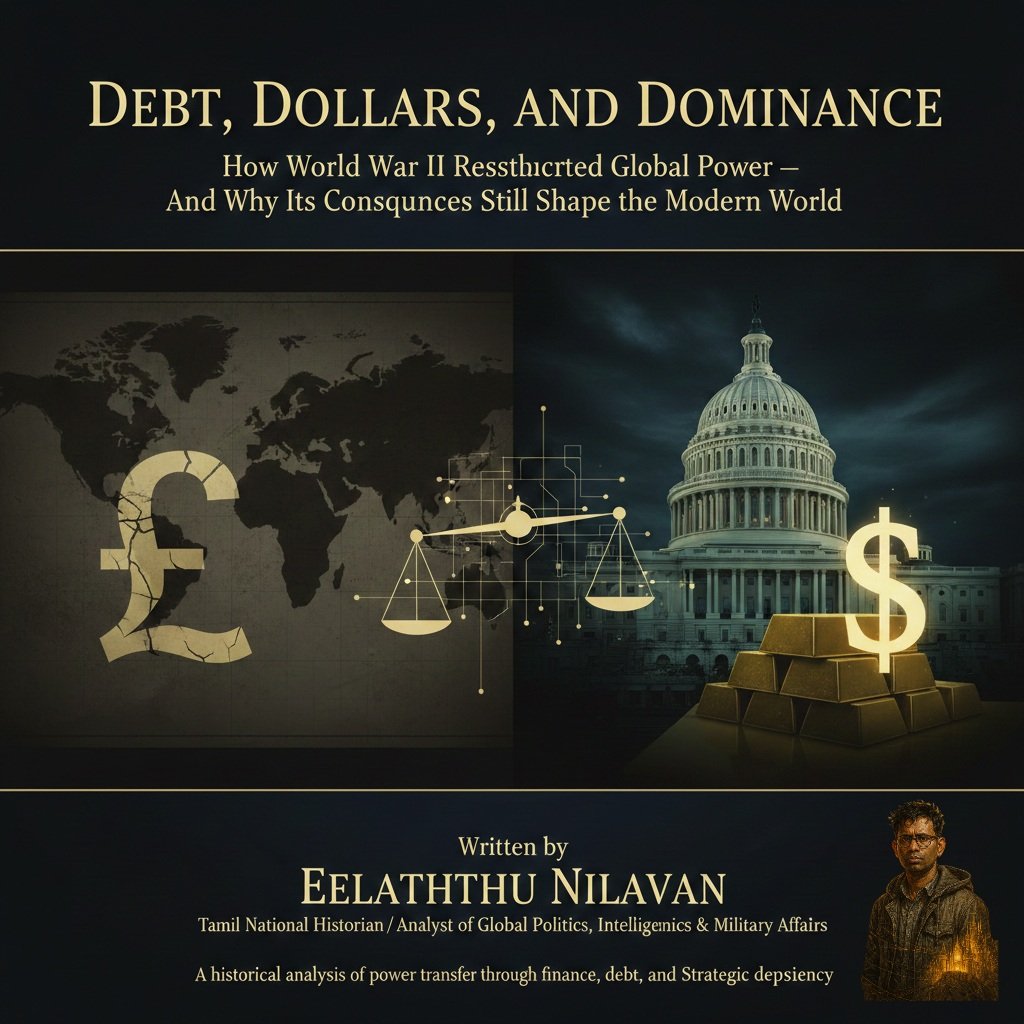
From Britain’s Bankruptcy to America’s Financial Empire

𝐓𝐇𝐄 𝐌𝐘𝐓𝐇 𝐎𝐅 𝐖𝐀𝐑𝐓𝐈𝐌𝐄 “𝐀𝐋𝐋𝐈𝐀𝐍𝐂𝐄”
World War II is often narrated as a moral struggle won by unity, sacrifice, and shared values.
Yet beneath battlefield heroism lay a cold financial war, executed without bullets — one that permanently shifted global power from London to Washington.
By December 31, 2006, when Britain made its final $83.25 million payment to the United States, the illusion collapsed:
The war had never been free. Victory had been mortgaged.
This was not repayment for tanks or ammunition alone.
It was the final installment of a global power transfer engineered between 1939 and 1947 — a transfer whose consequences shape today’s international system.
𝐁𝐑𝐈𝐓𝐀𝐈𝐍 𝐈𝐍 𝟏𝟗𝟑𝟗: 𝐓𝐇𝐄 𝐖𝐎𝐑𝐋𝐃’𝐒 𝐅𝐈𝐍𝐀𝐍𝐂𝐈𝐀𝐋 𝐇𝐄𝐆𝐄𝐌𝐎𝐍
At the outbreak of war, Britain was not a declining power — it was the world’s financial centre:
• British Empire: 35.5 million sq km (24% of global landmass)
• Overseas Investments: $22 billion (≈ $450 billion today)
• Gold Reserves: $6–7 billion (second only to the US)
• Currency Power: Pound sterling as global reserve
• London: World capital of banking, insurance, shipping finance
Britain entered the war as the world’s largest creditor nation.
It exited as a debtor state.
“𝐂𝐀𝐒𝐇 𝐀𝐍𝐃 𝐂𝐀𝐑𝐑𝐘”: 𝐓𝐇𝐄 𝐅𝐈𝐑𝐒𝐓 𝐒𝐓𝐑𝐀𝐍𝐆𝐋𝐄𝐇𝐎𝐋𝐃
Neutrality With a Price Tag (1939–1940)
U.S. Neutrality Acts prohibited credit sales.
Britain had to pay upfront in gold for survival.
Operation Fish – The Silent Evacuation of Wealth
• Entire British gold reserves shipped across a U-boat-infested Atlantic
• Largest physical wealth transfer in human history
• Gold bars, securities, art, and assets relocated to North America
By November 1940:
Britain had no gold, no dollars, and no leverage.
Churchill’s letter to Roosevelt was blunt:
“We are broke.”
𝐋𝐄𝐍𝐃-𝐋𝐄𝐀𝐒𝐄: 𝐀𝐈𝐃 𝐖𝐈𝐓𝐇 𝐂𝐎𝐋𝐋𝐀𝐓𝐄𝐑𝐀𝐋
The Illusion of Generosity (1941)
The name concealed the reality.
Lend-Lease was not charity — it was conditional extraction.
Henry Morgenthau Jr.’s Audit of an Empire
Before aid:
• Full disclosure of British global assets
• Forced liquidation of investments
• Fire-sale disposals at massive discounts
Case Study: American Viscose Corporation
• Actual value: $100M+
• Sold under duress: $54.4M
• Proceeds transferred directly to U.S. Treasury
By mid-1941:
• $1.1 billion in British securities liquidated
• A century of accumulated capital erased
𝐃𝐄𝐒𝐓𝐑𝐎𝐘𝐄𝐑𝐒-𝐅𝐎𝐑-𝐁𝐀𝐒𝐄𝐒: 𝐓𝐄𝐑𝐑𝐈𝐓𝐎𝐑𝐘 𝐅𝐎𝐑 𝐒𝐂𝐑𝐀𝐏
Britain surrendered 99-year base leases across the Western Hemisphere in exchange for 50 obsolete destroyers the U.S. Navy no longer wanted.
Result:
• U.S. military footprint encircled Atlantic routes
• Britain lost strategic control of imperial defense
• America inherited global basing architecture
These bases remain active today.
𝐀𝐑𝐓𝐈𝐂𝐋𝐄 𝐕𝐈𝐈: 𝐓𝐇𝐄 𝐄𝐌𝐏𝐈𝐑𝐄’𝐒 𝐄𝐂𝐎𝐍𝐎𝐌𝐈𝐂 𝐃𝐄𝐀𝐓𝐇 𝐖𝐀𝐑𝐑𝐀𝐍𝐓
Buried in legal language, Article VII demanded:
“Elimination of discriminatory trade practices.”
Translation:
• Abolition of Imperial Preference
• Opening colonial markets to U.S. goods
• Collapse of Empire’s economic unity
British negotiators understood:
This clause guaranteed imperial dissolution.
But London was under air raids.
Choice was an illusion.
𝟏𝟗𝟒𝟓–𝟏𝟗𝟒𝟗: 𝐓𝐇𝐄 𝐅𝐈𝐍𝐀𝐍𝐂𝐈𝐀𝐋 𝐃𝐔𝐍𝐊𝐈𝐑𝐊
Aid Cut Off Overnight
• Lend-Lease terminated 7 days after Japan surrendered
• Supply ships ordered to turn back mid-Atlantic
The Keynes Mission
Britain requested a grant.
America offered a loan.
Conditions:
• $3.75B at 2% interest
• Mandatory sterling convertibility
Sterling Collapse (1947)
• Pounds flooded markets
• 25% of loan lost in 5 weeks
• Convertibility suspended in humiliation
1949 Devaluation
• Pound cut 30% overnight
• British living standards permanently reduced
𝐖𝐇𝐎 𝐖𝐎𝐍 𝐓𝐇𝐄 𝐖𝐀𝐑 (𝐅𝐈𝐍𝐀𝐍𝐂𝐈𝐀𝐋𝐋𝐘)?
• U.S. Treasury: Two-thirds of global gold
• Dollar: New world reserve currency
• Wall Street: Asset acquisitions at discounts
• Military-Industrial Complex: Permanent war economy
• Global Influence: IMF, World Bank, NATO architecture
Britain:
• Lost empire
• Lost currency dominance
• Lost financial sovereignty
𝐓𝐇𝐄 𝐂𝐔𝐑𝐑𝐄𝐍𝐓 𝐖𝐎𝐑𝐋𝐃: 𝐓𝐇𝐄 𝐌𝐎𝐃𝐄𝐋 𝐑𝐄𝐏𝐄𝐀𝐓𝐒
The mechanism, not the actors, remains unchanged.
Today:
• Debt diplomacy replaces gunboats
• IMF conditionality replaces imperial treaties
• Currency dependency replaces colonial rule
From:
• Latin America
• Africa
• South Asia
• Eastern Europe
The pattern is recognisable:
Crisis → Loans → Conditions → Asset access → Strategic dominance
𝐂𝐎𝐍𝐂𝐋𝐔𝐒𝐈𝐎𝐍: 𝐓𝐇𝐄 𝐖𝐀𝐑 𝐓𝐇𝐀𝐓 𝐍𝐄𝐕𝐄𝐑 𝐄𝐍𝐃𝐄𝐃
World War II did not merely defeat fascism.
It restructured global power through finance.
Britain’s final payment in 2006 was not an ending —
It was a reminder:
Empires no longer fall to armies alone.
They fall to balance sheets, debt schedules, and conditional aid.
Understanding this history is essential —
Because the same system governs the present.

Written by
Eelaththu Nilavan
Tamil National Historian | Analyst of Global Politics, Economics, Intelligence & Military Affairs
21/12/2025 / London
