


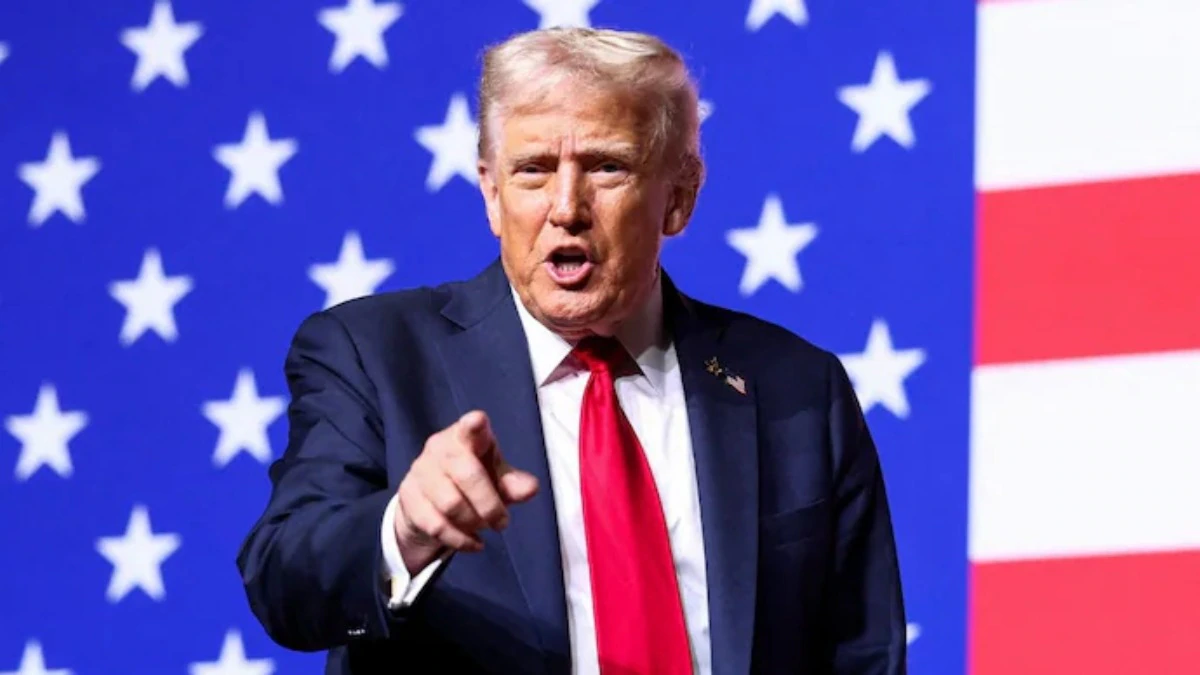

In a series of increasingly forceful statements that have sent ripples through Latin America, U.S. President Donald Trump has suggested he may consider expanding U.S. military operations to Mexico and Colombia as part of his administration’s intensified campaign against drug trafficking. The remarks, delivered in recent interviews and public appearances, mark one of the most direct indications yet that the White House is weighing broader military action beyond its current operations near Venezuela.
Speaking to Politico earlier this month, Trump said he “would consider” using military force against drug-trafficking targets in Mexico and Colombia, citing the continued flow of narcotics into the United States. The President’s comments follow months of U.S. maritime strikes on vessels in the Caribbean and Eastern Pacific. These operations have resulted in dozens of deaths and drawn mounting scrutiny from lawmakers and international legal experts.
Escalation of the “War on Drugs”
The administration’s maritime campaign—now formally named Operation Southern Spear—has involved at least 21 to 22 lethal strikes on suspected drug-smuggling boats, according to Pentagon briefings and media reports. U.S. officials say the operations are aimed at dismantling “narco-terrorist” networks, though critics argue the strikes lack clear legal justification and risk destabilizing the region.
Trump has repeatedly framed the drug crisis as a national security emergency, recently declaring that the U.S. overdose epidemic is comparable to “a war” in terms of lives lost. He has also designated illicit fentanyl as a “weapon of mass destruction,” a move that expands the Pentagon’s authority to support counter-narcotics operations.
Mexico and Colombia in the Crosshairs
While the administration’s military buildup has largely focused on Venezuela—where Trump has not ruled out a ground invasion—his recent comments suggest a widening scope.
Mexico, a primary transit point for fentanyl, heroin, and cocaine entering the U.S., has long been at the center of bilateral tensions over cartel violence and narcotics production. Asked whether he would support ground strikes in Mexico, Trump responded: “OK with me, whatever we have to do to stop drugs”.
Colombia, one of the world’s largest cocaine producers, has also drawn Trump’s attention. In remarks at the White House, he warned that Colombian President Gustavo Petro “better wise up or he’ll be next,” implying potential U.S. action if Colombia fails to curb drug production.
Regional and Political Fallout
The President’s statements have sparked concern among foreign policy analysts, members of Congress, and Latin American governments. Critics warn that unilateral U.S. military action in allied nations could violate international law and trigger severe diplomatic consequences.
Some U.S. officials, including Secretary of State Marco Rubio, have attempted to downplay the likelihood of direct intervention in Mexico, emphasizing cooperation rather than force. “We’re not going to take unilateral action or send American forces into Mexico,” Rubio said earlier this month.
Within the administration, however, Trump’s rhetoric appears to be part of a broader pressure strategy. Analysts note that the President has used similar threats in the past to force negotiations or signal resolve, even when large-scale military operations were not imminent.
Logistical and Legal Hurdles
Despite the President’s aggressive posture, defense experts say the U.S. currently lacks the troop presence or logistical infrastructure for major land operations in Latin America. Airstrikes remain the most feasible option, though even limited strikes in Mexico or Colombia would represent a dramatic escalation with unpredictable consequences.
Legal scholars have also questioned the administration’s authority to conduct lethal operations without congressional approval, particularly in countries that are U.S. allies and not designated conflict zones.
Uncertain Path Ahead
As Operation Southern Spear continues and U.S. naval forces remain deployed in the Caribbean, Trump’s latest remarks have heightened uncertainty across the region. While it remains unclear whether the President intends to follow through on his warnings, the possibility of expanded military action has already strained diplomatic relations and intensified debate in Washington.
For now, Mexico and Colombia—both key partners in regional security—are left to navigate the implications of a U.S. administration that has signaled it is willing to take unprecedented steps in its campaign against drug trafficking.
